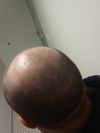
A user who has been using Pyrilutamide for 5 months with no results, and other users suggesting they switch to RU58841 or stick to their treatment plan for at least one year.
A user expressed frustration with hair loss treatments, including finasteride, minoxidil with micro-needling, and RU58841, which all failed to stop hair thinning and miniaturization. Suggestions from others included accepting baldness, considering hair systems, and continuing prescribed antidepressants for depression.
The user is experiencing thinning at the temporal points and has been using minoxidil, dermarolling, and a mixture of natural oils to improve hair growth. They are considering finasteride as a potential treatment based on shared information.
The user has been using topical finasteride and minoxidil for 5 years, with recent use of a liposomal formulation, but sees no significant improvement. They are considering switching to oral treatments due to continued hair loss and thinning.
The user has been using finasteride for over a year and topical minoxidil since March, noticing small hairs but no significant regrowth. Suggestions include continuing the current treatment, considering microneedling, and possibly trying oral minoxidil for better results.
Turkey is a popular destination for hair transplants due to lower costs, but quality varies, and many clinics are scams. It's crucial to research and select reputable clinics to ensure good results.
The user has seen great progress in hair regrowth over 8 months using oral finasteride without minoxidil. They plan to start using topical minoxidil soon.
The post discusses frustration over the limited and not always effective treatments for hair loss, mainly Minoxidil and Finasteride. The conversation includes mentions of potential new treatments like GT20029, HMI-115, CosmeRNA, KX-826, and microneedling, but also highlights the challenges of funding and prioritizing research in this area.
A 25-year-old is considering hair loss solutions, including buzzing hair short, using treatments like minoxidil and finasteride, or possibly a hair transplant. Medications are suggested to stabilize hair loss before considering a transplant.
1 mg of finasteride is commonly prescribed because it is more effective for a larger number of people compared to lower doses, despite only slightly reducing serum DHT more than 0.2 mg. Serum DHT and scalp DHT are different, and 1 mg is believed to reduce scalp DHT more effectively, contributing to better hair growth results.
The conversation is about a person rapidly losing hair and seeking information on the availability of a new treatment called scube3, as they have experienced side effects from current treatments like Minoxidil and finasteride. They are hoping scube3 will be approved soon as they believe it's their only remaining option.
A 35-year-old has seen no hair regrowth after 9 months using treatments including finasteride, pyrilutamide, microneedling, ketoconazole shampoo, and topical dutasteride, but experienced side effects with RU58841. Commenters suggest starting minoxidil for better results and question why it wasn't included from the beginning.
An 18-year-old started using finasteride for hair loss, already seeing results from minoxidil but experiencing shedding. They also use castor, rosemary, and peppermint oils, dermarolling, and are questioning the need for Nizoral while on finasteride.
Hair loss discussion includes delay in others noticing balding, using hair fibers for peace of mind, and taking before and after photos. Finasteride and Minoxidil are mentioned as treatments.
The user is considering whether to consult a hair loss specialist after letting their hair grow for two weeks, having previously shaved their head since age 26. They are contemplating continuing to shave if consulting a specialist seems unnecessary.
User shared 15-month results using finasteride and minoxidil, showing no loss but minimal growth, considering a hair transplant. Replies suggest starting treatment earlier, continuing current treatment, or getting a transplant.
The user lost hair density after 7 months of using minoxidil and finasteride and is seeking advice on other treatments after trying tretinoin, microneedling, and castor oil. Suggestions include checking for scalp conditions like eczema or psoriasis, changing minoxidil brands, and questioning hair dryer use and finasteride dosage.
A 24 year old male struggling with the physical and mental effects of balding, being short, and having a micropenis. Suggested treatments include taking medications such as finasteride and minoxidil, lifting weights, and trying not to compare himself to others.
Hair loss treatments for female pattern baldness, with the user focusing on wigs as an effective solution; they also discussed the difference between cheap and real wigs, and the importance of returning to confidence and self-esteem when tackling alopecia.
The conversation discusses using finasteride for hair loss, with iron supplements helping to slow shedding. The user emphasizes that shedding doesn't necessarily mean permanent hair loss.
A woman who has been experiencing hair loss for several years, and her question of whether there is any benefit to getting a biopsy to check if it's AGA or diffuse alopecia areata when no cure or very effective treatment exists. Treatments such as spironolactone and Minoxidil/finasteride/RU58841 have previously been discussed.
At this point.
In this conversation, users discussed the risks of drinking topical minoxidil and suggested alternative treatments such as obtaining a prescription for oral minoxidil or finasteride.
A 28-year-old male considering hair restoration is deciding between starting with 0.5mg dutasteride or 1mg finasteride, with finasteride being the typical starting point due to fewer and shorter-lasting side effects. The options also include minoxidil and biotin.
Finasteride is seen as risky for men due to side effects like erectile dysfunction, while hormonal birth control for women is normalized despite its side effects. The discussion points out a double standard influenced by societal and gender norms.
A user shared progress pictures after 9 years on finasteride and 10 months on oral minoxidil, considering a small FUE hair transplant to fill in temple points. Replies praised the results, suggesting a transplant might not be necessary.
Someone who is 18 and has been balding since 15 starting treatments with finasteride and minoxidil to stop or reverse their hair loss, as well as discussing the dilemma of whether it's rude or helpful to point out another person's hair loss.
A user's experience with using oral finasteride and topical minoxidil for hair loss over the course of one year, including their starting point (NW2) and resulting progress. The replies from other users have been encouraging.
Clascoterone 5% topical solution shows promise for treating male-pattern hair loss by blocking DHT at the follicle without systemic absorption, potentially offering fewer side effects than oral treatments like finasteride. While results are promising, long-term safety and effectiveness need further study, and it may serve as a starting point for developing more effective treatments.
The conversation humorously discusses various unconventional and satirical hair loss treatments, including Minoxidil, RU58841, dutasteride, and microneedling. It also mentions bizarre suggestions like topical sharpie, spray paint, and Nutella.