Search
for
Sort by
Community Join
270-300 / 1000+ resultscommunity Calling out *diffuse thinners* here -- Have you ruled out other factors?
Diffuse hair loss is often linked to genetics but can also be due to health issues like thyroid problems and low vitamin or iron levels. Treatments include finasteride, minoxidil, and dutasteride, with some seeing improvements after addressing health issues.
community Is hair thinning or loss associated with pain?
Hair thinning/loss associated with burning scalp pain. Finasteride helped relieve "DHT itch" for one person.
community How to use conditioner and essential oils without it touching roots?
The user is seeking advice on applying conditioner and essential oils without touching the scalp due to thinning hair, while using treatments like topical finasteride, minoxidil, and pyril. They are experimenting with hair care routines and have noticed some improvements with their current treatment regimen.
community Common hair-loss drug consistently associated with higher rates of psychiatric harm
Finasteride and dutasteride can cause psychiatric side effects like depression and suicidal thoughts in some users, especially those with a history of mental health issues. While some users experience positive hair growth results, others face severe psychological effects, raising concerns about their safety and the need for careful monitoring.
community Clinical efficacy of popular oral supplements for AA
Vitamins and minerals like vitamin E, zinc, and iron may aid hair growth, especially in cases of deficiency. Pumpkin seed oil, saw palmetto, horsetail, and AminoMar show some promise for improving hair health and count.
community Head feels way more inflamed when scalp is oily
The user experiences scalp inflammation, especially when oily, despite using treatments like dutasteride, oral minoxidil, RU58841, and nizoral. They recently started cetirizine and are considering benzoyl peroxide wash for relief.
community Why aren’t hair fibers popular?
Hair fibers are discussed as a temporary solution for hair loss, with users noting they work well if applied correctly but can be messy and time-consuming. Some users also use finasteride for long-term treatment.
community Worried after using minoxidil once in a home with cats
A user applied minoxidil for hair loss and worried about its toxicity to cats after their cat drank from a water fountain they touched. After consulting a vet and pet poison control, they were reassured that the exposure was not enough to harm the cat, and others advised using gloves and being cautious in the future.
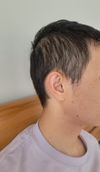
community 25M Low Density Hair, Concerned About Increased Scalp Visibility
The user is experiencing excessive hair thinning and is unsure of the cause. They are seeking opinions on treatments like Minoxidil, finasteride, and RU58841.
community Scalp Inflammation Beyond Psoriasis: A Hidden Player in Hair Thinning
Scalp inflammation may contribute to hair thinning, with treatments like ketoconazole shampoo potentially helping by reducing inflammation. Some users report that DHT blockers and other treatments like finasteride, minoxidil, and RU58841 can alleviate symptoms associated with inflammation.
community Serum DHT CAN'T cause hair loss. Sebum DHT is a better measurement.
Serum DHT is mostly inactive; sebum DHT is a better measure for hair loss. Users discuss using finasteride, dutasteride, and topical treatments like KX826 and RU58841 for better scalp DHT suppression.
community Anybody tried Regenepure Shampoo?
community Hair started thinning and found out i have high cortisol and thyroid issues
User experienced hair thinning due to high cortisol and thyroid issues, along with insulin resistance. They are taking magnesium, zinc, vitamin D, calcium, and selenium as supplements.
community Hormones and hair loss (23F)
The user is experiencing severe hair loss, possibly due to telogen effluvium, after stress, poor nutrition, and hormonal changes. They are using Nizoral and supplements but are considering hormonal treatments like spironolactone despite previous side effects.
community Has anyone noticed a lot more dandruff and dryer hair/scalp after starting fin? Currently 1 month in
Finasteride use can lead to drier hair and scalp, increased dandruff, and changes in hair texture. Some users manage these effects with products like Nizoral and oils.
community Why does hairloss look great one day and regression the next?
Hair appearance fluctuates due to factors like styling, product buildup, and humidity, causing frustration for those with diffuse thinning. Treatments mentioned include minoxidil, finasteride, ketoconazole shampoo, and RU58841, with mixed results.
community How much does diet affect hair loss?
The conversation suggests that changing diet and lifestyle has little to no effect on male pattern baldness (MPB), which is largely determined by genetics. Some individuals noted personal improvements in hair condition with healthier diets, but the consensus is that diet alone cannot prevent or reverse MPB.
community Peppermint oil for Hair Thickness
Peppermint oil may increase hair thickness more effectively than minoxidil, but its effects are mostly studied in animals. Users report mixed results, with some seeing no regrowth and others noting slight improvements when combined with other treatments.
community Nizoral is drying my hair and I don’t know what else to do
A 25-year-old woman with androgenic alopecia is experiencing hair dryness and damage after using topical minoxidil and Nizoral. She is advised to reduce washing frequency, use a bond builder like K18, apply a silicone-based serum, and consider using a shower filter and different oils like argan oil for better hair health.
community (Topical) Quercetin might be a good add on to the hair loss stack
Quercetin might help with hair loss by inhibiting HSP-70, which increases androgen receptors. Concerns include its staining properties and unclear topical absorption.
community Is Sulforaphane really an option?
The conversation discusses the potential benefits of Sulforaphane for hair growth, with a suggestion to grow broccoli sprouts for the best results. One user doubts its effectiveness for hair loss but notes its anti-cancer and hormetic benefits.
community The Theory of BURN THE SCALP. !! PHOTOS ¡¡
The conversation discusses a user's unconventional hair loss treatment involving scalp massage, dermastamping, and pouring hot water to induce a burning sensation, with a warning not to try it without further evidence. Other users suggest more traditional treatments like Minoxidil and finasteride, while expressing skepticism and concern about the hot water method.
community Is coenzyme Q10 good or bad for hair?
The conversation discusses the use of coenzyme Q10 as a potential aid for androgenetic alopecia, alongside dutasteride. The user is seeking feedback on whether coenzyme Q10 improves or worsens hair condition.
community What supplements or extra dtuff do you guys do for your hair?
OP uses multivitamins, collagen, biotin, keratin, omega-3, satin bonnet, dandruff shampoo, oil moisturizer, and sun exposure for hair care. Users suggest adding antioxidants, probiotics, pumpkin seed oil, vitamin D, iron, and dermastamping.
community Been on fin/min topical spray for 6 months and my hair is the worst it’s been
The user has been using a topical spray containing finasteride and minoxidil for six months but is experiencing increased hair shedding and concerns about its effectiveness. Suggestions include switching to oral finasteride and minoxidil, consulting a dermatologist, and checking for underlying health issues like thyroid function and nutrient deficiencies.
community The difference that light can do in scalp pics
Lighting can significantly affect the perception of hair progress in photos. The user has been using dutasteride and oral minoxidil for hair loss, noting improvements after switching from finasteride.
community Pregnant wife and hairloss - posting on behalf of my husband
A husband experiencing hair loss is considering treatments like topical minoxidil and finasteride but is concerned about their effects on his pregnant wife and future child. Alternatives suggested include oral finasteride, which is considered safe if hands are washed after use, and exploring natural methods like oils.
community I have been applying undiluted, pure 100% peppermint oil to my scalp, 2.5ml a day as an experiment
A user is experimenting with applying undiluted peppermint oil to their scalp daily to stimulate hair growth, based on a rat study where peppermint oil outperformed minoxidil. The user reports immediate hair thickening and increased scalp blood flow, while others in the conversation express skepticism, humor, and concern about the undiluted application.
community Body hair growth on finasteride
Finasteride can increase body and facial hair growth due to increased testosterone, despite its intended use to reduce hair loss on the scalp. Some users consider trying topical finasteride for less systemic impact, while others report mixed results and side effects.