Search
for
Sort by
Community Join
450-480 / 1000+ resultscommunity OrganTech Aims to Regenerate Hair and Teeth, trial on Mice show positive results
OrganTech is working on regenerating hair and teeth, with positive results in mice, but skepticism remains about progress for humans. Users express frustration over the lack of advancements in human hair loss treatments, despite ongoing research and trials.
community Will PP405 render Minox and Fin obsolete?
PP405 might make minoxidil unnecessary, but finasteride or other 5AR inhibitors may still be needed. PP405 is expected to be expensive and not available until at least 2028, with limited information on its effectiveness.
community Thoughts on this? Supposed everychem pp405 results after 2 weeks
community Only Minoxidil 2 Months Before After Photos
A user shared their 2-month hair growth progress using only Minoxidil, noting significant improvement and plans to continue despite a genetic predisposition to baldness. They apply Minoxidil twice daily, experienced a heat rash, and chose not to use Finasteride due to side effects.
community New company created by Dr. Kang-Yell Choi to commercialize PTD-DBM therapy
PTD-DBM therapy for hair loss is being developed by Dr. Kang-Yell Choi, with human testing planned in South Korea. Some clinics in the U.S. offer PTD-DBM/valproic acid therapy, but it hasn't completed trials yet.
community 2~ year progress update! 1mg FIN 2.5mg oral MIN daily. (26)
User shared a 2-year progress update on hair regrowth using 1mg finasteride and 2.5mg oral minoxidil daily. They switched from topical to oral minoxidil for ease of use and showed significant improvement.
community Why does Pelage PP405 receive so much attention, while Eirion ET-02 seems to be almost forgotten?
ET-02 is seen as promising for addressing hair loss and graying, but PP405 is more advanced in development and has better publicity. Some users plan to use both treatments alongside minoxidil and dutasteride.
community What's better:Min2x a day or min + tret 1x a day?????
A 23-year-old male with early stage 4 hair loss is using a treatment routine that includes minoxidil 5% with tretinoin once daily, finasteride 1mg every other day, 2.5mg oral minoxidil every other day, and derma rolling twice a week. The discussion is about whether using minoxidil twice a day is better than combining it with tretinoin once a day.
community Why there are no updates from Amplifica about SCUBE3 & AMP-303?
Amplifica has not provided updates on SCUBE3 and AMP-303, raising concerns about their trial outcomes. Users also mention other treatments like Minoxidil, finasteride, RU58841, PP405, and ET-03.
community New Preprint: Retinoic Acid Supports Verteporfin-Induced Regeneration
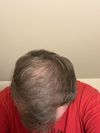
community 2 month check in
After 2 months of using Minoxidil and finasteride, OP noticed fuller hair, confirmed by their wife's observation. OP is pleased with the progress, though the change isn't drastic.
community 2nd HT FOR CROWN AND MID SCALP.
The user underwent a second hair transplant for the crown and mid-scalp, achieving good density. They are using minoxidil, finasteride, and biotin, and considering PRP treatments to enhance growth.
community 200mcg Selenium stopped my hairloss
A user reported that taking 20mg copper and 200mcg selenium completely stopped their hair loss. The conversation is about hair loss treatments.
community MWC compounded Minoxidil + Tretinoin
A user is considering using compounded Minoxidil with Tretinoin from Medical Wellness Center to improve hair growth. They are also curious about the effects of higher Minoxidil doses and adding Tretinoin to their regimen.
community Yokohama university and Dr. Fukuda published 2 new studies this month. They are aiming for 2023 hair multiplication trials in humans.
Yokohama University and Dr. Fukuda plan human hair multiplication trials in 2023. Users express hope for future hair cloning treatments over current hair transplants.
community Confused why people are calling PP405 a cure...it never claimed to be able to undo miniaturization or revert vellus back to terminal hairs. It seems to be more of a growth stimulant like minoxidil.
PP405 is not a cure for hair loss but may reactivate dormant hair follicles, similar to minoxidil. It is unlikely to help with miniaturized or vellus hairs and is still in trial phases, with availability expected around 2030.
community Pp405 - lowkey kinda bad results
PP405 increased hair density by 20% in 31% of participants, but results are considered underwhelming. Minoxidil and finasteride are seen as more effective treatments.
community Case study: 2mo update 1.5mm microneedling + Minox, no fin. Added Nizoral.
The user reports some hair regrowth after two months of using 1.5mm microneedling with Minoxidil and Nizoral shampoo. They note reduced pain and skin flaking, attributing changes to skin thickening and collagen induction.
community Any help with female hair loss?
A 20-year-old female with PCOS is experiencing hair loss and excessive facial hair. She is using ketoconazole and caffeine shampoos, microneedling, and considering anti-androgens like finasteride, but is cautious about minoxidil due to facial hair concerns.
community Which mesotherapy should I choose?
A user is considering adding PRP and mesotherapy to their hair loss treatment and is deciding between two options: Promoitalia, which contains Phosphatidic acid, Riboflavin, and Superoxide dismutase, and the more expensive Melsmon, a human placenta derivative. They seek advice on which option to choose based on effectiveness and scientific backing.
community Sugar and Hair loss connections
High sugar diets may worsen hair loss by increasing 5α-reductase activity and androgen levels, especially in women with PCOS. A low sugar diet might reduce scalp DHT levels, similar to finasteride, but genetics also significantly influence hair loss.
community Anyone here that has been using KX-826 for at least 9-12M or more and still sees good maintenance?
KX-826 did not maintain hair loss prevention for users. Some switched to Pyrilutamide but returned to Minoxidil and RU58841 due to worsening conditions.
community dut/min /copper peptides VS PP405 results
Minoxidil, dutasteride, and copper peptides are used in a tattooing method for hair regrowth, with some users noting better results compared to oral treatments. Copper peptides are considered to have minimal impact, but the method may reduce side effects.
community 2.5 months on fin and min and think im a hyper responder
The user started using finasteride, minoxidil, and biotin for hair loss and believes they are a hyper responder, noticing significant changes in hair thickness. They regret not starting earlier and mention using oral minoxidil.
community Setipiprant/PGE2 feedbacks?
The conversation discusses using PGE2 as a hair growth stimulant, comparing it to minoxidil, and considering the addition of Setipiprant. Concerns about side effects like skin damage and cost are also mentioned.
community Alpha plus from Anagenica - 25%CB???
A user ordered Alpha Plus from Anagenica, expecting it to contain specific percentages of Fin, Estradiol, Minoxidil, and CB0301. However, the received product's label showed different percentages, including a surprising 25% CB, leading the user to question its safety and accuracy.
community Is regrowth on an androgen receptor blocker possible?
RU and Pyri block androgen receptors to prevent hair loss but may also hinder hair regrowth since they prevent testosterone, which can stimulate hair growth, from binding to these receptors. The user is questioning if this understanding is correct.
community Peppermint Essential Oil (PEO) regrowth effects on shaved mice after 4 weeks
Peppermint Essential Oil (PEO) was discussed for its hair regrowth effects on shaved mice after 4 weeks. Specific treatments mentioned include Minoxidil (Min), Finasteride (Fin), and RU58841 (RU).
community DUPA - Impossible to cure, so giving up
The user diagnosed with DUPA tried treatments like dutasteride, finasteride, RU58841, and minoxidil without success and is considering a hair system. They hope for a future cure, possibly with PP405, and others suggest options like scalp biopsy and SMP.