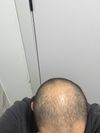
The user has been using finasteride, minoxidil, and a dermastamp for over four months and is asking if there is noticeable hair regrowth. They are seeking opinions on whether their hair will look good when grown out.
Actifolic RU-58841 powder and GhK-Cu peptide were tested and found to be accurate. The user is satisfied with the product's authenticity for hair loss treatment.
Breezula shows promise in stabilizing hair loss and potentially promoting regrowth at the one-year mark, offering hope for those who can't tolerate 5AR inhibitors. Its local targeting of androgen receptors could be a significant advancement if it avoids systemic side effects.
A female user with alopecia is researching peptide usage, specifically ghk-cu, for hair loss. Other users shared mixed experiences with copper treatments, noting some success with topical application.
A user shared their positive experience with a hair transplant in Patna, using 1800 grafts to enhance their hairline and temple points. The procedure cost around Rs 85K, and the user is pleased with the natural-looking results.
A user is starting a topical finasteride treatment for diffuse patterned alopecia, having previously used minoxidil without success. They are cautious about side effects and have chosen topical over oral finasteride, while also using Nizoral and biotin in their routine.
The conversation is about finding a high-quality copper peptide powder for long-term hair growth, to be mixed with rosemary oil. It also suggests using finasteride for hair loss treatment.
A user shared an 8-month update on their hair transplant surgery, which used 1800 grafts for aesthetic refinement, resulting in a natural-looking hairline and improved confidence. The procedure was performed by Dr. Abhinav Kumar, and the user is pleased with the results.
Users discussed the effectiveness of Everychem's solution, similar to PP405, with some reporting improved hair thickness and new growth. Concerns were raised about safety and the legitimacy of the product, with some users advising against purchasing research chemicals.
A new topical medication, Clascoterone, shows promise for hair loss, improving hair count significantly. Trials for Breezula are ending, but sign-ups for PP405 trials are available for 2026.
This post and conversation are about the molecular mechanisms triggered by microneedling, specifically its effects on inflammation, tissue remodeling, epithelial proliferation, differentiation, and collagen synthesis. The discussion highlights the potential benefits of microneedling for hair loss treatment.
Sulforaphane, found in broccoli sprouts, promotes hair growth by degrading DHT. Users discuss its potential benefits and joke about unconventional application methods.
A treatment showed a 20% hair density increase in weeks, with nearly a third of participants experiencing significant results, while questions remain about its long-term efficacy and effectiveness across different scalp areas. There is interest in combining it with finasteride and minoxidil for potentially better outcomes.
Breezula is being sold at Anagen Inc and Universal Labs, and users are discussing their experiences and results with it. There is also interest in the formulation process and inquiries about PP405.
A user is experiencing hair thinning on the sides while wearing a hair system and has had a transplant to correct temple peaks. They are using finasteride, oral minoxidil, and rosemary oil serum, and are considering a corrective transplant to add density and achieve a natural look.
The post discusses using ImageJ software to objectively track hair regrowth progress. The user is treating Androgen alopecia with dutasteride and minoxidil.
The user is using Minoxidil, RU58841, CB-03-01, WAY-316606, Ketoconazole, MK-677, and derma stamping to treat hair loss and has noticed new hair growth, especially around the temples and hairline. They apply different treatments at various times of the day and have seen improvements in skin condition and body hair texture.
A user shared an 8.5-month update on their hair transplant of 1064 grafts done by Dr. Kaan Pekiner in Ankara, Turkey, costing $3500. They are also using finasteride 2.25 mg weekly and have reduced shampoo use.
The user experienced significant hair regrowth using finasteride, minoxidil, and a 4,000-graft hair transplant performed by Dr. Nader in Reynosa, Mexico. The results were natural-looking, and the user plans a second transplant for additional density if needed.
The user started using topical minoxidil, oral finasteride, GHK-CU, and HGH in October, resulting in thicker hair and improved overall health. They experienced minor side effects like dehydration from HGH but reported benefits like clearer skin, better recovery, and muscle gain.
The user experienced temporary peach fuzz growth using a product with procapil and later tried minoxidil and finasteride without significant results. Their boyfriend has used minoxidil and finasteride consistently for over five years with sparse hair improvement.
8 months post hair transplant, OP experiences asymmetrical shedding despite using finasteride and starting minoxidil. The doctor suggests it might correct itself or be due to transplant trauma, recommending a wait-and-see approach.
Pelage Pharmaceuticals received $120 million in Series B funding for hair loss treatment development. The conversation expresses excitement and anticipation for the release and effectiveness of the treatment.
JW0061 shows superior hair growth results compared to existing treatments, with significant increases in hair follicles. The Wnt/β-catenin pathway is crucial for hair growth, and JW0061 activates this pathway effectively.