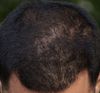
A 7-month progress report of using finasteride and minoxidil, as well as keto dieting and derma stamping; the discussion also touched on RU58841 and its potential side effects.
Epibiotech will offer off-the-shelf allogeneic hair multiplication treatment in South Korea, using dermal papilla cells from donors to grow hair in balding areas. This method is cheaper and less invasive than traditional hair transplants.
PP405 shows promise in treating severe hair loss, with 31% of users experiencing over 20% hair density increase in four weeks, faster than minoxidil and finasteride. Some users are skeptical about the results' significance and long-term efficacy.
The user is experiencing hair loss and has tried various treatments including topical and oral finasteride, minoxidil, dutasteride, and ketoconazole, but continues to lose hair. They are considering alternative solutions like hair systems due to the lack of improvement and a scalp condition called CVG.
Post Finasteride Syndrome (PFS) may result from epigenetic changes and gut microbiota alterations. Supplementing with Allopregnanolone might protect against these adverse effects.
The user shared progress pictures showing significant improvement in hair loss after using finasteride, RU58841, and undergoing a 3000 graft hair transplant. They plan to get another transplant due to remaining thin areas.
The conversation discusses the importance of scalp biopsies for diagnosing hair loss conditions like DUPA and Retrograde, which may not be just AGA. It emphasizes that treatments like finasteride and dutasteride may not work if the condition is autoimmune.
The conversation discusses interest in participating in PP405 trials for hair loss treatment, with users expressing uncertainty about eligibility due to location. Participants are eager for updates and willing to pay for shipping if trials are limited to America.
PP405 shows promise in hair regrowth, with 31% of participants experiencing over 20% increase in hair density after 8 weeks. Phase 3 trials are expected in 2026, with potential market availability by 2029-2031.
A user is treating hair loss with Dutasteride, Minoxidil, RU58841, Derminator 2, Vitamin D, Biotin, and Zinc. After 6 months, there's no significant visual improvement, but the user feels less insecure about Retrograde Alopecia.
The user noticed hair thinning since age 15, initially attributed to a Vitamin D deficiency. They are currently using Rogaine and considering Propecia but are hesitant about a scalp biopsy; they seek financially practical treatments for male-pattern baldness.
A user with kidney disease and high blood pressure experienced hair thinning, especially around the vertex. They are currently using finasteride and oral minoxidil but are considering whether to resume blood pressure medication despite managing symptoms with diet and exercise.
Pelage Pharmaceutical raised $120 million to continue research on PP405, a promising hair loss treatment that showed a 20% increase in hair density in 31% of men during a Phase 2a trial. The treatment was well-tolerated, with no systemic absorption, and Phase 3 trials are planned for 2026.
The user underwent a biopsy two years ago and was diagnosed with keratosis pilaris, leading to hair issues. They tried treatments including Minoxidil, betamethasone, lymecycline, topical Accutane, and dutasteride, as well as diet changes, without improvement in hair thickness or skin dryness.
A 34-year-old woman is experiencing diffuse hair loss and irregular periods, possibly due to long-term spironolactone use. She is considering minoxidil and finasteride for treatment and seeking medical advice for androgenic alopecia and hormonal imbalances.
A 40-year-old shared their positive experience with a second hair transplant at HDC Cyprus, involving 4148 grafts and costing around 9,000 euros. They used oral minoxidil, Dutasteride, biotin, and vitamins to aid recovery and were pleased with the results.
PP405 is a potential hair loss treatment undergoing trials, with discussions on its effectiveness and comparison to existing treatments like finasteride and minoxidil. There is skepticism about its status as a cure, with hopes for future advancements in genetic treatments like CRISPR.
Hair loss treatments discussed include microneedling, minoxidil, tretinoin, finasteride, dutasteride, pumpkin seeds, saw palmetto, and scalp massage. The consensus is that finasteride or dutasteride is necessary for significant regrowth, while other methods may only slow hair loss.
PP405 shows promise in stimulating new terminal hair growth by activating dormant follicles, with no systemic adverse effects observed in a short-term trial. However, long-term efficacy remains unproven, and further trials are needed to confirm its potential as a hair loss treatment.
A young man with hypertrichosis has over 95% of his face covered in hair, sparking humorous comments about hair loss treatments like minoxidil and dutasteride. Users joke about transplanting his facial hair and discuss the challenges of his condition compared to typical balding.
A peptide-based hair loss treatment, PP405, reportedly increased hair density by 62% in 90 days, but these claims are unverified and met with skepticism. Users compared PP405 to Minoxidil and Finasteride, expressing doubts about its effectiveness without more evidence.
Dr. Bloxham's trial is testing verteporfin on hair transplant patients to see if it can improve hair regrowth in treated areas. People are discussing the potential for follicle regeneration, expected results timeline, and concerns about side effects like cancer.
Pelage is moving to Phase III clinical trials for PP405, a hair loss treatment, with results to be presented at a medical meeting. Users express skepticism and hope, comparing it to existing treatments like Minoxidil and finasteride, while discussing the potential for new hair growth in previously bald areas.
A 16-year-old female experiencing severe hair loss and sebum buildup, likely due to telogen effluvium and PCOS, is currently using vitamin D3 supplements, Redenser serum, and T follihair supplements. Recommendations include addressing PCOS first and consulting a doctor.
PCOS female visited doctor for hair loss concerns, prescribed spironolactone and minox 5%. Doctor advised against finasteride or dutasteride, user considering self-medication with dutasteride.
A user shared progress pictures 1.5 months after a hair transplant of 3500 grafts, using oral finasteride, topical finasteride, minoxidil, and vitamins. They are concerned about potential shock loss and the thinning appearance.
The user has been using topical minoxidil for over a year and added kx826/pyrilutamide to improve hair growth, avoiding finasteride due to side effects like lowered libido and panic attacks. They report positive results with reduced shedding and healthier hair, particularly in areas previously unresponsive to minoxidil.
Pp405 is discussed as a potential hair loss treatment, with humorous suggestions about rectal administration for increased effectiveness. Users joke about unconventional methods and express willingness to try anything for hair regrowth.
Hair loss treatments, including PP405, minoxidil, finasteride, and RU58841, with hopes for future solutions. Participants discuss the emotional impact of hair loss and consider alternatives like hair transplants or acceptance.
Hair follicle stem cells remain in bald individuals, but progenitor cells do not, raising questions about hair regrowth claims by Pelage. PP405 is discussed as a potential treatment, with skepticism about its effectiveness compared to existing treatments like Minoxidil and Finasteride.