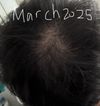
The user noticed new baby hairs after using sulforaphane but is still experiencing shedding. They are seeking a supplement to stop shedding, possibly grape seed extract.
The conversation discusses the hair loss treatment Breezula by Cassiopea, which had a successful Phase II trial and is expected to start Phase III by the end of the year. Users are curious about the timeline for availability and note that it performs slightly better than finasteride at 6 months, slightly worse at 12 months, with the benefit of having no side effects.
The conversation is about the effectiveness of a hair loss treatment product containing 0.01% Latanoprost, with the user considering trying it as a vehicle for RU58841. The user questions whether the dosage is too low to be effective.
The topical solution with 1% finasteride and 5% minoxidil, using water, glycerin, and PEG-40 hydrogenated castor oil as carriers, is considered adequate for hair loss treatment. Consistent use is recommended, with full results potentially taking up to a year.
Jordan-Iliad has been using a combination of finasteride, minoxidil, stemoxydine, microneedling, saw palmetto, peppermint and jojoba oils, ketoconazole shampoo, and Purador shampoo/conditioner for 3 months to treat their hair loss with stunning results. They have also recently started taking oral minoxidil 1.25mg/day in hopes of achieving even better results over the next 3 months.
RU58841 is considered effective by some users, but finasteride and minoxidil are commonly used with varying dosages to manage side effects. Users report different experiences with treatments like pyrilutamide, fluridil, and RU58841, with some seeing results and others not.
Pyrilutamide, a potentially effective hair loss treatment; other topical treatments like RU58841 and CB-03-01 that may have fewer side effects than Pyrilutamide; and the Phase 3 clinical trials of Pyrilutamide, which is likely to be approved by the FDA soon.
The user shared progress after two months of using finasteride, serioxyl, and NOOANCE casque Pro for alopecia. They are documenting their hair loss treatment journey.
The user switched from finasteride and topical minoxidil to dutasteride and oral minoxidil, questioning the effectiveness and safety of continuing RU58841. They experienced hair loss improvement initially but are now considering stopping RU58841 due to cost and safety concerns.
Liquid minoxidil caused mild seborrheic dermatitis on the user's eyebrows, likely due to propylene glycol. The user is considering switching to foam or oral minoxidil to avoid irritation on the scalp/temples.
Verteporfin is being explored for its potential to improve hair transplant outcomes by reducing scarring and increasing donor hair follicles. There is skepticism about the results, with some claiming misleading presentation of evidence.
Combining Minoxidil with peptide serums like Redensyl, Procapil, and Capixyl is more effective for hair growth than using Minoxidil alone, increasing hair density and thickness. However, some users are skeptical about the effectiveness of peptides, suggesting other ingredients or factors might contribute to the results.
A new Latanoprost-based formula used by Hollywood celebrities to treat hair loss, with the formula containing minoxidil, tretinoin, melatonin, azelaic acid, zinc thymulin, vitamin B6, sandalore and methyl vanillate. It also mentions the potential of offering a combined sublingual minoxidil/oral dutasteride option in the future.
The conversation is about whether stemoxydine can shorten the dormant phase after a hair transplant, known as the ugly duckling phase. There is skepticism about whether it actually works as claimed.
New hair loss treatments include Breezula, PP405, ET-02, KX-826, GT20029, VDPHL01, and CosmeRNA, with some showing promise in reactivating stem cells and reversing greying. Breezula and VDPHL01 are highlighted as potential add-ons or alternatives to current treatments like finasteride and minoxidil.
The user is using Minoxidil 5% foam in the morning and a Minoxidil 5% + Finasteride 1% solution in the evening for hair loss. They are seeking advice on additional topical treatments to use midday, such as caffeine serums, peptides, Redensyl, or natural anti-inflammatories.
The conversation discusses using GHK-Cu, C60, and saw palmetto oil as treatments for hair loss. Specific treatments mentioned include Minoxidil (Min), Finasteride (Fin), and RU58841 (RU).
The conversation is about whether Saw Palmetto, which has similar but less potent effects to Finasteride, could cause the same side effects due to lowering DHT levels. The user is considering oral Saw Palmetto as an alternative to Finasteride for hair loss treatment.
The conversation discusses organizing group buys and tracking progress for Kx-826 Pyrilutamide, a hair loss treatment. Participants express optimism about upcoming results and concerns about self-reporting bias.
Hair loss discussion involves experimenting with Sulforaphane from broccoli sprouts and possibly procyanidin b2. People seek updates on progress and if it's worth adding to treatment stack like microneedling.
The conversation discusses making a RU58841 solution for hair loss prevention and includes personal experiences with using RU58841 and minoxidil for hair regrowth, with a mention of monitoring health effects.
Amplifica starting clinical trials for new hair loss drug. SCUBE3 protein discovered, stimulates hair growth, could be alternative to Minoxidil and Finasteride.
The conversation discusses the use of topical finasteride from Hasson and Wong, with claims that none of their 800 users reported side effects. The user expresses skepticism about these claims and seeks others' experiences with the treatment.
Cyclosporine A is discussed as a powerful hair growth stimulant, potentially more effective than minoxidil, but concerns about safety and side effects, including cancer risk, limit its use. The conversation highlights the need for further research and experimentation with topical application, despite its risks.
Using a combination of low-dose topical finasteride (0.025%) and 0.5% pyrilutamide for hair loss, with a focus on minimizing side effects. The user seeks experiences and results from others who have tried this combination.
The conversation discusses the potential of creating a homemade sulforaphane topical for hair loss treatment. Participants mention challenges with sulforaphane stability and reference other treatments like Minoxidil.
The conversation discusses arranging an interview with the developers of RU58841 to clarify its safety and reasons for halted research, with some users expressing concerns about potential risks and others citing financial reasons for the discontinuation of studies. Specific treatments mentioned include RU58841, minoxidil, and finasteride.
The conversation discusses the lack of promising results from the 23rd Annual Meeting of Japan Society of Clinical Hair Restoration, with no significant advancements expected in the next five years. Treatments mentioned include setipiprant, with skepticism about its effectiveness.
A user is seeking trusted sources to buy Minoxidil powder to create their own solution with Propanediol. The conversation focuses on recommendations for purchasing Minoxidil powder.