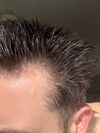
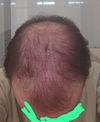
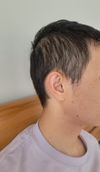
A user's hair loss progress after 4 months of using a topical fin and min mix, with responses from other users about their experience with the same treatments.
The post and conversation are about microneedling as a treatment for alopecia. It provides a comprehensive review of scientific literature on the technique and its application.
The user tried non-finasteride treatments for a year with little success, but has seen some improvement in hair thinning after 10 months using topical finasteride/minoxidil. They also use microneedling, Nizoral, rosemary/castor oil treatments, and maintain a nutrient-rich diet.
The user has been using Minoxidil for 2 months and Finasteride for 1 month to address hair loss, particularly at the temples. They are questioning whether the new small hairs are facial hairs or new scalp hair.
The user experienced another hair shed and plateau at month 5 using 6% minoxidil and 0.3% finasteride, with an itchy scalp indicating potential regrowth. They find the topical spray easy to use and saw results within two months, but caution that stopping use may lead to hair loss.
A user's progress with hair loss treatments, including minoxidil, microneedling, nizoral 2%, finasteride 0.5mg/day and 0.5mg/ml per day in minoxidil, as well as RU58841 purchased from Anagen Inc., which allowed the user to go outside without a hat or cap for two years.
The conversation discusses managing seborrheic dermatitis (sebderm) and male pattern baldness (MPB) with treatments like finasteride, coal tar shampoo, Nizoral, and oral minoxidil. Users suggest dietary changes, regular shampooing, and using antifungal products to control sebderm before considering minoxidil.
PP405 is a new hair loss treatment targeting dormant hair follicles, with ongoing trials. Some users consider stopping finasteride and minoxidil to join trials, while others doubt its effectiveness.
A 21-year-old male experiencing hair loss again despite using topical minoxidil (5%) for a year, possibly due to stress-related telogen effluvium. He is advised to continue using minoxidil and consider stress-reduction strategies while consulting a doctor for further evaluation.
Female using Rogaine foam for hair loss had scalp punch biopsy, diagnosed with Androgenetic Alopecia (AGA). Doctor recommended starting Spironolactone 50mg.
The user is using a routine involving microneedling, Minoxidil with tretinoin, a red light cap, scalp massages, Nizoral shampoo, and essence oil shampoo to address hair loss, with visible progress noted. They are considering topical finasteride or dutasteride if progress slows but are cautious due to past side effects.
Scalp tension from the occipitalis muscle is theorized to contribute to hair loss, but most believe DHT and genetics are the main causes. Treatments like finasteride and minoxidil are considered more effective than addressing scalp tension.
User experienced hair loss since 16, used Fin, Minox, and Nizoral with success but stopped due to side effects. Now using Pur D'or shampoo, Rogaine foam, scalp massages, volumizing spray, and dermarolling for hair maintenance.
A user shared their 2-month progress on hair regrowth using oral minoxidil, oral finasteride, and topical minoxidil with pyrilutamide. They reported seeing tiny hairs growing and no side effects from finasteride so far.
A user shared a 10-month hair loss treatment update using oral dutasteride, topical minoxidil, topical finasteride, microneedling, biotin, and saw palmetto. Replies praised the progress and suggested additional treatments like tretinoin and RU58841.
Finasteride, minoxidil, and derma rolling are currently the best treatments for hair loss. New treatments like TDM-105795, GT20029, PP405, HMI 115, Tsuji, Scube 3, RU, JW0061, Topilutamide, and verteporfin show promise but have uncertain timelines.
Probiotics like L. reuteri ATCC PTA 6475 and B. longum BB536 may improve hair growth and density by reducing inflammation and reversing DHT damage. The user is trialing these probiotics personally, ordering them from the U.S. to Canada, and plans to continue if no adverse effects occur.
The user started using topical minoxidil 5% and ketoconazole shampoo for hair loss, noticing minimal progress after three months, with fine hairs appearing. They experienced a setback when reducing the application to once a day but resumed twice daily applications.
People are hopeful about future hair loss treatments like PP405, GT20029, and VDPHL01, while some are currently using finasteride and minoxidil. There is skepticism about the effectiveness of new treatments, and some advise against hair transplants until more promising drugs are available.
The user observed new tiny white hairs after 12 days of using minoxidil, finasteride, microneedling, and biotin, hoping they will become terminal hairs. Others advise that while some hairs may not fully grow, consistent treatment, patience, and scalp massages could enhance results.
A 27-year-old woman with androgenic alopecia is losing hair despite using oral minoxidil and spironolactone, and is considering dutasteride. She is exploring causes like stress and medication side effects, planning tests, and considering treatment changes.
A user shared their hair loss treatment routine, which includes oral and topical Minoxidil, dermarolling, Keto shampoo, multivitamins, Biotin, oils, protein intake, and water. Another user suggested adding finasteride and continuing the routine for 6-12 months.
Elevated PGD2 levels in bald scalp tissue may contribute to hair loss, and treatments like castor oil, finasteride, and minoxidil are discussed as potential solutions. Some users explore alternatives like oral castor oil and cetirizine for those who cannot use finasteride.
Hair loss is linked to cellular physiology and the IGF-1 to TGF-B1 ratio, not just androgen sensitivity. The theory lacks evidence, while finasteride and minoxidil are effective treatments.
The user experienced significant hair loss due to health issues and is now using finasteride and minoxidil for nearly 3 months. They are hopeful about tiny hairs/dots indicating regrowth and are considering a hair transplant later in the year.
The user experienced regrowth and stabilization in hair density using finasteride, minoxidil, a derma roller, and an LLLT helmet, but noticed a recent decline in hair quality. They only take finasteride orally and are unsure about the effectiveness of the LLLT device.
An 18-year-old shares progress in hair regrowth after 1.5 months using a topical treatment with finasteride, ketoconazole, minoxidil, and biotin. They report significant hairline improvement and a decrease in sex drive as a side effect.
The user is treating androgenetic alopecia with finasteride and discovered a folic acid deficiency. They are asking if curing the deficiency can worsen or improve their hair condition.
The user experienced significant hair shedding from months 4 to 11 after starting oral dutasteride and minoxidil but saw improvement by month 13. They recommend patience and using a DHT blocker to stabilize hair loss.
A 24-year-old with male pattern baldness experienced side effects from oral finasteride and switched to a topical minoxidil/finasteride combination, later incorporating daily shampooing and scalp brushing to manage hair loss and dandruff. After initial shedding, the regimen led to reduced hair loss and new hair growth, with the user now using a densita mf combination (5% minoxidil/0.1% finasteride + redensyl) nightly.