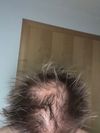
Scalp irritation from homemade topical finasteride may be caused by isopropyl alcohol. Alternatives suggested include using ethanol or everclear with distilled water.
The user experienced thicker hair and less hair loss after using topical finasteride (0.5%) and minoxidil (5%) foam for four months, with minimal side effects compared to oral finasteride. They also use a derma needler and injectable testosterone, noting no increased hair loss despite higher testosterone levels.
Hair loss from seborrheic dermatitis can be temporary. Treatments discussed include Minoxidil, finasteride, and RU58841, along with collagen and biotin supplements.
PP405 is seen as a potential breakthrough for converting vellus hairs to terminal hairs, with users expressing both hope and skepticism. It is compared to treatments like minoxidil and finasteride, with discussions on side effects and marketing concerns.
PP405 may damage hair follicles if used long-term, suggesting cycling might be necessary. Combining it with finasteride could help maintain hair growth.
OP asked if Alfatradiol 0.1% can maintain hair after a transplant. Responses suggest using stronger treatments like finasteride or micro-dosing oral finasteride instead.
A user reported hair regrowth using a homemade topical solution of minoxidil and finasteride sourced from Pakistan, combined with microneedling, after experiencing hair loss with UK-based products. They claim a reduction in hair loss from 200-300 to 3-5 hairs a day and advise against spending money on branded products.
The user experienced significant hairline regrowth over seven months using oral finasteride, topical minoxidil, and microneedling. Initial shedding occurred, but baby hairs appeared around three months, gradually maturing to fill in the hairline.
A user shared their 3-month progress using topical minoxidil and finasteride for hair loss, expressing hope for continued improvement. Others advised patience, suggesting adding micro-needling and waiting at least a year for significant results.
The user documented eight weeks of progress using 5% topical minoxidil, 1 mg oral finasteride, and weekly microneedling. They reported diffuse fill-in and new baby hairs, with plans to taper off topical minoxidil.
A new human trial using an FDA-approved treatment for wound healing called Verteporfin, which may potentially be able to reverse scarring and regrow hair in that area. The trial is only lasting one month so far.
A user shared their experience with hair loss treatments, including I-PRF injections, mesotherapy, and a topical solution containing Minoxidil and Finasteride. After experiencing side effects, they decided to stop the medicinal treatments and focus on natural alternatives like I-PRF, microneedling, and essential oils.
User has been using topical finasteride and minoxidil since May, previously used a spray version since January. They are seeing vellus hairs and have added weekly microneedling to their routine.
The potential of using Verteporfin to prevent hair loss scars and possible regrowth, with two doctors currently testing it, although the price of a 15mg bottle is expensive.
A user's 6 month hairline results from using dutasteride and microneedling, which resulted in successful regrowth of their thinning temples. Other users commented with similar experiences that were also achieved through the use of finasteride, dutasteride and minoxidil.
Minoxidil, dutasteride, and copper peptides are used in a tattooing method for hair regrowth, with some users noting better results compared to oral treatments. Copper peptides are considered to have minimal impact, but the method may reduce side effects.
The conversation discusses a user's 13-week experience using finasteride, topical minoxidil, and biotin for hair loss, noting initial shedding and subsequent improvement. Replies suggest some improvement may be visible, likely due to minoxidil, and encourage patience.
Hair regrowth after 13 weeks using topical minoxidil, oral finasteride, peptide shampoo, serum, and a red light hat. Some growth is attributed to a recent hair transplant.
The post discusses a successful hair loss treatment involving a hair transplant, finasteride, and minoxidil. The user underwent a 2000 graft hair transplant at the hairline in a clinic in Sweden.
Minoxidil can cause itching, pimples, and shedding, and starting spironolactone or finasteride may also lead to shedding. Topical CBD oil with MCT is suggested to reduce inflammation, and overlapping shedding might occur but doesn't necessarily increase each other's effects.
Hair loss treatments, including PP405, minoxidil, finasteride, and RU58841, with hopes for future solutions. Participants discuss the emotional impact of hair loss and consider alternatives like hair transplants or acceptance.
A user shared progress pictures showing significant hair regrowth after 3 months using a topical foam with 5% Minoxidil and 0.25% Finasteride. They plan to add derma rolling to their routine.
A user with long-term hair loss has been using topical minoxidil, finasteride, RU58841, ketoconazole, and dermastamping for 8 months. They are unsure if the new hairs are miniaturized or vellus.
A user reported significant hair regrowth using a homemade 0.01% topical finasteride solution, highlighting its effectiveness and lack of side effects. The discussion included concerns about oral finasteride's side effects and the benefits of topical solutions.
Excess Vitamin A and topical retinoids can cause diffuse hair shedding. The user suspects their chronic telogen effluvium may be linked to using adapalene, a topical retinoid.
A 38-year-old man reports positive results using topical Minoxidil 5% and infrared therapy for hair regrowth over four months, along with Saw Palmetto and Pumpkin Seed Oil supplements. Others suggest adding Finasteride for better maintenance and discuss the role of DHT blockers.
A 33-year-old is using topical minoxidil, oral finasteride (1mg), a derma pen, and 0.05% tretinoin on the hairline to treat hair loss, showing progress after 2 months. They apply tretinoin in the evening with minoxidil and use a derma pen once a week at 1.5mm.
A user is considering mixing Stemoxydine, RU-58841, Alfatradiol, and Tretinoin into a single topical solution for hair loss. They are concerned about potential interactions that could reduce the effectiveness of these ingredients.
The user has been using topical 0.3% finasteride, 5% minoxidil, and Nizoral for 5 months and is questioning if they are experiencing hair regrowth. The conversation revolves around identifying potential hair regrowth.
A user shared their successful hair loss treatment using 1.25mg finasteride daily, 2.5mm microneedling every 1-3 weeks, zinc pyrithione shampoo, occasional scalp massages, and 40% glycolic acid on temples. They reported significant progress over 21 months.