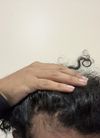
A 25-year-old is using vinpocetine to enhance the absorption of topical Minoxidil for hair loss. They also use a hair tonic and supplement with Glycine, Taurine, Creatine, and Citrulline.
The conversation is about the effectiveness of Minoxidil formulations with different alcohol and propylene glycol (pg) ratios. The user finds that a formulation with 20% pg and 80% ethanol dries faster but is concerned about absorption time.
The user felt pressured during a hair transplant consultation at Bosley, where they were advised to undergo FUT surgery and use a laser cap for maintenance, but did not meet with a doctor. Other users recommended seeking a second opinion from reputable doctors like Dr. Rassman and suggested trying finasteride first.
The conversation is about hair loss treatments, specifically Minoxidil, Finasteride, and RU58841. Users discuss personal experiences and preferences for starting these treatments.
A user shared before and after photos of their hair loss treatment using Finasteride. The treatment showed significant improvement after 8 months of daily use.
Obtaining treatments for hair loss, such as Finasteride and Minoxidil, without a prescription in some European countries. Replies to the post included experiences of being able to obtain treatments through pharmacies without prescriptions.
An 18-year-old experiencing aggressive hair loss is considering whether to obtain a finasteride prescription through an online consult to save money instead of visiting a dermatologist. The user is seeking advice on the cost-effectiveness of these options.
People are excited about a new hair loss treatment, PP405, and some suggest using Twitter to increase its visibility. Current treatments mentioned include finasteride, minoxidil, and dutasteride, but skepticism remains about the effectiveness of new treatments.
Considering alternative treatments to hair loss, such as platelet-rich plasma (PRP) and exosome therapy, instead of using medications like minoxidil, finasteride/dutasteride.
The post and conversation are about using bimatoprost for hair regrowth, with the user seeking a higher concentration to enhance results. The user also discusses difficulties in sourcing the powder for personal use.
A user's 14 month experience with Dutasteride for hair loss and other users discussing their experiences with Dutasteride, Minoxidil, Finasteride, and RU58841.
The conversation discusses the potential of PP405 as a hair loss treatment, with some users expressing skepticism and others hopeful about its development. There is also mention of other treatments like Minoxidil, Finasteride, and Pyrilutamide, with users debating the effectiveness and safety of self-experimentation versus waiting for clinical trial results.
The conversation is about a user's hair loss treatment regimen, which includes Dutasteride, oral Minoxidil, topical Dutasteride, Minoxidil sulfate, antioxidants, and various supplements. The user is also using a derma stamp and has paused Tretinoin due to a TCA peel recovery.
FCE 28260 (PNU 156765), an under-explored 5α-reductase inhibitor, showcases promising results in research by Giudici et al., outperforming well-known treatments like Finasteride in reducing the conversion of testosterone to DHT. Its superior efficacy, demonstrated through lower IC50 values in both natural and human recombinant enzyme studies, suggests it could offer more effective management of DHT-related conditions. Additionally, its lower molecular weight hints at better potential for topical application, potentially offering advantages in treating conditions such as androgenic alopecia. Despite its potential, it has not advanced in development, possibly due to financial limitations, leaving its therapeutic prospects and side effect profile largely unexplored.
Obtaining treatments for hair loss that are not approved in one's own country, such as pyrilutamide or GT20029. It was suggested to use a middleman to get it, but there is the risk of getting low quality or fake products.
Ibrox1972 shared an 8.5-month update on their 2,689-graft hair transplant by Dr. Raghu Reddy in London, along with using oral finasteride, oral minoxidil, and microneedling. Users praised the natural-looking results and discussed the importance of choosing a skilled doctor.
The GT20029 tincture, a topical androgen receptor degrader, showed significant hair growth and good safety in a China Phase II trial for male androgenetic alopecia (AGA), with the 1% dose twice weekly identified as optimal. The company plans to initiate Phase III trials in China and Phase II in the U.S., and the treatment also shows promise for acne.
A user's 14-month journey with finasteride, microneedling, and Nizoral to treat hair loss. They experienced some side effects such as ball ache, needing to pee constantly, and less semen, but the results were generally positive.
The conversation discusses hair loss treatments, specifically mentioning Minoxidil, finasteride, and RU58841. It also references upcoming trial data from Shiseido in Japan.
A user is deciding between oral and topical finasteride for hair loss, noting oral finasteride's ease of use but broader effects. Another user simply recommends oral finasteride.
A new brand is seeking 10 U.S.-based individuals aged 25+ experiencing hair loss to test a topical product containing GHK-Cu and Acetyl Tetrapeptide-3. Participants must not be using other treatments like finasteride or minoxidil and will provide feedback and photos.
The conversation discusses the delay in bringing FAK inhibitors and Stanford's hydrogel to market for hair transplants, with a preference for FAK inhibitors over Verteporfin due to their superior potential in preventing scarring. The user expresses frustration over the slow progress and hopes for faster development by companies like FAKnostics.
The conversation discusses the use of KX826 for hair loss, with mixed opinions on its effectiveness. Some users are skeptical, mentioning no significant progress or regrowth, and others suggest it might be a scam or that data may be manipulated.
Post Finasteride Syndrome (PFS) is debated, with some users reporting severe side effects from finasteride, while others believe these effects are rare or psychosomatic. Treatments discussed include finasteride, minoxidil, and RU58841.
PP405 is a potential new hair loss treatment that might replace finasteride and minoxidil, but it is still in clinical trials and may not be available until 2028-2031. There is skepticism about its effectiveness, with only a 20% increase in hair density observed in some participants.
The user is exploring hair loss treatments, including Patented Growth Factors (PGF) and a serum with Copper Peptide, Ceramides, Amino Acids, and Caffeine, while expressing concerns about the cost and effectiveness of PGF. They are also considering starting finasteride due to doubts about PGF's long-term viability and are seeking experiences from others who have used these treatments alongside antidepressants.
A user received a custom topical treatment for hair loss from Rootsbyga, which includes minoxidil and possibly other ingredients to enhance its effectiveness. The initial test cost $120, and the monthly topical costs around $70, with concerns about long-term use of steroids like hydrocortisone.
The conversation discusses the potential market release of a hair loss treatment called GT20029 by Anageninc, with users expressing interest and discussing the importance of safety and effectiveness. Some users plan to contact Anageninc to show demand for the product.