A user who had FUT surgery for 2877 grafts with Dr Jerry Wong of Hasson & Wong that resulted in low growth and an abnormally wide scar, suggesting negligence by the doctor and possibly illegal behaviour by an unqualified technician. The post sparked discussion about seeking legal action, as well as criticism of the clinic's high cost.
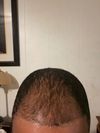
After a year on dutasteride and oral minoxidil, the user experienced significant hair regrowth, improving from Norwood 2 to almost Norwood 1. They added RU58841, microneedling, rosemary oil, GHK-Cu, and annurca apple supplement to their regimen and are now noticing hair loss in the temple area.
Minoxidilmax offering a 0.5% Pyrilutamide solution and debating the cost, effectiveness, and safety of using it alone or with other treatments such as Finasteride and Minoxidil.
Hair loss can be treated by correcting glucose metabolism in hair follicles and using equol as a safer DHT blocker. Production of these treatments is starting soon, and a Discord channel is available for more information.
The conversation discusses a hair loss treatment involving a hair transplant of approximately 2500 grafts to the frontal area, daily use of finasteride, twice-daily topical minoxidil, and daily caffeine shampoo since the hair transplant procedure. One person is skeptical about the improvement in the crown area with just finasteride and minoxidil.
The emotional impact of hair loss and the risks associated with common treatments such as finasteride, dutasteride, minoxidil, RU58841, and Fluridil. People discussed their personal experiences with these treatments, including potential side effects and lowered fertility. Hair transplants were also mentioned as a possible solution.
OP experienced side effects from finasteride and is considering trying RU58841 for hair loss, while currently using minoxidil, Stemoxydine, a dermapen, and Nizoral. Another user shared positive results with RU58841, noting no side effects and maintained hair thickness after stopping its use.
A 25-year-old is experiencing chronic telogen effluvium (TE) and androgenetic alopecia (AGA) after surgery, using finasteride, red light therapy, and supplements, and considering oral minoxidil despite heart concerns. They are unsure whether to start minoxidil before or after an upcoming surgery, which may trigger another hair shed.
The conversation humorously discusses the use of pp405 for hair loss, with mentions of finasteride and minoxidil. Users joke about unusual side effects like growing extra body parts.
Dermatologists use treatments like oral minoxidil, finasteride, and RU58841 for male-pattern baldness, considering side effects and patient preferences. Photobiomodulation is noted as mildly effective but costly, while PRP is debated for its effectiveness compared to microneedling.
The conversation is about a user preparing to join the ABS-201 clinical trial for hair loss treatment, which involves a prolactin inhibitor. The user plans to update others on their progress if enrolled.
A 48-year-old male from the Philippines shared his two-year progress using finasteride only for hair regrowth, experiencing significant improvement without minoxidil. He started with 0.5mg and increased to 1.25mg, later adjusting to every other day due to elevated liver enzymes, and reported 90% hair restoration.
The user is using RU58841, dutasteride, and minoxidil for hair loss, storing RU58841 in the fridge and applying it nightly. They report more baby hairs on the temples but are unsure if it's due to new growth or miniaturization, and seek advice on mixing and results from RU58841.
The user experienced worsening hair thinning despite using finasteride, minoxidil, and ketoconazole shampoo, and switched to dutasteride five months ago. They are considering adding tretinoin and microneedling to their routine for better results.
The user has been experiencing hair loss since age 18 and has tried topical Minoxidil and oral finasteride, which slowed thinning but did not promote regrowth. They are considering switching to Dutasteride with topical Minoxidil after limited success with a Minoxidil and finasteride spray.
Minoxidil alone can work for some people, but it may not address DHT-related hair loss. Adding a derma roller and using ketoconazole shampoo might improve results.
A user shared their positive experience with a hair transplant at Moart Clinic, involving approximately 10,000 grafts for a new hairline and crown. The procedure was smooth, with no pain, and the user is very satisfied with the results.
The user switched from finasteride to dutasteride and is seeking feedback on hair changes after 4 months. The current regimen includes oral dutasteride, oral minoxidil, and topical minoxidil.
The user experienced significant hair regrowth after taking oral finasteride and minoxidil for four months. They reported no major side effects and are pleased with the progress.
The user experienced significant hair shedding despite long-term use of finasteride and minoxidil, considering switching to dutasteride and increasing minoxidil dosage. Suggestions included trying topical minoxidil and adding a topical antiandrogen, but avoiding RU58841.
Minoxidil and finasteride have not improved the user's hairline after a year. Suggestions include trying dutasteride, microneedling, or considering a hair transplant for better results.
A 20-year-old experiencing diffuse thinning is using a regimen of oral minoxidil, dutasteride, finasteride, and ketoconazole to address hair loss. They are considering increasing the minoxidil dosage or adding topical treatments due to minimal shedding observed after 16 days.
Minoxidil 5%, finasteride 1 mg, and L-arginine are discussed for male pattern baldness. L-arginine may help with blood flow but its effectiveness for hair loss is uncertain.
The user is considering switching from finasteride to dutasteride due to side effects like brain fog and lower libido. They experienced hair regrowth with finasteride but are concerned about potential side effects of dutasteride.
A user has been on finasteride and minoxidil for a year, along with biotin supplements, microneedling, and ketoconazole, but is experiencing heavy hair shedding and is concerned about the treatment's effectiveness. They are seeking advice and experiences from others regarding shedding and potential signs of hair regrowth.
A 54-year-old user shares progress after 3 years on dutasteride, following 15 years on finasteride, using 0.5 mg/day dutasteride, topical minoxidil every other day, and a peptide serum on alternate days. They experienced a significant shed during the transition but are now maintaining hair, noticing some new growth along the hairline.
A user is interested in Absci's AI-driven antibody platform, ABS-201, for treating androgenetic alopecia, which shows promising preclinical results and potential for hair regrowth and pigmentation restoration. However, concerns are raised about the drug's development timeline and its advantages compared to existing treatments.
A 31-year-old man using finasteride for a year is considering adding oral minoxidil or switching to topical minoxidil to address diffuse thinning, while also using a scalp massager and ketoconazole shampoo. Concerns include cardiovascular side effects, pet safety with topical minoxidil, and cost of telehealth services.
People using minoxidil and finasteride often see hair regrowth results around 4-5 months, but some experience no progress even after 10 months. Switching to dutasteride or adjusting dosages can lead to improvements, with some users noticing changes as early as 3 months.