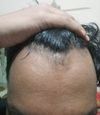
Verteporfin is being explored for hair regeneration, with unofficial trials and updates shared online. Efforts are being made to encourage more surgeons to trial verteporfin for donor hair regeneration.
The conversation is about hair loss treatment using finasteride, ketoconazole, and sulfur soap, with consideration of starting dermastamp. The user prefers not to use minoxidil.
The conversation discusses hair regrowth using Finasteride, Alpecin shampoo, vitamins, RCP serums, and Redensyl, with noticeable improvement in the fifth month. The user experienced some shedding initially but found stability without using Minoxidil, as advised by their dermatologist.
RU58841, a potential hair loss treatment, was not commercialized due to marketability issues and lack of long-term safety data. Concerns about its formulation and delivery methods further complicate its use.
The conversation is about hair loss treatments, including minoxidil, finasteride, dutasteride, tretinoin, stemoxydine, adenosine, castor oil, baicalin, and bimatoprost. The user shares their nightly and morning routines and discusses the role of DHT in hair loss.
The user reports significant hair regrowth using a topical solution of 5% minoxidil and 0.1% finasteride twice daily, along with derma rolling twice a week. They have not experienced shedding and are optimistic about continued hair growth.
The conversation discusses hair loss treatments, including the use of minoxidil, finasteride, dutasteride, RU58841, and Nizoral. Participants emphasize the importance of finasteride and minoxidil, while also considering factors like diet, stress, and scalp health.
A 38-year-old man from Poland, balding for 15 years, shared his hair regrowth progress after 4 months of using finasteride (fin), minoxidil (min), micro-needling, and infrared light treatments. He recently switched from finasteride to dutasteride.
The conversation discusses a 3-month update on using topical minoxidil, finasteride, microneedling, and ketoconazole shampoo for hair loss. Users express amazement at the progress and congratulate the original poster.
GentleIris stopped hormone-induced hair loss with diet changes but couldn't regrow lost hair. A reply suggested microneedling instead of Platelet-Rich Plasma Therapy (PRP) for hair regrowth.
Stem cell-related treatments and drugs like RCGD423 and WAY are being tested for hair growth. Clinics are conducting tests on patients who haven't had previous treatments.
Various peptides are discussed for treating male pattern baldness, with some available for topical use like GHK-Cu and Ac-KGHK, while others remain in research stages. Users are interested in experiences and sourcing these treatments.
A user's progress with treating their hair loss, including using finasteride, minoxidil, retinoic acid, dermapenning twice weekly and ket 2% shampoo two to three times per week. Other users offered advice such as not derma penning too often or shaving the area bald for a couple of months.
The conversation is about a user sharing their 3-month progress with finasteride, minoxidil, and weekly derma rolling for hair loss. Some suggest buzzing the hair off to better apply treatments and consider a hair transplant in the future.
The user's hair regrowth plan includes topical treatments (RU58841, azelaic acid, ketoconazole), oral supplements (Gia Herbs, castor oil), microneedling, PTD-DBM peptide with valproic acid, red light therapy, inversion table with scalp massage, and platelet-rich fibrin injections. Commenters suggest that finasteride and minoxidil are essential treatments for male pattern hair loss, which are missing from the plan.
21-year-old female experiencing hair loss and visible scalp seeks advice on PRP effectiveness. Currently taking spironolactone and krimson for high androgens, unsure if PRP can be done with these medications.
The user shared progress on hair loss treatment between September and November using oral finasteride, topical minoxidil, dermarolling, a LaserComb, caffeine shampoo, Nizoral, scalp massages, and both oral and topical biotin. The conversation discusses the effectiveness of these treatments.
A user shared a hair growth stack using minoxidil sulfate, valproic acid, bimatoprost, blue copper peptide, and other ingredients, emphasizing a gel-based formula for better skin tolerance. Another user suggested adding a 5-alpha-reductase inhibitor like finasteride or dutasteride for more effective long-term results.
The conversation discusses the effects of B5 (Pantothenic acid), B7 (Biotin), and B12 on hair loss. Specific treatments mentioned include Minoxidil, finasteride, and RU58841.
A user shared their 1.5-month progress using a routine of topical finasteride and minoxidil gel, minoxidil foam, microneedling, keto shampoo, and a multivitamin. They reported noticeable hair regrowth for the first time in a decade.
GT20029 is a new hair loss treatment in Phase 3 trials in China, using PROTAC technology to target androgen receptors, potentially with fewer side effects than finasteride and minoxidil. VDPHL01, a second-generation minoxidil, is also mentioned as potentially more effective.
The conversation is a satirical expression of frustration over hair loss, mentioning treatments like spironolactone, microneedling, and topical applications, with references to various hair loss products and personalities in the community.
A 23-year-old is experiencing hair that is thick at the ends but thin at the roots despite using minoxidil and finasteride for 10 months. They are concerned about whether this is normal or a sign of miniaturization and seek advice on reversing or improving the condition.
The conversation discusses using Rogaine (Minoxidil) and ketoconazole for hair regrowth, with interest in trying a formulation with Azelaic Acid for potentially better results. Concerns about Azelaic Acid's effectiveness and safety, including skin sensitivity to sunburn, are mentioned.
The conversation is about a user who has been bald for 15 years and is trying to regrow hair using a dermaroller, minoxidil, nourishing serums, biotin supplements, and mesotherapy. Other users suggest using finasteride or dutasteride for better results.
Stress can lead to hair loss by affecting hair-follicle stem cells, and this loss is harder to recover from if one has male pattern baldness (MPB). Treatments like finasteride and minoxidil are used to address hair loss, but stress-related hair loss differs from androgenic alopecia.
User shared 6-month progress using Fin, Min, Microneedling, Biotin, and Ketoconazole Shampoo for hair loss. They microneedle once a week, use 1.25 mg Fin daily, and apply topical Min twice a day.
Progesterone cream might help with hair loss by inhibiting DHT production and suppressing prolactin, which can increase DHT. Some dermatologists have used progesterone for hair loss treatment, and it has been effective, sometimes combined with minoxidil, finasteride, and hydrocortisone.
Individuals with oily scalps, dandruff, and diffuse thinning hair loss who have managed to either halt the loss or regrow their hair by using topical finasteride and minoxidil as well as microneedling and ketoconazole 2% shampoo.