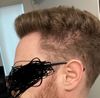
The conversation discusses hair thinning and treatments like Minoxidil, finasteride, and RU58841. The user is concerned about distinguishing between natural hair parting and actual thinning.
CRISPR Cas9 could potentially treat baldness by targeting specific genes in hair follicles without affecting other body functions. There is optimism about its future use, despite ethical concerns and the current reliance on treatments like minoxidil and finasteride.
An 80-year-old man and his 99-year-old father have more hair than many younger people, sparking discussions about hair loss and genetics. The suggested treatment for maintaining hair is simply eating oysters.
PP405 is a safer alternative to JXL069 for hair loss treatment because it penetrates the skin effectively and degrades in the blood, avoiding systemic toxicity. JXL069, when forced into the body, can cause dangerous side effects like lactic acidosis due to its inability to degrade safely.
The conversation discusses whether to wait 24 hours before applying minoxidil after using a .5 mm dermaroller for hair loss treatment. The specific treatments mentioned are microneedling, minoxidil, and dermarolling.
RU58841 stopped scalp itching for the user, providing relief from persistent itchiness associated with hair loss. Some users reported side effects like chest pain, while others found relief with different treatments like mometasone.
Tretinoin can irritate seborrheic dermatitis, but using it with a moisturizer on calm skin may help. Parallel Health's skin microbiome testing and phage therapy are suggested for persistent issues.
Tretinoin can cause non-telogen hair loss in some men by inducing catagen-like changes in hair follicles and through retinoid toxicity, especially when used with minoxidil. Some users report hair loss even when using retinoids on the face, while others experience benefits when combined with treatments like finasteride and minoxidil.
Breezula (clascoterone) initially performed better than finasteride for hair loss but then effectiveness decreased almost back to baseline after 6 months, raising questions about its strength.
The conversation is about using a Dr. Pen for microneedling on a widow's peak, with advice to use a depth of 1.25mm and hold it in place for 10 seconds. The user is also using minoxidil.
A user with diffuse thinning recommends a root cover-up spray as a temporary, medication-free solution. They plan to consult a dermatologist for treatments like Minoxidil and finasteride while using the spray for special occasions.
Hair loss has slowed, but uneven growth and kinking persist despite using keto/nizoral shampoo and clotrimazole. Stress and anxiety might be contributing factors.
A 30-year-old woman with a history of anemia and low vitamin D experienced hair shedding, which improved after addressing nutrient deficiencies. Despite regrowth of terminal hairs, her dermatologist recommended treatments like minoxidil and spironolactone to prevent future bald spots, but she is cautious due to family history of hormone-related cancers.
The acne medication Winlevi, which contains Clascoterone, is available in the U.S. and may slow down hair loss until a higher concentration treatment, Breezula, is released.
Making a 1 year update on hair loss treatment of Finasteride, 5 mg oral minoxidil and topical minoxidil with 1.5 mm dermarolling; the user experienced some face pimples, baggy eyes, and had tried skin care. They also used fiber with their hair product and left it for a few days to make it look visually better. Replies were positive and one asked if using both oral and topical minoxidil was overkill.
The user is experiencing increased hair shedding after using oral minoxidil and is considering topical dutasteride but is concerned about potential worsening. They are also exploring other topical treatments like latanoprost, caffeine, and melatonin, and seeking advice on application methods without pulling out existing hair.
The user is considering using Minoxidil and Tretinoin to manage hair loss while waiting for Breezula/PP405, as they cannot tolerate dutasteride or finasteride. They hope these treatments will help retain hair despite ongoing loss.
A 34-year-old male is experiencing hair loss on the sides of his head, with inflammation and itchiness, while the top remains thick. He is using topical dutasteride and keto shampoo to address the issue.
The conversation discusses using topical finasteride with propylene glycol, which causes scalp dryness or dandruff. The user also uses Nizoral, Nioxin, and DHT oil, and considers using a scalp conditioner to alleviate dryness.
The post is about a user's progress with using minoxidil and finasteride for hair loss. One user suggests that dermarolling may also be contributing to the positive results.
The user shared progress after one year of using Minoxidil, rosemary oil, and dermarolling for hair loss, noting fuller hair despite some scalp exposure. Another user inquired about the dermarolling process and frequency.
The conversation discusses the potential of Verteporfin for hair regeneration and improving hair transplant surgery to leave no scars. Specific treatments mentioned include Minoxidil, Finasteride, and RU58841.
The conversation is about finding a suitable hairbrush for diffuse thinning hair without causing separation or flattening. The user is using oral dutasteride, minoxidil foam, Nizoral, microneedling, and Pura D’or shampoo and conditioner.
A 30-year-old man with hairline recession is considering using 1% Clascoterone cream on his hairline while awaiting a 5% Breezula product. He has been using oral Minoxidil for four years but stopped using Finasteride due to side effects.
The user reports significant hair regrowth using a topical solution of 5% minoxidil and 0.1% finasteride twice daily, along with derma rolling twice a week. They have not experienced shedding and are optimistic about continued hair growth.
The user has seen great results from microneedling but is worried it might lead to faster balding without medication. They are considering adding Finasteride or Dutasteride to their routine to address underlying DHT issues.
Tretinoin may improve minoxidil's effectiveness for hair growth, but results vary; some users report no change or potential hair loss acceleration. Tretinoin is included in some topical hair loss treatments sold by dermatologists and online companies.
A user is concerned about receding hairlines and considers using finasteride and minoxidil but is hesitant due to potential side effects. Others advise starting treatment early to prevent further hair loss, emphasizing that finasteride is generally safe and effective for prevention.
The user is experiencing a second hair shedding phase and increased flaking and itching while using minoxidil 5% nightly and microneedling every two weeks, with needle length increasing over time. Other users suggest the hair loss may continue without the use of finasteride.
The user experienced improved self-confidence and hair regrowth using finasteride, minoxidil, and dermarolling. Visible results were noted after about three months, with microneedling done once a week.