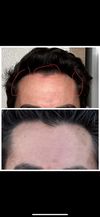
A user shared progress pictures after 15 months on 0.5 mg finasteride, reporting significant hair regrowth starting around 9 months. They no longer see the need for a hair transplant.
The conversation discusses the pros and cons of dutasteride for male pattern baldness, with a focus on its long half-life. The user, a physician, also mentions that switching from finasteride to dutasteride can cause temporary hair loss until dutasteride reaches effective levels or accelerates the hair cycle.
The conversation discusses the less impressive results of Pyrilutamide (kx-836) in phase 3 compared to phase 2, with a suggestion that a longer study might show more significant results. One user reports personal success with Pyrilutamide, experiencing no further hair loss and gradual regrowth.
A 25-year-old male is concerned about his blood test results, particularly the low percentage of free testosterone, and is questioning whether starting finasteride for hair loss might worsen this issue. He also notes a slight vitamin D deficiency and lack of sleep before the test.
A 21-year-old individual questioning the safety and potential side effects of using Dutasteride for hair loss, after Finasteride and RU58841 had limited effect. The responses vary, with some users suggesting it's safe and others advising to check hormone levels before proceeding.
A user with alopecia areata is considering treatment options like injections or Olumiant but is concerned about cost and whether delaying treatment will lead to permanent hair loss. They are seeking alternative treatments that are more affordable for a college student.
The efficacy of taking dutasteride, a medication used to treat hair loss, every other day instead of daily. It was suggested that taking 0.5mg daily for 3 months and then switching to 3 times per week would be effective. Finasteride was also discussed as an alternative treatment option.
Potential side effects of 5AR inhibitors like finasteride and dutasteride. Users debate risks, benefits, and personal experiences with these hair loss treatments.
The conversation discusses the importance of taking vitamin D with food for better absorption and its potential role in hair loss. Some users also suggest taking vitamin D with K2, getting sunlight, and using finasteride for hair loss treatment.
The conversation discusses using oils like pumpkin seed, rosemary, peppermint, and grape seed oil for hair regrowth, claiming they can be as effective as finasteride or minoxidil without side effects. Some users remain skeptical and prefer proven treatments like minoxidil.
The effects of Finasteride, a drug used to treat hair loss, prostate problems and other conditions. The post by iaskedadoctor describes the conversations they had with a Urologist about the effects of the drug on DHT levels throughout the body, how lower doses are beneficial in reducing side effects, how erectile dysfunction can be psychological as well as physiological, how morning erections are not necessarily important, and how persistent side effects appear to be rare. People also shared their experiences with taking Finasteride for hair loss, including potential side effects such as reduced ejaculate force and development of man boobs.
The user experienced stable hairline but diffuse thinning after switching from oral finasteride to a topical solution of minoxidil and finasteride. They are concerned about the effectiveness of the topical treatment and are considering other options due to a recent decline in hair density.
DHT is important for sexual function and mood, but finasteride and dutasteride can reduce DHT, causing side effects like reduced libido and erectile dysfunction. These treatments are effective for hair loss, but their impact on DHT leads to debate.
A dermatologist advised stopping minoxidil due to heavy shedding, suggesting alternative treatments like Betaval Lotion and supplements, but many users disagreed, recommending continuing minoxidil and adding finasteride for better results. The conversation highlights skepticism about the dermatologist's motives and emphasizes the importance of understanding the type of hair loss before choosing treatments.
A 54-year-old user shares progress after 3 years on dutasteride, following 15 years on finasteride, using 0.5 mg/day dutasteride, topical minoxidil every other day, and a peptide serum on alternate days. They experienced a significant shed during the transition but are now maintaining hair, noticing some new growth along the hairline.
Many users experienced increased diffuse thinning after starting finasteride, with some switching to dutasteride or adding minoxidil in hopes of improvement. Thyroid issues and low ferritin levels were also discussed as potential factors affecting hair loss.
The user switched from topical minoxidil to oral minoxidil (2.5 mg) and finasteride (1 mg) after two years without results, noticing some initial shedding but no significant side effects. Others in the conversation discuss similar experiences with these treatments, including shedding, body hair growth, and varying results.
Switching from finasteride to dutasteride caused significant shedding but minimal side effects. The user plans to continue dutasteride for 12 months despite concerns about hair density.
PP405 is seen as promising but uncertain, with users advised to continue using existing treatments like minoxidil and finasteride. Concerns include its cost, availability, and interaction with hair transplants, while some hope it could complement current treatments.
The treatment for androgenetic alopecia involves using finasteride and minoxidil with intense exercise and cold exposure to boost metabolism and reduce androgenic effects, potentially leading to hair regrowth. This approach may activate biological pathways for improved hair and overall health.
Dutasteride raises scalp testosterone by 99%, which may not be ideal for those sensitive to all androgens. Some argue finasteride's balancing act might be better, while others believe dutasteride is superior for hair regrowth.
A user stopped using minoxidil after 10-12 years due to severe side effects like fluctuating blood pressure and chest pain, resulting in significant hair loss. Other users shared similar experiences, emphasizing health over hair and suggesting alternatives like finasteride, nanoxidil, and rosemary oil.
Switching from finasteride to dutasteride involves gradually increasing dutasteride while decreasing finasteride. Studies show dutasteride 0.5 mg daily can improve hair density in men unresponsive to finasteride.
A user did not respond to finasteride, dutasteride, and oral minoxidil for hair loss after four years of treatment and is considering scalp micropigmentation (SMP). Other users suggest the hair loss pattern may indicate alopecia areata and recommend seeing a dermatologist.
The conclusion of the conversation is that the combination of finasteride and minoxidil has helped the user, Shama2, achieve fast and good results in regrowing hair. They have not experienced any side effects and are consistent with their treatment.
A user reporting an extended shedding period of 9 months while using finasteride and minoxidil, and other users offering advice on treatments such as dutasteride, multivitamin, biotin, rosemary oil, Kiel's magic elixir, hair extensions, changing hair color, healing crystals, and seeing a dermatologist.
Progress (in a good way). How often did you take biotin?
KarensAnon: I took biotin once daily.
KarensAnon has made 3-month progress with the use of Minoxidil foam, 0.5mm micro-needling weekly, and biotin to combat hair loss which had started at age 19. They plan to further their treatment by adding finasteride soon.
A user sharing their progress after using Fin, Minoxidil, keto diet, and microneedling for two months to attempt to regrow hair on bald temples. Other users replied with advice and support.
The conversation discusses the removal of Breezula phase II 12-month results by Cassiopea and the search for the original data. Concerns were raised about potential negative long-term effects on hair growth, such as androgen receptor upregulation.
A user expressed deep frustration and embarrassment about balding, especially at a friend's wedding, and mentioned using finasteride and minoxidil. Others shared similar experiences and offered support, with some suggesting therapy and hair treatments.
