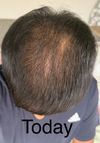
A user shared their 4-month hair transplant progress with 3740 grafts, showing before and after pictures. They had a generally good experience, except for the anesthesia part.
The conversation is about someone noticing hair regrowth after using a scalp massager and considering a hair transplant. People suggest using finasteride or dutasteride, but there's debate on their effectiveness and side effects. Some see progress, while others are skeptical without consistent photo evidence.
The conversation is about the progress and development of a hair loss treatment called GT20029. People are discussing updates on its status and speculating on how long it will take to become available.
Treating Black/ethnic hair loss with a combination of Minoxidil, finasteride, Nizoral shampoo and derma pen treatments, as well as occasional Jamaican Black Caster Oil use. The user documented their progress over the course of 3.5 months, showing improvement in hair growth.
The conversation discusses the lack of significant advancements in hair loss treatments beyond finasteride and minoxidil, questioning if hair restoration technology has reached a dead end. Hair transplant technology has improved, but new medications face challenges with market entry, cost, accessibility, and long-term effectiveness.
The user started using oral minoxidil and estradiol in August 2025, added finasteride in December, and experienced significant hair shedding in February/March. They switched to estradiol injections and are considering their hair washing routine, while another user suggested consulting a dermatologist and possibly trying dutasteride.
The user has been using topical minoxidil, topical finasteride, microneedling, and ketoconazole shampoo for 9 months with positive results but is concerned about recent increased shedding. Another user advises that shedding is normal and suggests continuing the treatments consistently for up to a year to see solid results.
The user experienced hair loss diagnosed as chronic Telogen Effluvium and male pattern baldness, treated with finasteride and minoxidil, later switching to dutasteride due to side effects but with limited success. The user plans to return to finasteride due to side effects from dutasteride, while others suggest maintaining consistent treatment and considering additional options like oral minoxidil and lifestyle changes.
A user on finasteride for 7 months is experiencing increased hair loss and is considering adding dutasteride or minoxidil to their regimen. They are seeking advice on whether to switch treatments or continue their current plan.
The user is using 2.5mg oral finasteride, 2.5mg oral minoxidil, 5% topical minoxidil, multivitamins, calcium, vitamin K2 D3, iron, theanine, and a derma stamp every 4 days for hair regrowth. They note improvements after almost 3 months, but others suggest results take longer.
The user started finasteride early for hair loss but saw no improvement, feeling hopeless despite adding dutasteride. Others suggest trying minoxidil, micro-needling, or considering blood flow issues, while some share similar struggles or suggest acceptance.
The post discusses a user's hair loss treatment involving Dutasteride 2.5 mg 5 times per week, Finasteride 1mg 4 times per week, RU58841 daily, and Minoxidil twice daily. A reply suggests that the combination is excessive, particularly the use of both Dutasteride and Finasteride, and labels it as a "chemical castration protocol".
The user has been using minoxidil, dermarolling, and nizoral shampoo for hair regrowth but hasn't fully restored their hairline. They are considering adding finasteride to their regimen.
After 6 months of adding topical finasteride to minoxidil, the user saw significant hair improvement, with noticeable results starting from the 5th month. The treatment included 5% minoxidil, 0.5 mg topical finasteride, and supplements like omega-3, minerals, and vitamins, with minimal side effects reported.
A user shared their positive experience with hair regrowth using a topical treatment containing 0.3% finasteride, 7% minoxidil, ketoconazole, and biotin. They noticed results after about three months, experienced some initial shedding, and had minor headaches as a side effect.
A user experienced 12 months of hair shedding on finasteride and is unsure about continuing, increasing the dose, or switching to dutasteride. Suggestions include adding minoxidil, adjusting finasteride dosage, and checking for deficiencies.
The conversation humorously speculates on whether an elderly man's good hairline is due to finasteride, dutasteride, or genetics. It also discusses the role of DHT and genetics in hair loss.
A 21-year-old used minoxidil, finasteride, avocado oil, peppermint oil, and a derma stamp to treat hair loss and saw significant improvement in 9 weeks. He also used a DHT blocking shampoo and got a haircut to enhance the appearance of hair growth.
The user shared progress in hair regrowth over 2.5 years using oral minoxidil, finasteride, and dutasteride, noting significant improvement in hair thickness and hairline. They switched from finasteride to dutasteride due to frequent shedding and reported no side effects from the treatments.
The conversation discusses using estradiol and its derivatives for hair loss without causing feminization. Users mention alternatives like alfatradiol, topical 17b-Estradiol, and DIM (Diindolylmethane).
The person is happy with their hair regrowth results using oral minoxidil, finasteride, RU58841, and weekly microneedling. They started this treatment in January 2023 and have seen significant improvement by January 2024.
Finasteride can cause initial hair shedding as part of the treatment process, which is normal and often leads to regrowth of healthier hair. Users discuss experiencing multiple shedding phases and emphasize patience, as results can take several months to become noticeable.
A 28-year-old man is considering whether to proceed with a hair transplant in February or continue using oral minoxidil, finasteride, and dermastamping, which have shown great progress in 3.5 months, to achieve desired results by his wedding in September 2026. Most responses suggest postponing the transplant to avoid potential "shock loss" and relying on the current treatment and hair fibers for the wedding.
Finasteride may cause hair shedding as part of the regrowth process, but there are no controlled trials confirming this. The shedding idea is mostly based on anecdotal reports and comparisons to how minoxidil works.
The user is concerned about the quick prescription process for hair loss treatments like Minoxidil and Finasteride through HIMs, questioning the lack of a thorough evaluation. Another user reassures that such practices are common, emphasizing the effectiveness and low risk of these treatments, and suggests monitoring personal response to the medication.
Kintor apologized for using misleading images in their advertisements and promised stricter review processes. They are also considering developing a topical dutasteride formulation.
The post discusses a theory that hair regrowth after transplant is due to the angiogenesis process (new blood vessels forming), not because the transplanted hair is unaffected by DHT. The responses highlight the established belief in 'donor dominance' (the importance of the hair's origin in transplantation) and skepticism about the new theory.
Pelage is delaying the start of phase 3 trials for PP405 to 2026 due to necessary regulatory processes, despite having $120 million in funding. Users discuss the potential of PP405 for hair regrowth, with some expressing skepticism and others hopeful for new treatments like Breezula.
A 78-year-old man regrew hair after suffering burns, suggesting that injury-induced healing processes might trigger hair growth. Microneedling and other treatments like minoxidil and finasteride are discussed as potential methods to stimulate similar regrowth.
A person shared their hair transplant experience at Diamond Hair Clinic, discussing the process, costs, and satisfaction with the results. They used Minoxidil, Duasteride, and vitamins for maintenance post-surgery.