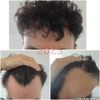
A user shared progress pictures 1.5 months after a hair transplant of 3500 grafts, using oral finasteride, topical finasteride, minoxidil, and vitamins. They are concerned about potential shock loss and the thinning appearance.
The user showed progress in hair regrowth using topical Minoxidil, oral Finasteride, and derma rolling with tretinoin. They seek advice on achieving Norwood 1 and the number of grafts needed for hairline restoration.
New hair loss treatments, including Breezula, VDPHL01, and PP405, are nearing Phase 3 trials, offering hope for effective solutions. Current treatments like finasteride and minoxidil remain effective, but early intervention is crucial.
User discusses using Verteporfin for hair regrowth after hair transplant. Replies mention successful follicle regrowth in studies and mice, questioning if it can be replicated in humans.
GT20029 shows promising results for hair loss treatment, with potential approval in China by 2026 or 2027, but U.S. approval may take longer. It could serve as an alternative to finasteride, with a potentially better side effect profile.
Verteporfin is being discussed for its potential to regrow hair and heal scars, possibly aiding hair transplants or replacing them. Some users are skeptical about its effectiveness, while others suggest combining it with microneedling for better results.
Sulforaphane shows potential for hair regrowth, with users reporting reduced shedding and regrowth. Some users combine it with Minoxidil and finasteride for better results.
A 29-year-old male shared his hair loss journey, using oral finasteride, topical minoxidil, derma rolling, and recently switching to dutasteride, oral minoxidil, and ketoconazole shampoo. He observed significant regrowth but progress slowed, hoping new treatments will enhance results.
A user shared their experience of hair loss progression after one year on dutasteride, expressing disappointment with no improvement and considering other treatments like RU58841. Other users offered mixed responses, some seeing no change, others suggesting the hair loss might have been worse without treatment, and discussing the role of testosterone and DHT in hair loss.
A 25-year-old with aggressive diffuse NW5 hair loss is using Minoxidil, oral Finasteride, RU58841, Ketoconazole, and dermastamping, experiencing slow progress and mental health struggles. Despite some visible regrowth, the user feels discouraged due to ongoing hair loss and is seeking reassurance and advice.
A user shared their 11-week post-op hair transplant results, noting they use only vitamins, not minoxidil or finasteride. Replies suggest starting finasteride to maintain results, with mixed opinions on the current progress.
Dr. Bloxham's 9-month update on FUT scar revision with Verteporfin shows promising results. Excitement is high for FUE, which appears highly effective based on Dr. Barghouthi's findings.
PP405 is discussed as a potential treatment for hair loss, with excitement about its promise but skepticism about its current effectiveness. Users mention combining it with treatments like minoxidil, finasteride, and microneedling, but emphasize it is not a cure.
A 36-year-old experienced significant hair regrowth using dutasteride, oral and topical minoxidil, and keto shampoo, and plans a hair transplant for further improvement. Despite progress, they seek hairline restoration and have scheduled a transplant of 3,000 grafts.
The conversation is about the potential of the RCH-01/Replicel hair loss treatment and its lack of updates since 2013, with the user expressing hope for its success and considering using Minoxidil, finasteride, and dermarolling in the meantime. Other treatments mentioned as promising are Breezula and Tsuji.
A 28-year-old male with a family history of baldness is deciding whether to start finasteride now or wait for visible hair changes. He is considering starting finasteride immediately to proactively address potential hair loss.
The user is experiencing early hair loss and is using finasteride, Rogaine, biotin, vitamin D3, and Nizoral. They are concerned about whether starting treatment early will help them keep their hair despite strong genetic predisposition to balding.
The user has been using finasteride daily, scalp massages, micro-needling, and Nizoral shampoo for hair loss, with noticeable progress after 9 months. They are considering adding minoxidil but are hesitant due to concerns about long-term commitment.
PP405 is a new hair loss treatment showing early promise with a 20% hair density increase, but skepticism exists due to past failures of similar treatments like Pyrilutamide, RU58841, and Bimatoprost. Users debate its potential effectiveness, with some hopeful due to Google's involvement, while others urge caution without more evidence.
The conversation discusses the delay in bringing FAK inhibitors and Stanford's hydrogel to market for hair transplants, with a preference for FAK inhibitors over Verteporfin due to their superior potential in preventing scarring. The user expresses frustration over the slow progress and hopes for faster development by companies like FAKnostics.
A 19-year-old started treating male pattern baldness with topical minoxidil, finasteride tablets, microneedling, and is considering PRP injections. They are concerned about the effectiveness and timing of these treatments.
The user has been using finasteride and dutasteride for hair loss but is experiencing low energy and motivation, possibly due to high prolactin levels. Despite treatment, hairline recession continues, and the user is considering the impact of low DHT levels on overall health and energy.
The conversation is about people with advanced hair loss (Norwood 6 or 7) who have seen significant hair regrowth using treatments like finasteride, minoxidil, microneedling, and RU58841. Nine cases were collected to motivate others to try these treatments despite advanced hair loss.
Hair loss treatment with latanoprost, minoxidil, and biotin showed progress. Latanoprost, a glaucoma drug, stimulates anagen phase and increases conversion of vellus hair to terminal hair.
PP405 is a new topical treatment for hair loss, showing promise in trials but still requires finasteride for maintenance. There is skepticism about its effectiveness and safety, with concerns about needing finasteride to maintain results.
The conversation discusses verteporfin as a potential treatment for hair regeneration, which could lead to unlimited hair transplants by healing the donor area. Some users are considering using verteporfin now, while others are hopeful it will be available for future hair transplants.
The user is experiencing progressive hair thinning despite using finasteride and dutasteride. A biopsy confirmed male pattern baldness, and minoxidil was suggested as an additional treatment.
Nutrafol progress for 8 months is discussed, with skepticism about its effectiveness. Finasteride and Minoxidil are mentioned as alternative treatments.
People are discussing the potential of a new hair loss treatment, pp405, and its approval timeline, comparing it to existing treatments like Minoxidil and finasteride. There is skepticism about its effectiveness and concerns about the time it will take for approval and availability, especially in Europe.