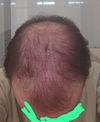
The user is treating hair loss with dermarolling, a laser helmet, scalp massages, and Nizoral. They stopped using minoxidil and finasteride and are considering pumpkin seed oil and sulforaphane.
A user shared their positive experience with PRP and stem cell treatment for hair loss, noting it nearly stopped their hair loss after previous use of finasteride and minoxidil. Another user mentioned PRP helped maintain their hair, though its effectiveness decreased over time, and they experienced side effects from dutasteride.
The conversation discusses the synthesis and potential use of JXL069 and PP405 for hair loss treatment, with skepticism about their effectiveness and concerns about safety. Users mention that JXL069 has shown no results in hair growth, and there is confusion about its identity and effectiveness compared to PP405.
PP405 is expected to finish Phase 2 trials in late 2025, with potential market availability around 2028-2029 if all goes well. Current treatments like finasteride and minoxidil are still popular, while new options like KX-826 and Breezula are anticipated soon.
A hair restoration case involved injecting four different doses of Verteporfin into the mid scalp and using Scalp MicroPigmentation (SMP) around the extraction areas. Photos were taken and an update will be shared soon.
Peptides like GHK-Cu, BPC-157, and TB-500 have significantly reduced hair loss, with GHK-Cu being particularly effective. The discussion also covers the high cost of these peptides and explores more affordable purchasing options.
SCUBE3 and Amplifica's progress in hair loss treatment is being discussed, with inquiries about their current status and clinical trials. No specific updates or new information are provided in the conversation.
The conversation discusses using verteporfin for hair regrowth and minimizing scarring after hair transplants. Some individuals plan to self-administer verteporfin, potentially in combination with microneedling, as an alternative to hair transplants.
The conversation questions the lack of feedback on the effectiveness of PGE2 and setipiprant for hair loss, despite their availability. The user is puzzled by the absence of reviews or results, whether positive or negative.
Recruitment for a verteporfin trial and a separate hair cloning trial using verteporfin and other methods is underway, with locations in Jordan, NYC, Beverly Hills, and Memphis. Dr. Bloxham is conducting the hair cloning trial, and interested participants are encouraged to contact him directly.
The conversation is about enhancing dermarolling for hair loss by using topical peptides like tb-500 or GHK-Cu to aid in healing and hair growth, and whether anyone has experienced significant results from this method.
Verteporfin is being explored for hair regeneration, with unofficial trials and updates shared online. Efforts are being made to encourage more surgeons to trial verteporfin for donor hair regeneration.
A user's father experienced hair regrowth and other health improvements after two IV exosome treatments. The user also had four rounds of exosome therapy, noting significant hair regrowth and relief from headaches, but no change in gray hair.
PP405 may help with hair regrowth, especially when combined with minoxidil and finasteride, but its long-term effectiveness is unclear. Phase 3 trials are expected to begin soon, with results in a few years.
Verteporfin and FAK inhibitors being looked at as potential treatments for hair regeneration, with updates on the unofficial off-label human trial being discussed.
PP405 shows potential for hair growth by increasing terminal hair and converting vellus hairs, but results are modest and more waiting is needed. It complements existing treatments like minoxidil and finasteride, but won't replace them.
The user shared a 4-month update on their hair regrowth journey using finasteride, minoxidil, and microneedling, reporting significant progress and styling ability. They emphasized persistence, shared their regimen details, and addressed side effects like weaker erections and blurry vision, which improved with lifestyle changes.
PP405 is seen as promising but uncertain, with users advised to continue using existing treatments like minoxidil and finasteride. Concerns include its cost, availability, and interaction with hair transplants, while some hope it could complement current treatments.
The phase 3 trial results for Pyrilutamide showed no significant difference from the control treatment in increasing hair count, leading to the company halting its development. Users discussed their disappointment and skepticism about hair loss treatments, with some mentioning other treatments like Minoxidil, Finasteride, and RU58841.
The user is using a hair regrowth treatment plan that includes finasteride, microneedling, minoxidil foam, ketoconazole shampoo, and piroctone olamine shampoo. They are seeking advice on the effectiveness of their regimen and dosage of finasteride, and are curious about others' experiences with piroctone olamine.
User discusses using C60 serum with microneedling at 1.75mm and asks if it's safe. Current routine includes daily Pyril on temples, weekly microneedling, and C60 serum on non-Pyril days.
PP405, a promising hair loss treatment, is expected to be available by 2027, with faster trials due to its topical nature. Users are eager for its release, comparing it to existing treatments like minoxidil and finasteride, but remain cautious about its long-term effectiveness.
Pelage Pharmaceuticals received $120 million in Series B funding for hair loss treatment development. The conversation expresses excitement and anticipation for the release and effectiveness of the treatment.
New hair loss treatments like PP-405, AMP-303, and SCUBE3 are being discussed, but none are confirmed to fully restore hairlines. Current treatments like Minoxidil, Finasteride, and RU58841 are still widely used, with some hope for future advancements in hair regrowth.
Hair follicles are mostly dormant but can be reactivated with treatments like minoxidil, finasteride, and microneedling. A new drug, PP405, shows promise for hair regrowth but may not be available until 2027-2028.