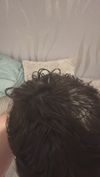
The conversation is about a user's four-month progress using topical minoxidil for hair loss, with discussions on potential future use of finasteride and natural DHT blockers like saw palmetto and spearmint tea. The user is cautious about oral medications due to past side effects and is exploring natural alternatives.
A 23-year-old plans a hair transplant and uses finasteride, Essengen 6 Plus, ketoconazole shampoo, dermarolling, vitamins, and Foligain capsules. He seeks advice on his regimen and the timing of the procedure, considering family history and potential future hair loss.
A user's positive experience with finasteride for hair loss treatment over two months, noticing less visible scalp after haircuts. The user also used a derma roller occasionally but did not use minoxidil.
Shedding stopped for a user after trying various hair loss treatments without success, including Propecia and Minoxidil. The improvement occurred after starting CB (possibly a hair loss treatment), Eucapil, natural sprays with rosemary and cloves, and regular sauna visits.
People often notice and analyze others' hairlines due to their own insecurities about hair loss. Treatments mentioned include finasteride, minoxidil, dutasteride, and red light therapy.
Pyrilutamide, a new drug being tested to combat hair loss that has been found to perform comparably or better than finasteride and dutasteride in the initial 6 months of treatment with minimal reported side effects.
The user had a hair transplant in 2020 and later learned they needed to continue medication for hair loss. They shared a 5-month timelapse video of their hair regrowth using topical finasteride/minoxidil, microneedling every 3 weeks, and ketoconazole.
A 20-year-old male with a high hairline seeks advice on potential hair loss, noting a family history that typically doesn't progress beyond Norwood 2. A user suggests it appears to be a mature hairline rather than hair loss and advises monitoring for changes.
PP405 and GT20029 are new hair loss treatments with different mechanisms from traditional options like Minoxidil and Finasteride. PP405 targets hair follicle stem cells to reactivate growth, while GT20029 works as an androgen receptor deleter, both requiring ongoing use for effectiveness.
The user is using finasteride and minoxidil for hair loss but is looking for new treatments. Pyrilutamide and GT20029 are potential future treatments, with Pyrilutamide expected next year and GT20029 possibly by 2027.
The user is experiencing irritation from using PG with RU58841 and is seeking alternative solutions like K&B in the UK. They report redness, itchiness, and flaky skin from the current treatment.
A woman experiencing severe hair loss since age 20 is seeking advice on hair transplants for women. Minoxidil hasn't worked for her, and she's considering shaving her head or getting a wig.
A user bought questionable RU58841 powder from AliExpress and seeks a way to test its composition in Europe. Another user suggests using Janoshik for testing.
A 25-year-old male is experiencing advanced hair loss and is using topical and oral minoxidil, topical finasteride, and vitamin D3, but has not seen significant regrowth. He is considering switching treatments, including oral dutasteride, topical spironolactone, and possibly a scalp biopsy to better understand his condition.
RU58841, a potential hair loss treatment, was not commercialized due to marketability issues and lack of long-term safety data. Concerns about its formulation and delivery methods further complicate its use.
The user showed a 4-month hair loss treatment progress using topical finasteride with minoxidil, Redensyl, Procapil, Capixyl, ketoconazole shampoo, and occasional microneedling. They took consistent progress photos under the same conditions.
A user diluted a Hims spray with Kirkland's minoxidil to lower finasteride concentration and has been applying it for nearly 3 months, noticing baby hairs at the temples. They also use a dermastamp, saw palmetto, and biotin supplements, and are seeking advice on their hair loss stage.
The user experiencing diffuse hair loss is using various treatments including RU58841, finasteride, minoxidil with tretinoin, anti-hair loss shampoo, and microneedling, and is considering adding peptides TB500, BPC157, and GHK-Cu. They have low growth hormone levels and are questioning its impact on hair loss, while another user suggests androgenic alopecia and androgens are likely the main cause of hair loss.
The conversation discusses the safety, tolerability, and efficacy of oral Setipiprant tablets for treating androgenetic alopecia compared to finasteride. It mentions the high cost of Setipiprant on the black market and the trial's end date in September 2017.
The user is considering starting finasteride for hair loss but is concerned about potential side effects due to their estradiol levels being near the upper limit. They have consulted a doctor who confirmed their levels are okay to start the treatment.
The user experienced scalp irritation from a Finasteride and Minoxidil spray and serum. They are considering switching to foam, oral treatments, or another provider.
A 37-year-old male stopped using finasteride and minoxidil due to side effects and switched to derma rolling, scalp massaging, and Revita shampoo, resulting in thicker, healthier hair with new growth. Users discuss the effectiveness of mechanical scalp stimulation, with some sharing similar positive experiences and others expressing skepticism.
A user is trying 2-deoxy-D-ribose with distilled water for hair growth, observing new hair and skin pigmentation changes. Others compare it to Minoxidil, expressing interest and caution about its effectiveness and safety.
The conversation discusses hair regrowth progress from Norwood scale 4 to 2.5 over a year using daily 8.5-9% RU58841, topical Dutasteride 0.1%, RU58841 5% 1.5 times a week, and daily caffeine redensyl scalp treatment.
A 32-year-old male started taking 0.5mg of finasteride daily for hair thinning and, after 8 weeks, experienced a 70% reduction in DHT and an increase in estradiol; he is currently in the shedding phase of treatment and questioning if the dosage is correct based on his DHT levels. He began with a lower dose due to already low normal testosterone and DHT levels.
The conversation discusses verteporfin as a potential hair loss treatment and questions why more precise methods aren't used to test its effectiveness in regrowing hair. Some users believe verteporfin is promising and should receive more attention, while others are skeptical about the testing methods.
Hair loss, DHT and bloodflow with Andrew Huberman; the discussion includes opinions about supplements, finasteride, minoxidil, turmeric, coffee and botox injections for hair loss.
Significant hair regrowth was achieved using EssenGen 6-Plus with 6% minoxidil and 0.05% finasteride, along with Nizoral shampoo, over 12 weeks. No side effects were experienced, highlighting the benefits of a low dose.
A user shared their hair regrowth progress using Dutasteride, topical Minoxidil, Spironolactone, and Estradiol Valerate injections as part of hormone replacement therapy for transitioning. They experienced significant hair improvement and personal satisfaction but caution against this approach for non-transitioning individuals due to irreversible changes.