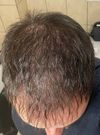
PP405 is a potential hair loss treatment, but its safety and effectiveness are uncertain. Users advise caution and suggest waiting for more data before purchasing unverified versions.
User experienced hair loss after surgery and was diagnosed with TE. The doctor recommended PRP therapy, Finasteride, Anatrix pro Hair Serum, a multivitamin, and a lotion and shampoo containing Zinc Pyrithione.
The conversation discusses hair loss treatments, with the original poster considering joining a clinical trial for setipiprant after experiencing side effects from finasteride and disinterest in minoxidil. Some users express skepticism about setipiprant's effectiveness, while others encourage participation in the trial for potential benefits.
Pyrilutamide is considered by some as an alternative for those avoiding 5AR inhibitors like finasteride and dutasteride, but opinions on its effectiveness vary. Some users report similar results with fluridil and pyrilutamide, while others find pyrilutamide less effective compared to prescription treatments.
User asks if spironolactone can stack with finasteride and pyrilutamide for hair loss treatment. They question why spironolactone is associated with feminizing effects, while RU/pyri/fluridil, which work similarly, are not.
DHT may inhibit hair growth by affecting mitochondrial function, leading to hair follicle miniaturization. Treatments like minoxidil and PP405 may promote hair growth by altering metabolic pathways, potentially counteracting DHT's effects.
Minoxidil with alcohol and propylene glycol was more effective than non-alcohol versions, and RU58841 worked best in a non-water-based solution. Oral finasteride showed better results than topical, despite side effects; microneedling and tretinoin worsened hair loss, and PRP was only helpful when younger.
The user cannot tolerate oral finasteride and is considering topical finasteride, minoxidil, microneedling, and RU58841 as alternative treatments for hair loss. They seek advice on whether these options are worth trying.
The conversation is about using pyrilutamide and RU58841 as topical solutions to prevent hair loss. Pyrilutamide is considered safer but less potent than RU58841, which some users find effective despite potential side effects like heart palpitations.
A user is experiencing genetic hair loss and is using spironolactone and minoxidil without success. They are considering switching to vegan protein powder due to digestive issues and are concerned if it will worsen hair loss.
The user is experiencing intense hair shedding all over the scalp after applying pyrilutamide to the hairline and taking oral castor oil. They are also using topical finasteride and latanoprost, but are unsure which treatment is causing the shedding.
The conversation is about the effectiveness of topical azelaic acid in blocking DHT for hair loss treatment. Specific treatments discussed include Minoxidil, finasteride, and RU58841.
The conversation discusses a new model for understanding androgenetic alopecia (AGA), linking it to dietary and lifestyle factors similar to PCOS, and highlighting the role of DHT, vascular damage, and inflammation. Treatments mentioned include Minoxidil, finasteride, and RU58841.
Finasteride and Dutasteride do not cause depression or "Post Finasteride Syndrome," with concerns often linked to the nocebo effect and preexisting mental health issues. The EU is unlikely to ban these drugs, but access may become more restricted due to ongoing debates.
The user is exploring alternatives to finasteride and dutasteride due to concerns about side effects, and is using rosemary and jojoba oil, ketoconazole, minoxidil, microneedling, multi-peptide serum, saw palmetto, and stinging nettle for hair loss. They are also considering CB 03 01 and spironolactone.
User discusses group buy for finerenone, a third-gen mineralocorticoid antagonist for hair loss treatment. Finerenone inhibits TGFb, NOX, and ROS, and improves renal and cardiac function; topical dose should be no more than 10mg per day.
PP405 is progressing to Phase 2b trials, with results expected in late 2025 or early 2026, and potential Phase 3 trials in 2026. Some users experienced side effects from finasteride and are hopeful for PP405 as an alternative treatment.
The drugs RU-58841, Pyrilutamide (KX-826), Apalutamide, Enzalutamide, and Darolutamide, which are nonsteroidal antiandrogens (NSAA), potentially impacting male fertility. Pyrilutamide, similar to Enzalutamide, may have reversible effects on fertility.
The user successfully managed hair regrowth by using a combination of finasteride, dutasteride, minoxidil, and specific shampoos to treat seborrheic dermatitis. They emphasize the importance of maintaining a healthy scalp and are considering food intolerance tests to further address inflammation.
Topical pirfenidone is highlighted as an effective anti-inflammatory and anti-fibrotic treatment for hair loss, particularly in addressing perifollicular fibrosis, which may enhance the effectiveness of standard treatments like finasteride and minoxidil. The user also uses calcipotriol, MCT oil, ciclopirox shampoo, and benzoyl peroxide shampoo as part of their regimen.
GHK-Cu is a potent inhibitor of the type 1 5-alpha reductase enzyme in hair follicles, which may reduce hair loss without the side effects associated with type 2 5-alpha reductase inhibitors. The user previously experienced side effects with 5-alpha reductase inhibitors and is considering GHK-Cu as an alternative.
Users discuss alternatives to DHT blockers for hair loss, suggesting minoxidil, microneedling, natural DHT blockers, and scalp massages. Some explore RU58841, ketoconazole, hair transplants, and hair systems due to side effects from finasteride and dutasteride.
The user is using 0.1% dutasteride, 1% minoxidil with 2% procapil and 0.005% caffeine in the morning, and 1% minoxidil with 2% procapil and 0.01% tretinoin at night. They are concerned about the solution vehicle's effectiveness in preventing systemic absorption and ensuring the products stay around the hair follicles.
The user has been using finasteride, minoxidil, and a derma stamp for 3 months with significant improvement. They are now adding ketoconazole to their routine.
People are discussing hair loss treatments, including pyrilutamide, minoxidil, dutasteride, alfatradiol, and bimatoprost. Users share their experiences and side effects, noting that pyrilutamide is considered more effective and safer than RU58841.
The conversation discusses hair loss treatments, specifically Setipiprant, finasteride, and bimatoprost. Setipiprant is suggested for maintenance, while bimatoprost is for regrowth, and combining them with dermarolling is recommended for better results.
Finasteride may seem less effective over time due to increased DHT sensitivity or aging, but it still suppresses DHT. Switching to dutasteride offers stronger DHT suppression but may increase estrogen levels.