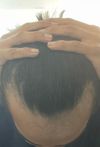
The user experienced noticeable hair regrowth after one year using finasteride and minoxidil, with improvements seen around 5-6 months. They report no side effects and use liquid minoxidil twice daily.
Dairy may contain DHT precursors that could affect hair loss and prostate health, with some users noting reduced hair shedding after eliminating dairy. Individual responses to dairy and DHT blockers vary, with some attributing hair health to diet changes and others seeing no impact.
High-dose Lysine and Histidine supplements caused curly/kinky hair and shedding due to Elastin dysfunction. Minoxidil, white tea, and dark grape juice were mentioned as treatments to inhibit Elastase and mimic Lysyl Oxidase.
PP405 is a promising experimental topical treatment for alopecia that reactivates dormant hair follicles by targeting cellular energy, with large-scale trials planned for 2026. While it shows potential, it cannot regenerate permanently destroyed follicles, making hair transplants the only guaranteed solution for advanced baldness currently.
A 19-year-old male experiencing hair loss is seeking advice on managing it without sexual side effects. He has used topical minoxidil and finasteride but experienced side effects, and is considering lifestyle changes to help slow hair loss.
A 42-year-old male has reached a plateau in hair regrowth after 8 months using Dutasteride, Minoxidil, a dermaroller, and Ketoconazole. Suggestions include continuing treatment, considering a hair transplant, and improving nutrition.
Finasteride, Minoxidil, a laser helmet, and ketoconazole shampoo were used to improve hair health and manage hair loss. A gentle scalp care routine is emphasized for better results.
The conversation is about a user seeking feedback on hair regrowth progress after two months of using finasteride, minoxidil, ketoconazole shampoo, dermastamping, and iron supplements. Most responses suggest that two months is too early to see significant results and recommend patience, with noticeable changes typically occurring around 4-6 months.
A 33-year-old man is experiencing positive hair regrowth after 3 months on 1mg finasteride, 2 months on 5% minoxidil, and 1.5 months of derma rolling. He is hopeful for further progress and considering additional treatments like dutasteride and microneedling.
The user is using dutasteride, finasteride, and RU58841 for hair loss but is allergic to minoxidil. Suggestions include dropping finasteride, increasing dutasteride dosage, and considering alternatives like microneedling, laser treatments, scalp massage, and supplements.
The user started using 1.25 mg of finasteride and 1.25 mg of oral minoxidil, noticing some hair regrowth and thickening. They plan to continue the treatment for a year, with others suggesting patience and possibly adding topical treatments.
A 27-year-old experienced significant hair regrowth after a hair transplant with 4349 grafts, supported by minoxidil and finasteride, improving his confidence. He plans to update on further progress at 9–12 months.
Liver problems may reduce the effectiveness of oral minoxidil due to impaired SULT1A1 enzyme activity, which is crucial for converting minoxidil to its active form. This reduction in enzyme function can significantly decrease the drug's effectiveness in promoting hair growth.
A 19-year-old experiencing hair loss despite using minoxidil and finasteride for three months, with no family history of baldness except for maternal grandfather. The user is advised to continue the treatment for Androgenic Alopecia and not rely on home remedies.
A user shared their 6-month progress using finasteride for hair loss, reporting significant improvement without side effects. They previously used saw palmetto and currently take omega-3, curcumin, and vitamin D supplements.
A 24-year-old woman with AGA and TE since age 14 is questioning if her hair is regrowing or breaking. She has been using minoxidil consistently since September 2025, along with caffeine and ketoconazole shampoos, rosemary oil, and saw palmetto, and has improved her overall hair care routine.
The user has been experiencing hair thinning despite taking finasteride and minoxidil for six months. Bloodwork suggests a vitamin D deficiency, and users recommend consulting a doctor and possibly supplementing vitamin D.
A 39-year-old user has been using topical 0.3% finasteride with 6% minoxidil for almost 7 months without seeing significant improvement in hair regrowth. They are considering switching to a gel with higher minoxidil concentration, adding retinoic acid, or trying topical dutasteride, while others suggest returning to 5% minoxidil foam, adding oral finasteride, or exploring microneedling and lifestyle changes.
GT20029 shows promising results for hair loss treatment, with potential approval in China by 2026 or 2027, but U.S. approval may take longer. It could serve as an alternative to finasteride, with a potentially better side effect profile.
The user experienced hair thickening and regrowth using dutasteride on alternate days, oral minoxidil every third day, and daily hair massages, but is dealing with dandruff and inflammation. They are considering adjusting their minoxidil dosage and have started using ketoconazole shampoo and cupping therapy for additional benefits.
The user has been using finasteride and topical minoxidil since 2020 with good initial results, but progress has stalled since 2024. They are considering switching to dutasteride and oral minoxidil for better results.
Oleic acid, microneedling, and emu oil are discussed as potential hair growth treatments, with some users expressing skepticism about their effectiveness. Minoxidil and finasteride are recommended as current reliable treatments until more proven solutions are available.
A 17-year-old experiencing hair loss, thinning, and white hair seeks advice on effective treatments. They have started using shampoo and conditioner but have not seen improvement and are open to product suggestions.
The user is dealing with early hair loss and is using a serum with Redensyl, multivitamins, and plans to add minoxidil. They seek advice on maintaining a positive mindset and improving hair health through lifestyle changes.
The user has been experiencing sudden and aggressive hair shedding despite using oral dutasteride and topical minoxidil for six years, and recently added topical finasteride without improvement. Possible causes discussed include stress-related hair loss, dietary changes, or high DHT sensitivity, with suggestions to consult a doctor and consider adjusting treatments.
The user is using finasteride 1mg every other day and seeks a topical solution excluding minoxidil. They are considering various combinations of ingredients like finasteride, dutasteride, and tofacitinib, with options for nourishing oils and other additives.
The user is using finasteride 1mg every other day and seeks a topical solution to complement it, excluding minoxidil. They are considering various combinations of ingredients like finasteride, dutasteride, and tofacitinib, with options for nourishing oils and other additives.
The user experienced significant hair regrowth using finasteride 1mg daily, minoxidil 5% twice a day, and microneedling 3-4 times a week. They reported no side effects from finasteride and are pleased with the results, feeling more confident and maintaining a new hair baseline.
The user has been using finasteride for 1 year and 7 months and oral minoxidil for 6 months, noticing peach fuzz that may turn into terminal hair. The user has experienced no side effects and is considering additional treatments like dermarolling and possibly increasing the minoxidil dose.
PP405 from Everychem is likely fake and potentially harmful, with concerns about its stability and the risk of using the wrong MPC inhibitor, which could damage hair follicles. The real PP405 was studied under strict conditions, and DIY attempts are discouraged due to unknown formulation and quality control.