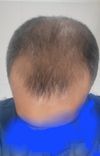
The user experienced reduced hair loss using an online serum but found it too expensive and is seeking a vendor for ptd-dbm. They are also interested in KY19382 but are unable to find it.
The conversation is about someone planning to start finasteride for hair loss and wanting to interpret pre-treatment blood panels to assess the risk of side effects like gynecomastia. They list various tests to measure hormone levels and other health indicators.
A peptide from Japanese water chestnut fruit may help with hair loss by suppressing DHT's effect on hair follicle cell death, potentially serving as a finasteride alternative. The treatment's effectiveness and safety in humans remain uncertain.
The conversation discusses using peptides BPC-157 and TB-500, combined with microneedling, to potentially enhance hair regrowth. The user plans to try BPC-157 due to its lower cost and reports of hair growth, despite limited human trials and concerns about side effects from other treatments like minoxidil and finasteride.
A 23-year-old male has been experiencing hair loss since 2022 and has used minoxidil and dutasteride with reduced shedding but no hair regrowth. He is considering PRP with mesotherapy and red light therapy, GFC, or exosomes, with a preference for exosomes due to efficiency and a reputable clinic.
The user plans to test for DHT, total testosterone, free testosterone, E2, SHBG, and prolactin while supplementing with vitamin D and monitoring ferritin levels. They are experiencing hairline thinning and are seeking advice on whether their approach is excessive or lacking.
The clinic diagnosed the user with NW3 and AGA, noting thinning hair despite using finasteride for 3 years, and suggested PRP and Mesotherapy before considering a transplant. The user questions the necessity of these treatments without confirming retrograde alopecia and its treatability.
GT20029 and CosmeRNA are both potential hair loss treatments; GT20029 breaks down the androgen receptor, while CosmeRNA prevents its production. Continuous use is needed, but less frequently than current treatments like Minoxidil and Finasteride.
A user shared their positive experience with Trichogenics for hair restoration, highlighting their unique zigzag hairline technique and personalized attention. They had 1700 follicles transplanted and praised the natural results.
A dermatologist prescribed methionine with vitamins for hair loss, but the user is doubtful and plans to seek finasteride in France. The user is unsure why finasteride or minoxidil wasn't prescribed, suspecting concerns about side effects or strength.
PP405 is a new hair loss treatment targeting dormant hair follicles, with ongoing trials. Some users consider stopping finasteride and minoxidil to join trials, while others doubt its effectiveness.
The user has been using finasteride, dutasteride, and minoxidil without success and is considering a comprehensive blood test to explore other causes of hair loss. They are unsure about the necessity and cost of the extensive tests and are seeking advice on whether to proceed with the full panel or focus on specific tests.
Genetic variations influence how people respond to dutasteride for hair loss, with some benefiting more from finasteride. Dutasteride is effective for most, but genetic differences may cause it to be less effective for some.
Probiotics like L. reuteri ATCC PTA 6475 and B. longum BB536 may improve hair growth and density by reducing inflammation and reversing DHT damage. The user is trialing these probiotics personally, ordering them from the U.S. to Canada, and plans to continue if no adverse effects occur.
PP405 is a potential hair loss treatment that inhibits mitochondrial pyruvate carriers, increasing lactate dehydrogenase activity and stimulating hair follicle stem cells. In a phase 1 trial, 31% of participants showed over 20% hair density increase with PP405 treatment.
A 31-year-old experiencing rapid hair loss is considering whether to shave their head or use treatments. They were prescribed B12, topical finasteride 0.1%, and minoxidil 10% but are unsure about the correct dosage and potential side effects.
PP405 is a potential hair loss treatment undergoing trials, with discussions on its effectiveness and comparison to existing treatments like finasteride and minoxidil. There is skepticism about its status as a cure, with hopes for future advancements in genetic treatments like CRISPR.
The conversation humorously discusses hair loss treatments, mentioning Minoxidil, finasteride, and RU58841. It jokingly suggests the creation of a new chemical called RU99999.
PP405 shows promise for hair regrowth by manipulating stem cell characteristics and lactate dehydrogenase, with Phase 2a trials pending. Google Ventures' $15M investment suggests confidence, but results and market availability remain uncertain.
Amplifica is testing a compound called AMP-303 for hair loss, but it's not Scube3 or osteopontin. The timing for the results from the clinical trial is unknown.
Exosomes combined with fractional picosecond laser treatment were effective in treating androgenetic alopecia and promoting repigmentation in white hair patches. The role of exosomes in hair repigmentation, particularly in conditions like poliosis, is not well-studied.
A 22-year-old female with AGA due to PCOS is using 5% minoxidil foam and 2mg finasteride daily, and is seeking advice on microneedling frequency and safety. Concerns about finasteride dosage and its effects on PCOS were discussed, with emphasis on trusting the prescribed treatment plan.
GT20029 is discussed as a potential treatment for androgenetic hair loss by targeting androgen receptors, unlike finasteride which reduces DHT broadly. Concerns include its effectiveness, genetic variations in androgen receptors, and availability, with some skepticism about its potential as a true alternative.
A quercetin-encapsulated and polydopamine-integrated nanosystem (PDA@QLipo) shows promise for treating androgenetic alopecia by reshaping the perifollicular microenvironment, outperforming minoxidil in hair regeneration. The nanosystem promotes cell proliferation, hair follicle renewal, and recovery by scavenging reactive oxygen species and enhancing neovascularity.
CRISPR Cas9 could potentially treat baldness by targeting specific genes in hair follicles without affecting other body functions. There is optimism about its future use, despite ethical concerns and the current reliance on treatments like minoxidil and finasteride.
Hopeful treatments for hair loss, including Verteporfin, Androgen Receptor Degradation, and SCUBE3. These treatments offer potential solutions to slow or stop the effects of androgens on the scalp.
Post Finasteride Syndrome (PFS) may result from epigenetic changes and gut microbiota alterations. Supplementing with Allopregnanolone might protect against these adverse effects.
A user proposed genetically engineering scalp stem cells to stop androgen receptors from causing hair loss. Others discussed the feasibility, existing research, and potential issues with this approach, including targeting the correct cells and unintended effects.
CRISPR shows promise for treating hair loss by targeting specific genes. Current treatments include Minoxidil and finasteride, but CRISPR could offer a more precise solution, though it is still expensive and in early stages.
Two Chinese suppliers provided legitimate RU58841, confirmed through a free drug testing service. The vendors were Shaanxi Greenyo Biotech and Lyphar, found on Made-in-China.