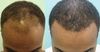
Transitioning from finasteride to dutasteride for hair loss, with suggestions to either slowly transition or frontload dutasteride. The user is also using minoxidil, nizoral, needling, and LLLT.
Microneedling for hair loss should avoid anti-inflammatory supplements like garlic, Vitamin E, fish oil, turmeric, and NSAIDs for 3 days before and 5 days after the procedure to enhance collagen production. Completely abstaining from these supplements may be unnecessary, but caution is advised around the procedure time.
The conversation is about a hair loss treatment protocol involving microneedling, finasteride, RU58841, minoxidil, ketoconazole shampoo, and a scalp massager with oils. Some users advise starting with fewer treatments like finasteride, minoxidil, and microneedling to avoid potential side effects.
The conversation discusses alternative and unorthodox hair loss treatments, including RU58841, nandrolone, and dianabol, as well as theoretical approaches involving high doses of estrogen and selective estrogen receptor modulators. These methods are considered extreme and potentially harmful but are explored for those unable to tolerate traditional 5-alpha reductase inhibitors.
The conversation is about a person's hair loss treatment routine, which includes Metformin, sleep in darkness, avoiding EMF at night, Nizoral, Dermarolling, Castor oil, and Collagen. They have observed less hair shedding and increased hair volume.
The user is addressing hair loss with scalp botox, scalp massage, nizoral shampoo, various vitamins and supplements, and natural nitric oxide boosters like citrulline malate and beetroot powder. They are also considering a mouthpiece to reduce snoring and improve sleep.
The user has been using a hair loss treatment protocol including topical dutasteride, minoxidil with tretinoin, ketoconazole shampoo, microneedling, a laser cap, and vitamin D for 15 weeks, showing impressive progress. Feedback suggests continuing medical therapy for 12-24 months before considering a hair transplant.
The user started using 1mg oral finasteride a year ago and added oral minoxidil 3-4 months ago, experiencing no side effects except initial aching. They found oral minoxidil more effective for regrowth and easier than topical due to its toxicity to dogs.
The user is using 5% Minoxidil, a 1 mm derma stamp, Vitamin D3, Zinc, and anti-dandruff shampoo for hair regrowth. They plan to consider DHT blockers like finasteride in the future.
A new hair loss protocol using FDA-approved topical treatments targets eight pathways, potentially improving results by 60-75% compared to the standard 40-50% from oral minoxidil and finasteride. The protocol includes minoxidil, finasteride, tacrolimus, cetirizine, bimatoprost, lithium gluconate, losartan, melatonin, NAC, caffeine, and tretinoin, with a monthly cost of $35-50 in Mexico and $80-150 in the US.
The conversation humorously suggests that drug use might be more effective for hair retention than traditional treatments like minoxidil or finasteride. It attributes full heads of hair in homeless individuals to lifestyle factors like reduced stress or hormonal changes.
A 22-year-old is using a hair loss treatment protocol including dutasteride, microneedling, 10% minoxidil, 0.1% finasteride topical, a healthy diet, and a hair multivitamin. Users discuss the effectiveness of microneedling and the intensity of the treatment.
A straightforward hair loss treatment involves using Minoxidil twice daily, microneedling weekly, and using silicone-free shampoo. Shaving the head can simplify the routine, and consistency is crucial for effectiveness.
The conversation discusses a hair loss protocol and compares it to using finasteride and minoxidil. It suggests that while the protocol includes some good advice, it may not surpass the effectiveness of established treatments like finasteride and minoxidil.
Combining microneedling and tretinoin with topical minoxidil involves discontinuing tretinoin a week before microneedling and resuming it a week after. Some people microneedle weekly, adjusting tretinoin use accordingly.
The user is using a combination of topical and oral treatments containing Finasteride and Minoxidil, along with supplements like Biotin, Saw Palmetto, and vitamins, to combat hair loss. They are also incorporating lifestyle changes such as a whole foods diet, exercise, and improved sleep to support their regimen.
The user changed their hair loss treatment to 5mg oral Minoxidil and 2.5mg Dutasteride daily, resulting in significant hair regrowth over two months. They also used Nizoral 2% Ketoconazole shampoo to improve scalp health.
A user shared a beard growth protocol involving hydration toner, azelaic acid, tretinoin, moisturizer, 5% topical minoxidil, and SPF 30+ sunscreen. The regimen spans a year to a year and a half, with specific application schedules for different phases.
The conversation discusses a hair regrowth protocol involving Dutasteride, Pyrilutamide, Stemoxydine, Minoxidil, Tretinoin, Oral Castor Oil, and L-Carnitine L-Tartrate. Some users are skeptical, particularly about the effectiveness and side effects of oral castor oil.
People discussed their intense hair loss treatments, including the use of dutasteride, RU58841, minoxidil, tretinoin, essential oils, microneedling, and various topical sprays. Some users reported success with these methods in preventing hair loss and stimulating hair growth.
The post is about a user's progress pictures of their hair loss over a span of 4.5 years. They did not use finasteride or minoxidil for their hair loss treatment.
The user is experiencing hair loss and plans to use a treatment protocol including Saw Palmetto Berries, MCT Oil, Zinc, testosterone balancers, L-tyrosine, and L-theanine. They also use a specific dandruff shampoo and are open to non-prescription treatments.
User tries dermapen for hair loss and plans to use non-mainstream topicals like c60, ghk-cu, and ptd-dbm with valproic acid. They also use a head massager and modified LLLT belt for additional treatment.
The conversation discusses a 4-month hair regrowth protocol that includes finasteride (1.25mg), RU58841, dermarolling, ketoconazole, minoxidil, peppermint oil, and fatty acids/oils. Progress pictures are shared to show the results of these treatments.
The user is using RU58841, finasteride, dutasteride, and minoxidil to slow down aggressive hair loss but is still experiencing hair shedding due to high testosterone levels. They plan to use ostarine to lower testosterone and prevent hair loss while maintaining muscle mass, and will continue using the other treatments.
A hair loss treatment protocol involving topical and oral medications such as Minoxidil, RU58841, Finasteride, Dutasteride, Melatonin, Zinc, Vitamin B6, NAC, Caffeine, Biotin, Ginseng, and Semen; other treatments including Microneedling, Laser Helmet, Nizoral shampoo, Scalp Massage and supplements like Vitamin C, Vitamin D, Fish Oil, and Biotin; and the potential side effects of using this protocol.
The user follows an intensive hair loss protocol including dutasteride, biotin, black tea, pumpkin seed oil, peppermint shampoo, rosemary conditioner, mukemame, soy milk, lycopene, garlic, magnesium, chamomile, spicy food, citrus bergamot, zinc, multivitamins, kefir, and Greek yogurt. They plan to alternate between pumpkin seed oil and safflower oil and will share before and after pictures.
User follows a hair loss protocol with topical finasteride, minoxidil, RU58841, stemoxydine, and microneedling. They plan to get a hair transplant at month 9 and ask for opinions on their progress.
User started hair loss treatment 3 months ago using topical fin, minoxidil, RU58841, stemoxydine, and microneedling. Others noticed improvement in mid and frontal scalp areas and suggested considering oral minoxidil.
Follica's preferred microneedling protocol for hair growth, which includes needle depth, frequency and movement parameters as well as the use of topical treatments such as minoxidil and finasteride.