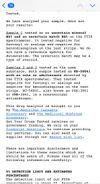
RU58841 powder from a lab supplier was tested at a free drug testing service. The discussion includes using Minoxidil and finasteride for hair loss treatment.
Diluting finasteride in a Hims spray can be done using ethanol or propylene glycol to maintain the desired concentration without increasing minoxidil levels. This approach ensures the finasteride concentration is reduced to 0.025% without affecting the minoxidil strength.
Hair loss treatments, specifically Pyrilutamide and Minoxidil/Finasteride/RU58841. Participants discussed their experiences with them and the results they have seen so far.
OP is using 5% minoxidil and a foligain supplement for hair loss, with blood test results showing high cortisol levels. OP is considering starting finasteride, while another user shares their experience with finasteride and hair loss challenges due to malabsorption issues.
Choosing between two hair loss treatments, with a preference for a higher concentration of RU58841 and 5% minoxidil, avoiding oils like castor and argan that may hinder absorption.
The user shared their 6-month progress using 0.25 mg finasteride, topical minoxidil, and dermastamping, noting good results but experiencing increased sleepiness. Another user suggested minoxidil might be causing the sleepiness, and the original poster considered adjusting their treatment.
The conversation is about finding non-alcoholic minoxidil options in India due to irritation from propylene glycol-based formulations. Suggestions include Tugain 5% foam, Morr Max 5%, minoxidil gel, and Morr F Aqua plus, with OP avoiding finasteride due to side effects.
The user experienced increased hair density after starting 1mg finasteride in February and 2.5mg oral minoxidil two months ago, along with 10mg biotin daily. They initially used topical minoxidil but switched to oral due to application difficulties and have seen improvements without significant side effects.
The post discusses a user's 6-month progress using topical finasteride (0.08%) and minoxidil (5%) once a day, combined with scalp micropigmentation (SMP). The user hopes for improved hair growth as they let their hair grow out.
The user reported positive feedback on hair appearance after switching from topical to oral minoxidil and finasteride, with no side effects. The treatment includes 1.1mg finasteride, 3mg minoxidil, biotin, and vitamins B5, B6, and C daily.
Alfatradiol is discussed as a weak 5ARI and estrogen, not as effective as minoxidil, RU58841, or CB-03-01, but a safe alternative for those who can't use finasteride. Users express frustration over the lack of strong FDA-approved topical antiandrogens for hair loss.
A user discusses a topical prescription for hair regrowth containing Minoxidil, Finasteride, and Latanoprost, noting Latanoprost's side effect of promoting eyelash and eyebrow growth. Others share experiences and information about Latanoprost, highlighting its origins as a glaucoma drug and potential side effects.
KX-826 failed Phase III trials due to high placebo effects, patient compliance issues, COVID-19 side effects, and detection method deviations. KX-826 is now marketed as a cosmetic and approved for combination with Minoxidil.
The conversation discusses hair loss and specific treatments like Minoxidil, Finasteride, and RU58841. It also highlights Procyanidin B-2 as a secret ingredient for hair growth.
The user is experiencing hair shedding after using minoxidil and is considering switching to dutasteride while planning to increase their oral minoxidil dose. They also use nicotine pouches, Vyvanse, and GHK-Cu, and have noticed thicker eyebrows and lashes from oral minoxidil.
PP405 may not need daily use like minoxidil, but finasteride might still be needed to maintain hair regrowth. PP405 reawakens dormant hair follicles, potentially offering a long-term solution, though not a permanent cure.
Latanoprost is discussed as a potential hair loss treatment, noted for its synergy with minoxidil and 5-AR inhibitors, but concerns include its effectiveness on scalp hair, cost, and potential skin darkening. Some users express interest in trying latanoprost or bimatoprost despite limited real-world evidence.
The user is using a hair regrowth treatment plan that includes finasteride, microneedling, minoxidil foam, ketoconazole shampoo, and piroctone olamine shampoo. They are seeking advice on the effectiveness of their regimen and dosage of finasteride, and are curious about others' experiences with piroctone olamine.
KX-826 Max combines KX-826, Kopyrrol, and Kopexil as a potential alternative to minoxidil and finasteride for hair loss, but users express skepticism about its effectiveness and high cost. Some users believe traditional treatments like minoxidil, finasteride, and others are more reliable.
PP405 shows promise for hair regrowth, with new hairs observed in 66% of patients in just 27 days. The discussion also mentions Minoxidil, finasteride, and RU58841 as potential treatments.
PP405 shows initial promise for treating androgenetic alopecia, with safety confirmed in early trials, but skepticism remains due to limited data. Further trials are needed to determine its true efficacy and potential market impact.
HMI 115 is being discussed as a potential hair loss treatment, with skepticism due to past disappointments like cosmeRNA, brezula, and pyrilutamide. The user is questioning if they should be hopeful for new developments in the next six years.
The user is seeking a quicker-drying carrier for RU58841 and Minoxidil to improve adherence to their hair loss treatment routine. They want to apply it after a morning shower without affecting their hair's appearance.
Mixing topical solutions like Morr F 10% (Minoxidil) and L'Oreal Seryoxyl (Stemoxydine) before application may not reduce their effectiveness. The goal is to apply treatments all at once instead of multiple times a day.
A user discusses using latanoprost, a costly treatment that may extend the hair growth phase and improve hair quality, wondering why it's not more popular. They already use a combination of finasteride and minoxidil and plan to incorporate latanoprost into their routine.
Minoxidil without propylene glycol is sought to avoid dermatitis, with Rogaine foam and Tecflox suggested as alternatives. Users discuss using foam to prevent irritation and suggest heating it for easier application.
The user is using a hair recovery treatment with 0.5 mg dutasteride, 5 mg biotin, 5% topical minoxidil, and dermarolling twice a week. They are considering using a 1.5 mm dermaroller and red light therapy.
Adding non-prescription topicals like alfatradiol and Zix to a standard fin/min/niz regimen may help with scalp inflammation and shedding, but their long-term effectiveness varies. Zix is recommended for reducing scalp inflammation and enhancing the effectiveness of other treatments.
Exploring different treatments for hair loss, such as cosmeRNA and HMI-115 which are small interference messenger RNA that inhibits the DHT receptor and an antibody that binds to the prolactin (PRL) receptor respectively; and researching mechanism and environment of hyperresponders.