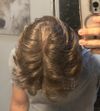
Hair loss may be linked to blood flow and inflammation, with treatments like Minoxidil, finasteride, and quercetin being discussed. The conversation also mentions the role of 5AR enzyme distribution in hair follicles.
The conversation discusses why CB-03-01, a potential hair loss treatment, isn't widely discussed despite evidence of its effectiveness and safety. Some users mention other treatments like melatonin, procianidin b2, and RU58841, debating their effectiveness and safety.
Breezula (cb-03-01) and kx-826 are discussed as hair loss treatments. Kx-826 is available on Kintor's website, while Breezula is available on the grey market.
The user is using a regimen of topical Minoxidil and Finasteride, oral Minoxidil, and a thickening shampoo and conditioner. They report no side effects except increased body hair, which they don't mind.
The conversation is about the release timeline for clinical trial results and the availability of Breezula, a hair loss treatment. The user is not comfortable buying it as a research drug from China.
A user noticed non-itchy, non-bleeding spots on their scalp while experiencing hair loss. Replies suggest the spots are likely sunspots or liver spots and recommend seeing a dermatologist; hair loss is attributed to male pattern baldness.
Fluridil may decrease the number of androgen receptors in hair follicles by up to 95%. This suggests a different action mechanism from other non-steroidal antiandrogens like RU58841, indicating they might be used together.
The effectiveness of pyrilutamide, a hair loss treatment, with research results being postponed until September. Various people shared their experiences with topical finasteride, minoxidil and RU58841, as well as other treatments such as dandruff shampoo, group buys and grey markets.
Dutasteride may reduce scalp oil and itchiness more effectively than finasteride, with some users experiencing drier skin and improved hair thickness. Users report varying results, with some noticing benefits after switching from finasteride to dutasteride, while others use a combination of treatments including minoxidil.
Pyrilutamide is being used effectively for hair loss with no side effects, and the user is seeking a cheaper bulk supplier. Users discuss the difficulty of finding affordable, trustworthy sources, with some suggesting potential suppliers.
The conversation is about adding a low dose of pyrilutamide to a hair loss treatment regimen. Specific treatments mentioned include Minoxidil, finasteride, and RU58841.
User experienced hair loss after surgery and was diagnosed with TE. The doctor recommended PRP therapy, Finasteride, Anatrix pro Hair Serum, a multivitamin, and a lotion and shampoo containing Zinc Pyrithione.
RU58841's potential side effects, particularly heart palpitations, are debated, with some attributing them to contamination with minoxidil. Users report mixed experiences, with some seeing no side effects and others cautioning about the lack of reliable data on RU58841's safety.
Setipiprant may help with hair maintenance but is not a guaranteed solution for everyone. Other treatments like minoxidil, finasteride, and topical spironolactone are discussed, with varying opinions on their effectiveness.
The conversation discusses using a hair wax containing propolis and Eruca sativa seed oil for hair growth. It also mentions treatments like Minoxidil, finasteride, and RU58841.
Hair density improved using topical dutasteride, minox, keto, and 3.5% fluridil for 6 months. Better results when hair is dry, but still unsatisfied when wet.
User's 2-month progress with hair loss treatment includes Ket 3x a week, Min 2x a day, Dut 0.5 every other day, Vit D 125mcg daily, and PRP once a month. Users discuss treatment effectiveness, side effects, and alternative solutions.
The conversation is about creating a natural hair loss topical using ingredients like cetirizine, Zinc Sulphate Heptahydrate, Safflower Extract, Ricinoleic Acid, and others. The user is seeking input and collaboration on this topical formula.
Using ketoconazole shampoo for seborrheic dermatitis is generally fine, but opinions vary on frequency, with some suggesting every other day and others less often. Proper scalp cleaning is emphasized to prevent itching and burning.
A user experienced a painful rash from both liquid and foam minoxidil, suggesting an allergy to minoxidil itself. They are seeking others with similar experiences.
Hair loss treatments discussed include cosmeRNA, minoxidil, finasteride, RU58841, and pyrilutamide. Users debate effectiveness, side effects, and upcoming treatments, with some expressing skepticism and others optimism.
The conversation discusses hair loss treatments for a woman experiencing androgenetic alopecia and seborrheic dermatitis, with suggestions including low-dose oral minoxidil, dutasteride, and hormone replacement therapy. The user is seeking advice due to intolerance to spironolactone and topical minoxidil, and concerns about low testosterone and DHT levels.
Pyrilutamide did not show effectiveness in regrowing hair compared to a placebo, but it may still help maintain existing hair by preventing DHT from causing follicle miniaturization. Some users believe it could be beneficial when used with other treatments like minoxidil, finasteride, and dutasteride.
Hair loss treatment with latanoprost, minoxidil, and biotin showed progress. Latanoprost, a glaucoma drug, stimulates anagen phase and increases conversion of vellus hair to terminal hair.
A 23-year-old is experiencing hair thinning at the crown and mid part, possibly due to vaping, and is using minoxidil, derma rolling, PRGF sessions, rosemary oil, ketoconazole shampoo, and vitamin D3 supplements. They are considering adding finasteride but are concerned about its side effects.
The conversation discusses using tretinoin for hair loss and whether applying SPF on the scalp is necessary if hair covers the treated areas. The user is considering this treatment despite having no completely bald patches.