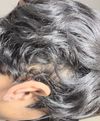
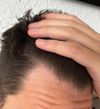
The user seeks alternatives to Propylene Glycol (PG) for delivering topical finasteride due to scalp irritation. They consider using Propanediol 1,3 and ask for other suggestions.
Microneedling can cause skin shedding and inflammation, with some users adjusting needle size or frequency to reduce these effects. Some users combine microneedling with treatments like minoxidil, while others prefer smaller needles or alternative treatments like dutasteride.
A woman is frustrated with her hair loss and the slow, ineffective healthcare system in Canada. She has tried treatments like minoxidil, doxycycline, and kenalog injections, but continues to experience painful inflammation and hair loss.
The conversation discusses the progress of Clascoterone (Breezula) for hair loss treatment, noting that COVID-19 delayed female trials by three months but Phase III trials for males are proceeding with a Special Protocol Assessment filed with the FDA. Users express hope for Breezula as an alternative to existing treatments like finasteride and minoxidil, despite concerns about its potential high cost.
The conversation discusses a new study on topical pumpkin seed oil for hair loss in mice. Treatments mentioned include Minoxidil, finasteride, and RU58841.
The conversation discusses struggles with diffuse thinning and hair loss treatments, including the use of dutasteride, minoxidil, and finasteride, with limited success. The original poster regrets having a hair transplant at 21 due to weak donor hair and ongoing thinning.
PRP treatment for hair loss shows some evidence of effectiveness, with HT surgeons using it post-op to promote growth. Microneedling is mentioned as a cheaper alternative.
A human trial involving verteporfin for hair regeneration, with the results showing some regrowth of 1-2 hairs in an area where a follicular unit was extracted. The conversation also suggested that future studies should involve higher doses and more frequent injections.
The conversation is about the potential risk of permanent hair loss from PRP (platelet rich plasma) treatments and whether PRF (platelet rich fibrin) carries the same risk. The user is seeking information on this topic.
Astaxanthin may cause increased hair shedding, affecting even transplanted hair and eyebrows. The user has tried various treatments for androgenic alopecia, including minoxidil, finasteride, and RU58841.
Hair loss treatment with Pyrilutamide, Minoxidil, and Finasteride showed improvement after 4 months. Shedding reduced, hair feels stronger and healthier, with no side effects.
The conversation discusses the effectiveness of a hair loss treatment called CB (Breezula) in comparison to Pyrilutamide, and its potential when combined with Finasteride. There is uncertainty about when or if phase 3 trials for Breezula will begin.
The user is experiencing hair loss and has been using RU58841 but is considering pyrilutamide and minoxidil, avoiding finasteride due to side effects. Another user suggests finasteride or dutasteride as essential, possibly in topical form, while dismissing saw palmetto as ineffective.
The post discusses the effectiveness of pyrilutamide for hair loss. The user maintains hair with alfatrodial, fluridil, minoxidil, and keto shampoo but is seeking a simpler and cheaper alternative.
The user is experiencing significant hair shedding after starting RU58841, despite using dutasteride and oral minoxidil for over a year without stabilization. Others suggest continuing the treatment as shedding can be a normal phase, but caution that RU58841 is unpredictable.
Hair cloning and new treatments like ET-02, Veradermics (vdphl01), and wound-induced hair neogenesis show promise but are not yet widely available. Current effective treatments include minoxidil, finasteride, and dutasteride, with early intervention being crucial for better outcomes.
The user treated seborrheic dermatitis by cutting sugar, improving sleep, using four different shampoos, and occasionally using steroids. Their hair is growing back thicker and new hair is appearing.
The user reports some hair regrowth after two months of using 1.5mm microneedling with Minoxidil and Nizoral shampoo. They note reduced pain and skin flaking, attributing changes to skin thickening and collagen induction.
The conversation discusses scalp issues and hair loss, with treatments like Accutane, Nizoral, and H&S being used. Suggestions include considering finasteride, minoxidil, and jojoba oil, with caution advised for the latter.
A user shared their 12-month progress using 0.5% Pyrilutamide once daily, 0.025% topical finasteride once daily, 5% Minoxidil twice daily, and microneedling 3 times a week. They reported good progress but noted a slowdown in recent months, hoping for thicker hair soon.
A user in their early 20s is concerned about minor hair thinning and is considering a hair loss regimen involving PRP sessions, mesotherapy with dutasteride injections, and low-dose finasteride. They dislike minoxidil due to its greasiness and prefer a routine that is easy to maintain.
Switching from liquid to foam Minoxidil to avoid scalp irritation, with a method to melt the foam for easier application. Users discuss alternatives and personal experiences with Minoxidil, including issues with propylene glycol and different application methods.
User experienced slow gains with topical fin+min, switched to topical dut+min, and considered adding Eucapil. Another user suggested DUT may be less effective topically due to high molar mass and mentioned Fluridil as a weak anti-androgen that could help.
The user is experiencing aggressive diffuse thinning despite using 1mg oral finasteride daily, topical minoxidil twice, microneedling, and Nizoral for seborrheic dermatitis. They are considering switching to dutasteride or RU58841 but are advised to seek a second opinion to determine the cause of hair loss.
A user with long-term hair loss has been using topical minoxidil, finasteride, RU58841, ketoconazole, and dermastamping for 8 months. They are unsure if the new hairs are miniaturized or vellus.