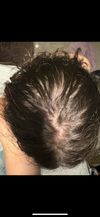
The conversation is about the potential side effects of using verteporfin in conjunction with a hair transplant. Specific treatments discussed include verteporfin, a hair transplant (HT), minoxidil (Min), finasteride (Fin), and RU58841 (RU).
The conversation discusses managing seborrheic dermatitis (sebderm) and male pattern baldness (MPB) with treatments like finasteride, coal tar shampoo, Nizoral, and oral minoxidil. Users suggest dietary changes, regular shampooing, and using antifungal products to control sebderm before considering minoxidil.
The user had a detailed 3.5-hour consultation with Dr. Zarev for hair loss treatment, praising his meticulous approach and innovative techniques, and was prescribed topical finasteride and minoxidil. Other users agreed on Zarev's expertise, noting his long waiting list and the high quality of his work, with one surgery per week and a focus on individual patient care.
RU58841, an anti-androgenic compound, showed early promise for treating alopecia but faced challenges after its patent in 1997. Despite advancing to Phase II trials, safety concerns and financial struggles led Aventis to abandon its development. Proskelia, which later merged into ProStrakan, couldn't prioritize the drug, leading to its eventual stagnation and failure to reach the market.
A user shared their experience with scalp micropigmentation (SMP) after one year. They discussed using Minoxidil, finasteride, and RU58841 as treatments for hair loss.
Scientists at UCLA have developed a promising treatment for male pattern baldness using a molecule called PP405, which can potentially stimulate dormant hair follicles. Initial trials showed significant results within a week, but larger clinical trials are needed to confirm its efficacy and safety.
The user successfully managed hair regrowth by using a combination of finasteride, dutasteride, minoxidil, and specific shampoos to treat seborrheic dermatitis. They emphasize the importance of maintaining a healthy scalp and are considering food intolerance tests to further address inflammation.
A user had a disappointing dermatologist appointment where they were denied prescriptions for Dutasteride and oral Minoxidil for hair loss and were only offered a hair transplant referral. Other users sympathized, discussed self-medication, and suggested consulting a transplant doctor for up-to-date treatments.
The user is considering using P5P to reduce high prolactin levels and is questioning if oral minoxidil could be contributing to the issue. They are also debating whether to switch from oral to topical minoxidil.
The conversation discusses the use of Verteporfin in hair loss treatment. It suggests that Verteporfin could potentially regenerate hair follicles instead of forming scars, providing an unlimited donor supply for hair transplants.
Young men experiencing early hair loss and discussing treatments like Minoxidil, finasteride, and RU58841. Many share feelings of frustration and coping strategies, with some finding solace in treatments and mindset shifts.
Hair loss treatments, specifically Pyrilutamide and Minoxidil/Finasteride/RU58841. Participants discussed their experiences with them and the results they have seen so far.
Hmi115, a prolactin receptor blocker, showed promise for hair growth, but results from Phase 2 trials have not been published. ABS-201, an AI-based analog, is expected to begin trials in December 2025, while commercialization of treatments like PP-405 is anticipated around 2027.
The conversation discusses hair loss treatments, specifically mentioning pyrilutamide, minoxidil, and finasteride. The consensus suggests starting treatment early, with finasteride being a preferred option.
The user experienced a slight decrease in hair shedding and scalp itch, and reduced sebum production using Pyrilutamide, but stopped due to chest pain, breathing difficulties, and heart issues. They felt normal a week after discontinuing and doubted FDA approval for the drug.
The user is seeking a way to obtain 5mg finasteride in Germany, as local dermatologists refuse to prescribe it. They are considering online options but have only found 1mg pills available.
The user shares their experience with hair loss treatments, including oral finasteride, oral minoxidil, and a topical lotion for dandruff, expressing dissatisfaction with past treatments like PRP and hair transplants. They seek advice on a DNA test to determine suitable medications and express frustration with dermatologists' advice.
A user shared their positive experience with finasteride and a 1000 FUE hair transplant for the frontal region, noting significant improvement in the crown area with medication alone. They emphasized patience with finasteride, as results vary from person to person.
A user visited a dermatologist for hair loss and was prescribed Minoxidil without a physical examination, leading to skepticism about the thoroughness of the appointment. The user is considering seeking a second opinion due to the lack of tests or physical checks.
The user experienced a significant drop in libido and energy after taking saw palmetto, which they believe caused these changes. They are seeking advice and reassurance, with some users suggesting that the effects may not be permanent and could improve over time with a healthy lifestyle.
The conversation discusses hair loss treatments, specifically the progress made with Pyrilutamide over 15 months. One person suggests using oral Minoxidil or Dutasteride, but another mentions experiencing negative side effects from oral Finasteride.
The conversation discusses the effectiveness of official and gray market Pyrilutamide for hair loss. One user experienced chest pain with the gray market version, while another found the official Koshine version mildly effective.
The conversation discusses a personal theory on the role of DHT in stress and reproduction, suggesting it converts testosterone for reproductive traits. The discussion includes skepticism and mentions individual differences in physiology and neurochemistry.
Hair loss discussion includes treatments Minoxidil, Finasteride, and RU58841. HMI 115 shows anecdotal success in Phase I trial, users seek group buy for research chemical.
The conversation discusses Fevipiprant, an asthma drug that may block CRTH2 and potentially stop male pattern baldness (MPB) without inhibiting DHT. It also mentions the use of finasteride and dutasteride for hair loss.
The user observed that stopping nicotine and caffeine improved their scalp health while using oral finasteride. However, relapsing with caffeine and nicotine caused scalp tightness and inflammation.
Pelage Pharmaceutical raised $120 million to continue research on PP405, a promising hair loss treatment that showed a 20% increase in hair density in 31% of men during a Phase 2a trial. The treatment was well-tolerated, with no systemic absorption, and Phase 3 trials are planned for 2026.
The conversation discusses Kintor's initiation of a new Phase 3 trial to assess the long-term safety of Pyrilutamide (KX-826) for hair loss, which will last 52 weeks. Specific treatments mentioned include Pyrilutamide.