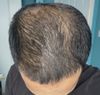
A 25-year-old is using vinpocetine to enhance the absorption of topical Minoxidil for hair loss. They also use a hair tonic and supplement with Glycine, Taurine, Creatine, and Citrulline.
The user is updating on their hair loss treatment progress after 4 months using oral finasteride, topical minoxidil spray, and weekly 1mm dermarolling. The crown area is slowly improving, with a smaller bald spot radius compared to the previous month.
The user's progress in treating their hair loss using finasteride, minoxidil, vitamins, and microneedling, with one person suggesting to wait six more months before considering a hair transplant. The other person agreed that a hair transplant would be nice.
After 13 years on finasteride, OP is experiencing reduced effectiveness and has started taking 0.5 mg of dutasteride weekly, noticing nipple sensitivity as a side effect. OP plans to increase the dutasteride dosage and retest hormone levels, while others suggest adjusting the dosage or trying different forms of dutasteride.
A 34-year-old started using a combination of topical finasteride/minoxidil and dermastamping to treat hair loss, noticing some shedding but remains optimistic about hair regrowth. They experienced minimal side effects, with only temporary watery semen.
The user experienced anxiety and heart pounding from oral minoxidil, despite its effectiveness, and switched back to topical minoxidil. After managing anxiety, they found oral minoxidil more effective, but side effects differ for each person.
OP asked if Alfatradiol 0.1% can maintain hair after a transplant. Responses suggest using stronger treatments like finasteride or micro-dosing oral finasteride instead.
The conversation discusses the tension theory of baldness, suggesting that over-developed masseter muscles may harm hair follicles. Botox injections to relax these muscles reportedly led to an 18% increase in hair count in men with AGA.
The conversation is about using topical melatonin or zix for hair loss without affecting hormones. The user is seeking advice on which treatment is more effective.
The conversation is about a user trying topical melatonin mixed with minoxidil to reduce hair shedding after not seeing desired results with finasteride and minoxidil alone. Another user suggests that instead of daily updates, the original poster should share their results after a few weeks.
The user had a hair transplant 5 years ago and is currently using 1 mg finasteride and topical minoxidil but is not seeing an increase in hair volume. They are considering another transplant to improve hair volume.
The user started using pyrilutamide for hair loss and experienced a significant reduction in hair shedding and an improvement in hair quality with only mild side effects. They previously used minoxidil and finasteride, which caused side effects, and are now combining pyrilutamide with minoxidil and tretinoin.
The user is not seeing hair regrowth after 12 weeks of using topical minoxidil and oral dutasteride, despite being on finasteride for 18 months, and is considering adding tretinoin. Another user suggests continuing the current treatment for 6-12 months before making changes.
The conversation is about using topical melatonin for hair loss treatment. Users discuss their experiences and results with topical melatonin, Minoxidil, finasteride, and RU58841.
Discussing results, side effects and potential sources of pyrilutamide for hair loss treatment alongside RU58841 and other treatments such as Minoxidil and finasteride.
Finasteride can cause sexual side effects, and reducing porn and masturbation may help improve sexual function. Some users experience persistent issues even after stopping finasteride.
PP405, a potential hair loss treatment, is facing delays in releasing Phase 2 results, causing frustration among users who compare it to past failed treatments. Despite skepticism, some remain hopeful about PP405's future, while others discuss alternative treatments like Clascoterone and its expected market release.
A 26-year-old discusses hair loss treatment using oral finasteride microdosing, topical minoxidil with tretinoin, and dermastamping every 10 days. They started experiencing hair loss at 19 and have been using these treatments for 8 months.
Scientists at UCLA have developed a promising treatment for male pattern baldness using a molecule called PP405, which can potentially stimulate dormant hair follicles. Initial trials showed significant results within a week, but larger clinical trials are needed to confirm its efficacy and safety.
A user is seeking recommendations for a minoxidil and tretinoin topical solution, including dosage and purchase locations in the US. They are looking for effective hair loss treatments.
A 33-year-old male experienced sudden, rapid hair loss, possibly due to a reaction to mentholated shampoo and undiluted tea tree oil, with a history of seborrheic dermatitis. He is currently taking finasteride, vitamin D3, a multivitamin, and biotin, and is seeking further medical evaluation.
A user is considering an extensive hair loss treatment regimen including oral dutasteride, oral minoxidil, topical finasteride, tretinoin, microneedling, keto shampoo, laser comb, and PRP injections. Suggestions include simplifying the routine, possibly increasing minoxidil dosage, and considering alternatives like RU58841, while cautioning against using estrogen due to potential side effects.
The conversation discusses hair regrowth after 7 months of treatment, with the recent addition of tretinoin 0.05%. The treatment routine remained the same as before, except for this new addition.
A user's 15-month experience with oral finasteride, minoxidil, zinc and vitamin C, caffeine, and microneedling as treatments for hair loss, which has yielded impressive results. Suggestions were made to stack a topical DHT blocker with the finasteride or increase the microneedling regimen, and it was suggested to re-evaluate at the two year mark.
The conversation discusses the use of pyrrolidinyl diaminopyrmidine oxide (triaminodil) compared to minoxidil for hair loss treatment. The user is considering switching from 5% minoxidil to a product containing 5% triaminodil.
The user experienced good hair growth results using a combination of finasteride, minoxidil, and a topical formulation, but faced temporary numbness as a side effect. They manage this by microdosing oral finasteride and minoxidil and using the topical formulation sparingly.
Alfatradiol (0.025%) is an effective and safe treatment for androgenetic alopecia in both men and women, increasing anagen hair rates with minimal side effects. Users discuss its cost-effectiveness and ease of use compared to other treatments like finasteride and RU58841, with some combining it with stemoxydine and Minoxidil.
The conversation discusses struggles with diffuse thinning and hair loss treatments, including the use of dutasteride, minoxidil, and finasteride, with limited success. The original poster regrets having a hair transplant at 21 due to weak donor hair and ongoing thinning.
A 27-year-old male with diffuse hair loss, including the donor area, did not respond to finasteride, dutasteride, or minoxidil. He suspects his hair loss may be linked to a mild connective tissue disorder, possibly affecting the structural support of hair follicles, rather than being purely hormonal.