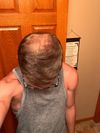
A user is deciding between oral and topical finasteride for hair loss, noting oral finasteride's ease of use but broader effects. Another user simply recommends oral finasteride.
A 33-year-old experienced significant hair regrowth on the crown after one year of using oral finasteride (1mg) and minoxidil (2.5mg) daily, with initial concerns about libido that resolved after a week. The user reported minimal shedding and no other side effects, making a hair transplant optional.
The user shared their hair regrowth journey using oral finasteride, minoxidil, biotin, and vitamins, along with microneedling. They experienced some side effects but reported significant progress and improvement in hair appearance.
PP405 shows promise in hair regrowth, potentially outperforming existing treatments like finasteride and minoxidil, with significant results in just four weeks. The treatment is still in early stages, with further trials needed to determine its long-term effectiveness and optimal dosage.
PP405 is a new hair loss treatment advancing quickly in trials, generating excitement and skepticism about its effectiveness and marketing claims. Some see it as a potential alternative to minoxidil and finasteride, but concerns about long-term effects and the need for DHT blockers persist.
The user is seeking advice on improving their hair loss treatment regimen, considering changes to their topical solution, and is curious about others' daily routines and recommendations for medications and supplements. They are contemplating switching Tretinoin for Tazarotene, Latanoprost for Bimatoprost, and possibly adding Alfatradiol, Topical Melatonin, or a topical androgen receptor antagonist.
The conversation discusses hair loss treatments, focusing on a new slow-release oral minoxidil compared to topical minoxidil and finasteride. The results show that twice-daily dosing of the new treatment is slightly more effective than once-daily, but concerns about cost, side effects, and the accuracy of reported results remain.
The conversation discusses switching from oral to topical treatments for hair loss, specifically using a mix of retinoic acid, finasteride, and minoxidil, after oral treatments like dutasteride and finasteride were ineffective. The user is concerned about the cost and potential impact of dandruff on the absorption of topical treatments.
Comparing the effectiveness and side effects of topical finasteride versus oral finasteride, with people sharing their experiences using both treatments to manage hair loss.
OP plans to switch from topical to oral minoxidil due to limited results and is advised to overlap both for a few weeks before discontinuing the topical. Oral minoxidil may be more effective for non-responders to topical treatment.
The user is considering switching from topical minoxidil to a combined oral treatment of finasteride and minoxidil for better consistency but is concerned about potential side effects like shedding, dizziness, and swelling. Another user advises that oral minoxidil should only be used under medical supervision with regular health checks and suggests using reputable brands like Pfizer's Loniten.
The conversation discusses switching from topical to oral Minoxidil for hair loss treatment, with the expectation of better results due to systemic delivery. The user has been using Finasteride, topical Minoxidil, and dermastamping, maintaining hair but seeking more regrowth.
PP405 is progressing rapidly through trials, with mixed opinions on its potential effectiveness. Current treatments like minoxidil and finasteride are still widely discussed, with some users reporting positive results from new formulations.
The user is considering switching between topical minoxidil (10%) and oral minoxidil (2.5mg) to manage hair shedding around the temples, while also using a dermaroller and biotin. They are concerned about the potential side effects of oral minoxidil, such as hypertrichosis, and the impact on hair shedding if they stop using it.
OP has been using oral minoxidil (5mg) and oral dutasteride (0.5mg) but sees little progress and is unsure if they should continue. Other users suggest being consistent, giving it more time, and addressing scalp inflammation.
The user has been using topical finasteride and minoxidil for 5 years, with recent use of a liposomal formulation, but sees no significant improvement. They are considering switching to oral treatments due to continued hair loss and thinning.
The post and conversation are about a user's progress with hair loss using oral finasteride and minoxidil foam. The user experienced new hair growth after 6-8 months and had to shave their head a few times, but continued taking the treatments and is happy with the results.
A 42-year-old experienced significant hair regrowth after 12 weeks on an oral combination of finasteride (1 mg) and minoxidil (2.5 mg), with noticeable improvements and no side effects. The user is considering continuing the treatment for a year due to the unexpected positive results.
The user is pleased with their hair growth results after using oral minoxidil (2.5mg) for 3 months and finasteride (1mg) for 4 months, despite experiencing significant shedding initially. They prefer oral treatments over topical due to convenience and concerns about toxicity to pets.
The conversation discusses the potential offering of oral finasteride/dutasteride and oral minoxidil treatments for hair loss, with feedback on pricing and preferences for separate or combined pills. Users express concerns about high costs, preferring affordable options, and some prefer oral over sublingual minoxidil for ease of use.
The user shared their 18-month hair treatment journey using oral finasteride and minoxidil foam, noting significant improvement in hair density and texture after initially experiencing shedding. They found oral finasteride more effective than topical solutions and emphasized the importance of consistency and patience in achieving results.
The user experienced significant hair regrowth using oral finasteride (1 mg) and oral minoxidil (2.5 mg) daily, with minimal side effects. They also use testosterone to balance any libido effects from finasteride.
A user experienced significant hair loss after switching from topical to oral finasteride and minoxidil, despite initially seeing great results with the topical treatment. They are seeking advice on whether to return to topical treatments or increase their oral minoxidil dosage.
The conversation is about using PTD-DBM and valproic acid for hair loss. The user is inquiring about the dosage of these treatments, noting that valproic acid is used at a 7.5% solution.
Spraying pyrilutamide on the crown area shows noticeable improvement compared to using a dropper. Applying directly to the vertex is challenging without wasting the product.
The user experienced hair recovery using oral dutasteride 0.5 mg and oral minoxidil 5 mg daily, considering increasing dutasteride dosage but concerned about cost and effectiveness. They noted progress and discussed alternatives like hair transplants and other medications.
A user mixed a pyrilutamide solution and noticed undissolved powder at the bottom, questioning if this is normal and how long to wait before applying it. They wished others good luck with their treatments.
A 17-year-old started using 1mg oral finasteride in April 2025 and increased oral minoxidil from 1.25mg to 2.5mg by December 2025. Users discuss progress, initial shedding, and suggest checking vitamin and mineral levels.
The user shared a one-year update on using oral finasteride (1.1 mg) and oral minoxidil (3 mg) along with ketoconazole shampoo, reporting significant hair regrowth and satisfaction with the results despite some side effects like thicker eyebrows and chest hair. The user encourages others to start treatment early and plans to continue the current regimen for further improvement.
Sprocketshead asks if pyrilutamide can be applied with minoxidil, and inquires about its consistency and odor. They want to know if it's more high maintenance than topical minoxidil.