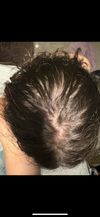
The user is using a self-made topical mix of finasteride and minoxidil foam for hair loss, experiencing solid regrowth in the frontal area and mild improvement at the crown, but still shedding. They previously used oral finasteride and dutasteride but stopped due to side effects, and are seeking advice on when shedding might stabilize with the topical treatment.
A user was prescribed betamethasone dipropionate spray for a receding hairline, which caused skin peeling and depigmentation. They stopped using it and are considering alternatives like BPC-157/TB-500 for healing.
Be cautious when sourcing PP405 or its analogs from third-party suppliers due to potential safety risks and lack of regulatory approval. The conversation highlights concerns about counterfeit products and the absence of reliable testing, making it risky to use such treatments.
PP405 is discussed as a potential treatment for hair loss, with excitement about its promise but skepticism about its current effectiveness. Users mention combining it with treatments like minoxidil, finasteride, and microneedling, but emphasize it is not a cure.
The conversation is about using Xeljanz for hair regrowth in individuals with LPP. The user is seeking experiences and expectations from others who have tried this treatment.
The user "Curious_Conflict_959" shared a progress picture of their hair transplant after 5 months. They used a low dosage of RU on native hairs and had PRP treatments. All hair loss has stopped.
The user realized they didn't shake their HappyHead Topical Fin + Min before use, leading to inconsistent application of Finasteride due to sediment at the bottle's bottom. They advise others to shake their topical hair loss treatments before use.
Exosomes combined with fractional picosecond laser treatment were effective in treating androgenetic alopecia and promoting repigmentation in white hair patches. The role of exosomes in hair repigmentation, particularly in conditions like poliosis, is not well-studied.
P-1075 is a more potent hair growth agent than Minoxidil, but it poses significant heart risks, making it unsafe for use. Despite promising results in macaques, concerns about its cardiotoxicity in rats have halted its development.
Post Finasteride Syndrome (PFS) is debated, with some users reporting severe side effects from finasteride, while others believe these effects are rare or psychosomatic. Treatments discussed include finasteride, minoxidil, and RU58841.
The conversation discusses whether gt20029 could cure complete baldness, mentioning verteporfin as a realistic treatment. Other treatments like Minoxidil, finasteride, and RU58841 are implied to be less promising.
The user is using oral and topical minoxidil, finasteride, dutasteride, and considering adding rosemary and pumpkin saw palmetto to their regimen. They report significant hair growth, especially with dutasteride, and are considering increasing their dose and adding RU58841.
The conversation is about a user's hair loss treatment regimen, which includes Dutasteride, oral Minoxidil, topical Dutasteride, Minoxidil sulfate, antioxidants, and various supplements. The user is also using a derma stamp and has paused Tretinoin due to a TCA peel recovery.
PP405 is a new hair loss treatment advancing quickly in trials, generating excitement and skepticism about its effectiveness and marketing claims. Some see it as a potential alternative to minoxidil and finasteride, but concerns about long-term effects and the need for DHT blockers persist.
The user is considering hair transplant clinics Vera, Smile, and Pure Line, with concerns about clinic reputation and effectiveness. They are seeking firsthand experiences and advice, with some users recommending against Smile and favoring Pure Line for its personalized approach.
Veradermics' oral minoxidil shows promise for hair regrowth, with some users reporting significant improvements, while Pelage's PP405 results are less convincing and lack transparency. There is skepticism about both treatments' long-term effectiveness and potential side effects.
PP405 is considered a potential new treatment for hair loss, compared to finasteride and minoxidil. There is skepticism about its effectiveness in humans, with anticipation for more information from an upcoming conference.
Finasteride users discuss potential side effects, including Post Finasteride Syndrome (PFS), with varying opinions on its legitimacy and impact. Some users report side effects like changes in semen consistency and reduced pre-ejaculate, while others emphasize the rarity and reversibility of side effects.
RU58841, an anti-androgenic compound, showed early promise for treating alopecia but faced challenges after its patent in 1997. Despite advancing to Phase II trials, safety concerns and financial struggles led Aventis to abandon its development. Proskelia, which later merged into ProStrakan, couldn't prioritize the drug, leading to its eventual stagnation and failure to reach the market.
Hair loss discussion includes treatments like Minoxidil, finasteride, and RU58841. Platelet rich plasma treatment is considered expensive but cheaper than hair transplant.
PP405 is likely a scam, with concerns about its legitimacy and safety, as it may cause unintended tissue growth. Users suggest sticking to known treatments like finasteride and minoxidil.
Exploring hair loss treatments beyond DHT, including Minoxidil, pyruvate, Gt20029 targeting androgen receptors, and vasodilators. Other options like Kx826, adenosine signaling, growth factor topicals, and microneedling are also discussed.
Hair follicle stem cells remain in bald individuals, but progenitor cells do not, raising questions about hair regrowth claims by Pelage. PP405 is discussed as a potential treatment, with skepticism about its effectiveness compared to existing treatments like Minoxidil and Finasteride.
The conversation discusses the need for a localized 5-alpha reductase inhibitor that only affects the scalp without systemic side effects, similar to pyrilutamide's approach. Current treatments like topical liposomal finasteride and dutasteride are mentioned, but concerns about their systemic effects and lack of research are highlighted.
Lichen Planopilaris (LPP) is an autoimmune condition causing permanent hair loss and fibrosis, often misdiagnosed. Treatments include pioglitazone, topical corticosteroids, anti-inflammatory medication, and Jak inhibitors.
The user is using a combination of finasteride, dutasteride, oral and topical minoxidil, PRP, and stem cell treatments for hair loss. They report slowed shedding and new vellus hairs on the hairline, questioning if they are a strong responder to the treatment.