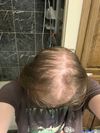
The user is considering a hair loss treatment plan involving oral dutasteride (2.5 mg), oral minoxidil (2.5-10 mg), topical finasteride, and topical minoxidil, with additional options like ketoconazole shampoo and microneedling. They are seeking advice on whether to start with finasteride or dutasteride, the potential side effects, and the effectiveness of their approach, with a plan to evaluate results after 3-4 months.
The conversation discusses arranging an interview with the developers of RU58841 to clarify its safety and reasons for halted research, with some users expressing concerns about potential risks and others citing financial reasons for the discontinuation of studies. Specific treatments mentioned include RU58841, minoxidil, and finasteride.
A user discusses a company, Roots by Genetic Arts, that offers a genetic test for hair loss to create personalized treatments, and is curious about its legitimacy and the science behind it. The company tests 16 genes related to hair loss and compounds a topical treatment based on the results.
The conversation discusses skepticism about the effectiveness of scalp tension theory and scalp massagers for hair regrowth, contrasting it with treatments like finasteride and minoxidil, which have more user-reported results. Participants question the belief in scalp tension theory, suggesting it may be a marketing tactic, while others argue for a multifactorial approach to hair loss.
Results for Amplifica's AMP-303 hair loss treatment study are expected late summer 2024. The study, fully enrolled in Q1 2024, focuses on safety and tolerability.
The user is considering starting minoxidil and finasteride for hair loss at Norwood 2 or 2.5. Another user suggests consulting a dermatologist and possibly using finasteride to prevent progression and minoxidil for regrowth, with dutasteride as an alternative.
The conversation is about finding the correct proportions of topical oils for hair loss treatment. The proposed mixture includes 10ml castor oil, 2ml rosemary essential oil, 1ml peppermint essential oil, and 1ml tea tree essential oil, applied three times weekly.
The conversation is about a user planning a blood test to monitor health while on hair loss treatments: Finasteride, Minoxidil, and Dutasteride. Recommendations include testing for androgens, thyroid function, micronutrients, and basic health markers, with additional suggestions for PSA, prolactin, and estradiol.
OP is considering Bicalutamide for female AGA and TE but is concerned about its side effects and effectiveness compared to Finasteride. OP is also using Minoxidil and Spironolactone but is experiencing significant shedding and is unsure if it's androgen-driven or due to Minoxidil changes.
The conversation is about someone considering using CB-03-01 for hair loss but has ordered finasteride, which they are hesitant to use. They are seeking advice on how to prepare CB-03-01 from powder form and the appropriate strength to use.
A user is considering adjusting their hair loss treatment, currently using 1.0mg finasteride, 2.5mg minoxidil, 5% minoxidil foam, and Nizoral 1%. They are seeking advice on whether to increase dosages or switch treatments, and if reducing dosages later would affect their progress.
The conclusion of the conversation is that the user, djamezz, has experienced significant regrowth and improved density in their hairline by using treatments such as RU (RU58841), dut (dutasteride), and Inkey's Caffeine Scalp treatment. They are satisfied with their progress and do not plan to cut off their hair.
PP405 is a potential hair loss treatment undergoing trials, with discussions on its effectiveness and comparison to existing treatments like finasteride and minoxidil. There is skepticism about its status as a cure, with hopes for future advancements in genetic treatments like CRISPR.
PP405 shows promise in hair regrowth, with 31% of participants experiencing over 20% increase in hair density after 8 weeks. Phase 3 trials are expected in 2026, with potential market availability by 2029-2031.
The conversation discusses the use of topical finasteride for hair loss, with the user considering whether oral finasteride might be more effective in reducing DHT levels. Other users suggest alternatives like dutasteride, RU58841, saw palmetto, and a combination of Redensyl, Procapil, and Capixyl, while debating the effectiveness and side effects of these treatments.
Sugary beverages increase the risk of pattern hair loss in men by 57%, and type 2 diabetes is linked to female pattern hair loss. Reducing sugar intake and using treatments like finasteride and minoxidil may help manage hair loss.
Shedding stopped for a user after trying various hair loss treatments without success, including Propecia and Minoxidil. The improvement occurred after starting CB (possibly a hair loss treatment), Eucapil, natural sprays with rosemary and cloves, and regular sauna visits.
GT20029 showed promising results for hair growth in a Phase II trial, with the 1.0% twice-weekly regimen being the most effective. Some users expressed skepticism and humor about the product's effects and market availability.
SCUBE3, a protein linked to hair growth in moles, was discovered over 25 years ago and is being developed by Amplifica for potential hair loss treatment. Concerns exist about SCUBE3's association with cancer, as it is a protein that promotes cell growth, which could potentially trigger cancer development if used for hair growth therapy.
New hair loss treatments, including Breezula, VDPHL01, and PP405, are nearing Phase 3 trials, offering hope for effective solutions. Current treatments like finasteride and minoxidil remain effective, but early intervention is crucial.
A 26-year-old is considering switching from a finasteride and minoxidil blend to using dutasteride and minoxidil separately, with concerns about shedding and dosage changes. They are exploring options for sourcing and considering using ketoconazole shampoo to manage dryness.
The user is considering using CB or clascoterone for hair loss, potentially as an alternative to RU. They're also contemplating asking a dermatologist for topical clascoterone cream to apply to their temple.
A user discusses their habit of analyzing others' hair due to their own hair thinning at 18. Another user mentions starting finasteride in 2010 and still having a full head of hair.
The user is considering switching their hair loss routine from taking finasteride daily to a combination of finasteride six times a week and dutasteride once a week. They are seeking advice on this potential change.
The conversation discusses biannual SCUBE3 injections and microneedling as treatments for hair loss. Specific treatments mentioned include Minoxidil, Finasteride, and RU58841.
Male pattern baldness (MPB) may be an early warning sign for type 2 diabetes due to its association with insulin resistance. Treatments discussed include testosterone therapy and finasteride, which affects hormone levels related to hair loss and insulin sensitivity.
A 25-year-old male is concerned about his blood test results, particularly the low percentage of free testosterone, and is questioning whether starting finasteride for hair loss might worsen this issue. He also notes a slight vitamin D deficiency and lack of sleep before the test.
The conversation discusses hair thinning and treatments like Minoxidil, finasteride, and RU58841. The user is concerned about distinguishing between natural hair parting and actual thinning.