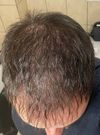
A user is seeing good results with RU58841 for hair loss, noting reduced shedding and thicker hair. They plan to use pumpkin seed oil as a solvent to avoid water content, which they believe reduces the effectiveness of anti-androgens.
The conversation is about adding crushed bicalutamide or spironolactone to a topical mix with finasteride and minoxidil to suppress testosterone in hair follicles, similar to what RU58841 does. The user cannot obtain RU58841 in their country and is seeking advice on this alternative approach for hair loss treatment.
Concerns about the potential systemic effects and safety of PP405 for hair loss, with discussions on its comparison to existing treatments like finasteride and minoxidil. Users express skepticism about untested research chemicals and emphasize the importance of clinical trials to ensure safety and efficacy.
RU58841, oral and topical minoxidil, finasteride, and ketoconazole shampoo led to significant hair regrowth, though some suspect a hair transplant. Concerns about RU58841's side effects, like anxiety and heart issues, were discussed.
User experienced significant hair regrowth with multiple treatments, but then had a brutal shedding period, losing progress. Others questioned the number of treatments used and potential side effects.
A user discusses switching from RU58841 to Pyrilutamide due to side effects like fatigue, brain fog, and elevated heart rate. They have used dutasteride, finasteride, and minoxidil, and are seeking safer alternatives.
A Spanish dermatologist suggests sulforaphane for androgenetic alopecia (AGA) due to its potential to remove DHT metabolites, though high dosages are needed. A topical formulation might be possible.
A user discusses using tazarotene to enhance minoxidil's effectiveness for hair regrowth, believing it will make a significant difference. Others caution about potential risks of retinoids accelerating hair loss in some individuals.
Veradermics' phase 2 trial of slow-release oral minoxidil shows promising hair regrowth with minimized side effects, gaining significant attention and funding. PP405 is also noted for its potential as a side-effect-free alternative.
Considering treatments for hair loss, including Minoxidil, Finasteride, RU58841, Fluridil and Pyrilutamide. The user is weighing the risks of taking unapproved medication before it has been mass produced.
An 18-year-old experiencing hair loss and seborrheic dermatitis has tried finasteride, dutasteride, and various shampoos without success. They are considering anti-androgens like RU58841 and KX-826 for oil control and dandruff reduction.
Dr. Kyle Gillet mentioned on Dr. Andrew Huberman's podcast that dutasteride mesotherapy blocks DHT conversion only in the scalp and is the most promising topical treatment. Users discussed concerns about systemic absorption and the practicality of dutasteride injections.
User obsessed with hair loss prevention shares collection of treatments, including oral and topical finasteride, minoxidil, dermapen, and more. Others suggest adding RU58841, laser helmet, and PRP, while some advise dropping certain treatments for long-term manageability.
The user is exploring alternatives to finasteride and dutasteride due to concerns about side effects, and is using rosemary and jojoba oil, ketoconazole, minoxidil, microneedling, multi-peptide serum, saw palmetto, and stinging nettle for hair loss. They are also considering CB 03 01 and spironolactone.
The conversation is about evaluating the ingredients in Davines VOLU shampoo for potential red flags. The user is concerned about which ingredients to avoid despite the shampoo being sulfate-free.
Hair loss theory involves 3alpha-hydroxysteroid reductase (3AHD) converting DHT to androstenol. Discussion explores potential treatments and encourages more research.
The user has been using RU58841 for 6 months without noticeable results and is considering dropping it while continuing oral minoxidil, daily dutasteride, and topical minoxidil. Another user suggests visiting a dermatologist to check for other conditions.
User on fin, minox, and ketoconazole seeks to add another topical anti-androgen. Hierarchy of effectiveness: 1. RU55841, 2. Fluridil - Eucapil, 3. CB-03-01 - Breezula, 4. Ketoconazole; alfatradiol suggested as addition.
The user shared progress pictures showing significant hair regrowth after three months using 5% foam minoxidil, 0.3% dutasteride, microneedling, pumpkin seed oil, and rosemary oil. The user reported no side effects and chose topical treatments to avoid them.
Mixing ketoconazole 2% shampoo with coal tar and salicylic acid for seborrheic dermatitis is discussed, with users sharing experiences and alternative treatments like sulfur soap and scalp massage. Some users report success with these methods, emphasizing the importance of avoiding irritants and maintaining scalp health.
Alfatradiol is used by some for hair loss, often alongside treatments like finasteride, RU58841, and minoxidil, but its effectiveness is unclear. Some users report no significant improvement, while others note reduced sebum production but experience side effects like gallbladder pain.
The conversation discusses a botanically derived treatment for androgenetic alopecia using ingredients like saw palmetto, green tea, and evening primrose, showing impressive results over 270 days. Concerns include the study's uncontrolled nature and potential product motivation, with suggestions to enhance absorption through derma rolling.
The user is frustrated with minimal hair regrowth after using dutasteride, oral minoxidil, and previously finasteride and topical minoxidil. Despite feeling discouraged, others suggest continuing treatment as progress can be slow and subtle, with some users noting visible improvement.
The conversation discusses the safety study of PP405, emphasizing that early trials focus on safety rather than efficacy, and that any efficacy data from such a short study should be viewed skeptically. It also highlights that the information released is primarily for securing funding, and that meaningful efficacy results are expected in later phases.
The user stopped oral treatments due to side effects and switched to a regimen of topical minoxidil, tretinoin, azelaic acid, and dermaneedling, with recent addition of topical finasteride. They are questioning the long-term effectiveness of non-hormonal methods and considering hair transplantation.
Hair regrowth treatment involving 3aHSD enzyme shows 6% improvement in 18 weeks. Sulforaphane, L-Menthol, and Dexpanthenol are potential ingredients for new hair loss solution.
CHK-Cu (copper peptide) and C-60 (branched carbon chain) are discussed as potentially more effective than minoxidil for hair regrowth. Some users are skeptical about the claim that DHT isn't the root cause of hair loss, and others are trying these products to see if they work.
Mesotherapy Dutasteride is considered highly effective for reducing scalp DHT and potentially reversing hair loss. However, one user reported systemic side effects and no improvement in hair loss.