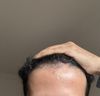
The post discusses a 21-year-old male's significant hair regrowth after experiencing shedding periods during an 11-month treatment with finasteride, minoxidil, ketoconazole, biotin, and dermaroller. The conversation encourages persistence with the treatment despite shedding phases, as hair tends to grow back thicker and longer.
User tried cheap hair fibers from Amazon, significantly improved appearance of thinning hair. Fixing spray recommended to prevent fibers from blowing off.
A potential non-invasive topical treatment targeting the WNT Signaling Pathway for hair regeneration is being researched, with positive results on human hair follicle cells. Current effective treatments for hair loss include Minoxidil, finasteride, and hair transplantation.
The conversation discusses various treatments for hair loss, including finasteride, minoxidil, dutasteride, microneedling, and checking for nutrient deficiencies. Some users suggest adding hydrocortisone butyrate, low-dose progesterone, or tretinoin to treatment regimens, while others recommend cosmetic solutions like Toppik hair fibers or shaving the head.
A user shared their 20-week progress using topical minoxidil (5%) and finasteride (0.1%) with a 1mm dermastamp, showing significant hair regrowth from NW5 to between NW3V and NW4. They experienced no side effects and plan to update at 12 months.
Astaxanthin may cause increased hair shedding, affecting even transplanted hair and eyebrows. The user has tried various treatments for androgenic alopecia, including minoxidil, finasteride, and RU58841.
The conversation discusses a hair loss treatment regimen involving minoxidil, finasteride, RU58841, JXL069, and nizoral shampoo. The user reports seeing new black dots in areas where hair hasn't grown in years, suggesting potential regrowth.
The user is experiencing significant hair shedding and thinning, particularly in the middle section, and is seeking advice. Suggested treatments include Minoxidil, finasteride, and RU58841.
The conversation discusses hair loss treatment using finasteride, minoxidil chews, 0.5 dermarolling, 2% ketoconazole, and a silk bonnet. The user reports positive progress and plans to continue the regimen.
A new topical treatment, TH07, combining finasteride, latanoprost, and minoxidil, is entering phase III trials with promising early results. Some users express skepticism, noting the treatment uses existing products.
PP405 is seen as a potential breakthrough for converting vellus hairs to terminal hairs, with users expressing both hope and skepticism. It is compared to treatments like minoxidil and finasteride, with discussions on side effects and marketing concerns.
The user "ninezske" shared their progress pictures of hair regrowth after using oral finasteride, topical minoxidil, and dermarolling. Other users commented on the results and discussed the effectiveness of minoxidil and finasteride.
A 21-year-old noticed vellus hair regrowth on their hairline after adopting a healthy lifestyle and meditation, without using treatments like Minoxidil or Finasteride. Other users are skeptical, attributing the regrowth to placebo effects.
The user has been using Finasteride 1mg, Topical Foam Minoxidil 5%, and a DermaRoller weekly for 4 months to combat low hair density. Despite initial shedding, they have seen satisfactory progress and reduced shedding recently.
The daily regimen includes oral finasteride, topical minoxidil, and witch hazel toner to reduce itchiness. Witch hazel is noted for its hydrating properties and affordability.
A user is frustrated with slow and thin hair regrowth at the temples despite using Minoxidil for six months, along with dermastamping, oiling, vitamins, and exercise. They are seeking advice on why vellus hairs are not thickening.
The conversation discusses a hair loss treatment regimen including 5% minoxidil, 2.5mg oral minoxidil, 1mg finasteride, tretinoin cream, derma stamping, derma rolling, scalp massagers, and a mix of vitamins and minerals. The user also considers using maca and adapalene, with advice on potential scalp irritation and the effectiveness of these treatments.
The conversation is about a user's hair regrowth progress using topical minoxidil, with plans to start finasteride. The user also takes Vitamin D and washes their hair 2-3 times a week.
A 17-year-old experiencing hair thinning uses dermarolling with rosemary oil and plans to start finasteride at 18. A reply suggests using finasteride and minoxidil due to high DHT sensitivity.
PP405 is a topical gel being tested for hair regrowth in adults with androgenetic alopecia. Volunteers aged 18-55 are needed for a 16-week trial in several US locations.
A user's results after 10 months of hair transplant surgery, which they had been taking care of with 0.5mg/day finasteride, 1x daily minoxidil and 1.5 times weekly microneedling treatments. One other user replied positively to the post.
The user is exploring alternatives to hair transplants due to a weak donor area and is currently using finasteride, minoxidil, dermapen, low-level laser therapy, Nizoral shampoo, and a high-protein diet. They plan to switch to dutasteride and consider adding RU58841, while rejecting hair systems and considering a buzz cut.
A user shared their 21-month hair regrowth journey using oral Finasteride 1mg daily and Minoxidil 5% topical applications. Despite initial discouragement due to slow progress, they saw significant improvement, reducing the need for a hair transplant to minor fill-ins at the front hairline.
Body hair is more resilient than scalp hair due to different gene expressions and DHT sensitivity. Treatments like minoxidil and finasteride are used for hair loss, but they have varying effects on body and scalp hair.
The conversation discusses hair regrowth possibilities using finasteride, minoxidil, microneedling, and dutasteride, with the user experiencing improvement from NW4 to NW2. Achieving NW0 is deemed unrealistic, but further regrowth may be possible with patience and potentially a hair transplant.
A user shared their hair regrowth progress using oral finasteride, biotin, topical minoxidil, and DS thickening shampoo over five months, reporting significant improvements in hair texture and growth. They experienced minor side effects like a slight headache from switching minoxidil forms but noted no issues with finasteride.
The conversation is about a user's impressive hair recovery over 14 months using 0.5mg dutasteride, 5% topical minoxidil, saw palmetto shampoo, and occasional microneedling. The results are highly praised by others, with many expressing admiration and hope for similar outcomes.