Search
for
Sort by
Community Join
960-990 / 1000+ resultscommunity What are your thoughts on Redensyl? 85% success rate?!
Hair loss discussion mentions Redensyl with 85% success rate and visible regrowth. Users skeptical, prefer Minoxidil, Finasteride, and RU58841.
community Binding affinity does not equal potency for anti androgens? Comparing pyrilutimide to cb-03-01
Pyrilutimide and CB-03-01, two treatments for hair loss, have similar clinical trial results despite different binding affinities to androgen receptors. Factors other than binding affinity, like the time a drug stays bound to the receptor, may influence their effectiveness.
community Verteporfin FUT 9 Month Update
Dr. Bloxham's 9-month update on FUT scar revision with Verteporfin shows promising results. Excitement is high for FUE, which appears highly effective based on Dr. Barghouthi's findings.
community My 4 year hair regrowth timelapse [Fin+Min 3 years - Hair transplant 1 year]
Hair regrowth using finasteride 1mg daily and topical minoxidil twice daily, with a hair transplant after three years, showed significant improvement over four years. The user is satisfied with the results despite not having access to oral minoxidil.
community My transplant already makes a big difference lads
The user had a hair transplant and feels significantly better, no longer needing to wear hats. They plan to continue using finasteride indefinitely.
community My progress from October of last year. My routine below ⬇️
The user started using topical minoxidil, oral finasteride, GHK-CU, and HGH in October, resulting in thicker hair and improved overall health. They experienced minor side effects like dehydration from HGH but reported benefits like clearer skin, better recovery, and muscle gain.
community Xeljanz medication for alopecia universalis?
community 45, NW Class 6: Possible Hair Regrowth Without Transplant?
A 45-year-old with NW class 6 baldness reports unexpected hair regrowth without a transplant after starting a new treatment in Lahore, Pakistan. Previous treatments with Minoxidil and Finasteride showed no progress, but the new specialist's approach is yielding results.
community started RU58841 today and am panicing
A user started using RU58841 for hair loss and experienced anxiety and physical discomfort. Other users suggested avoiding the treatment due to similar side effects and recommended alternative treatments like pyri.
community Homeopathy WORKS!! M[20] 6 month's treatment
A 20-year-old male with diffuse androgenetic alopecia tried homeopathy for hair regrowth but saw limited results due to inconsistency and is considering switching to minoxidil and finasteride. Despite some baby hair growth, hair fall hasn't stopped, and he believes more time and consistency might be needed.
community Would you guys be interested in a pure cb-03-01 progress pick series?
The conversation is about someone planning to use cb-03-01 for hair loss because they experience side effects with other treatments like finasteride, minoxidil, and RU58841. They have not found progress pictures online and are considering sharing their own experience with cb-03-01, which is expensive.
community Is RU58841 safe or is pyrilutamide better option
community Kintor KX -826 Pyrilutamide Adds 1 Year Phase 3 Trial For Safety
KX-826/pyrilutamide is undergoing an additional one-year safety and efficacy trial in China after a six-month study. Some participants speculate on the reasons for the extended trial and discuss the potential of other treatments.
community Update: A New Therapeutic Channel - Hair Follicle Glucose Metabolism
Hair loss can be treated by correcting glucose metabolism in hair follicles and using equol as a safer DHT blocker. Production of these treatments is starting soon, and a Discord channel is available for more information.
community NW7 recovery attempt, a little over 2 month progress. 1.25mg fin, 5mg topical minox twice a day. Pyrilutamide for 1 month, switched to RU58 2 weeks ago, weekly microneedling 1.5mm
A user is attempting to recover from severe hair loss using 1.25mg finasteride, 5mg topical minoxidil twice daily, pyrilutamide for a month, RU58841 for two weeks, and weekly microneedling at 1.5mm. They have seen new hair growth after two months and plan to continue the treatment for a year with the hope of regrowing enough hair for a transplant.
community Hair theory Scar tissue and Verteporfin
A user suggests that deeper microneedling with Verteporfin injections might help regrow hair in areas with scar tissue, alongside a DHT blocker. Another user explains that hair loss might be due to reduced Wnt/β-Catenin signaling and suggests that treatments like Minoxidil, Finasteride, and microneedling could potentially reverse it.
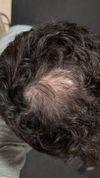
community How many grafts do you think? Will they be able to HT on to the scalp since it’s not gone fully? Been on min/fin/stamp for a year, little effect for me
The user has been using Minoxidil, finasteride, and a dermaroller for a year with little effect on hair loss. They are considering a hair transplant and are questioning the number of grafts needed and the feasibility of transplanting onto a partially bald scalp.
community Megadosing Koshine826(Pyrilutamide), my Plan.
The user plans to use 1% Koshine826, 0.1% Alfatradiol, Minoxidil with Tretinoin, microneedling, and Stemoxydine for hair loss treatment. They expect significant recovery with this regimen.
community Kintor Pharma Announces Completion of First Patient Enrollment in KX-826 Long-term Safety Phase III Trial for Treatment of AGA
Kintor Pharma has finished enrolling the first patient in a Phase III trial for KX-826, a treatment for androgenetic alopecia (AGA). One user has set a reminder to check back on the topic in a year.
community 35M, 4000 Grafts, Dr Patty, HairTran Clinic, Bangkok
A 35-year-old man underwent a hair transplant with Dr. Patty at HairTran Clinic in Bangkok, receiving 4,037 grafts primarily for his crown area. The procedure cost 188,700 THB, with an additional 12,000 THB for optional PRP treatment, and he plans to update with progress pictures in a year.
community Why isn't anyone using Way-316606? If it works then it grows a full head of hair back on most people
Way-316606 is considered a potential hair loss treatment but is avoided due to safety concerns and lack of research. Minoxidil and Finasteride are preferred as established treatments.
community Redensyl? Has anyone had any significant results from redensyl? Or another snake oil?
Hair loss discussion includes treatments like Minoxidil, Finasteride, and RU58841. User asks about Redensyl's effectiveness, questioning if it's another ineffective remedy.
community 3 month Ru58841,minox,microneedling transformation while blasting 2g of gear
Significant hair regrowth was achieved using RU58841, minoxidil, and microneedling during a high-dose steroid cycle. The user reported no side effects from RU58841 and plans to continue the regimen.
community Kintor Pharma Announces Completion of Patient Enrollment in Phase II Clinical Trial of GT20029 for Treatment of Androgenetic Alopecia in China
Kintor Pharma completed patient enrollment for a Phase II trial in China for GT20029, a potential new treatment for hair loss. Some believe GT20029 could replace finasteride if effective, while others discuss finasteride's limited efficacy and potential underreported side effects.
community Unexpected temple hair growth from GHK-Cu
GHK-Cu injections led to unexpected temple hair growth for someone who had been using minoxidil and finasteride for over a decade. The user plans to continue using GHK-Cu and experiment with a DIY AHK-Cu serum.
community Is this regrowth? Doing PRP + exosomes
User doing PRP with exosomes for hair loss, sees possible regrowth after two treatments. Another user suggests providing before and after pictures for better assessment.
community 2500-3000 grafts. 6 months post op. 1mg finasteride daily and 5% topical minoxidil bid.
A user named "Redbone2222" shares their positive experience with a hair transplant procedure of 2500-3000 grafts, along with the use of 1mg finasteride daily and 5% topical minoxidil. They express satisfaction with the results and believe that finasteride has been more effective for them than minoxidil.
community When will gt20029 research chemical be available?
The conversation is about the availability of the research chemical GT20029 for hair loss treatment and when companies like Anageninc will have it. Specific treatments mentioned include Minoxidil, Finasteride, and RU58841.
community Hormone level test results before starting topical liposomal finasteride: is my DHT level too high?
The conversation discusses using topical liposomal finasteride for hair loss, with concerns about high DHT levels. The user's DHT level is above the normal range, which may affect hair health.