Search
for
Sort by
Community Join
900-930 / 1000+ resultscommunity 14-Month Update - FUE Hair Transplant
A 14-month update on a FUE hair transplant, and the effects of male pattern baldness. People discussed products such as Minoxidil, finasteride, Kerastase Chronologiste shampoo and care oil, and RU58841 to help treat hair loss.
community A Short Recap on PP405 and AAD 2026
PP405 is a promising experimental topical treatment for alopecia that reactivates dormant hair follicles by targeting cellular energy, with large-scale trials planned for 2026. While it shows potential, it cannot regenerate permanently destroyed follicles, making hair transplants the only guaranteed solution for advanced baldness currently.
community Rate Cbum hair transplant after 1 year
The hair transplant has a straight, unnatural-looking hairline that many find unappealing. The person is not using finasteride or minoxidil, which may affect future hair retention.
community Jan 30 Update (4 months and amazing huge progress) fin + min + 3 PRP sessions
A user shared impressive hair regrowth results after 4 months using topical minoxidil, oral finasteride, and 3 PRP sessions. They plan to continue with these treatments and add dermastamping.
community Tried PRP after a year on Oral Dutasteride/Minoxidil. 6-9 months later had amazing results
OP used oral Dutasteride and Minoxidil but saw significant improvement only after adding PRP treatments. PRP sessions every 4 months maintained the results, though it is expensive.
community 10 months of treatment what has changed
Minoxidil and finasteride have improved hair thickness and density, but temple areas remain stubborn. Continued use is recommended, with suggestions for topical minoxidil, microneedling, or considering a hair transplant for further improvement.
community 12months result from médication only fin + minox + vitamines + microneedling... Time for HT!
The user's progress in treating their hair loss using finasteride, minoxidil, vitamins, and microneedling, with one person suggesting to wait six more months before considering a hair transplant. The other person agreed that a hair transplant would be nice.
community New Hair Cloning Breakthrough! The hair loss cure is closer than ever!
A new hair cloning breakthrough suggests a potential cure for hair loss, though skepticism remains about its availability and cost. Users discuss the possibility of unlimited hair grafts for transplants and express hope for future developments.
community 9 years into my hair rescue mission. Started finasteride in 2017 (age 25). Added oral minoxidil 2024. Added microneedling 2025.
The user started finasteride in 2017, added oral minoxidil in 2024, and began microneedling in 2025, achieving significant hair regrowth without side effects. They recommend using all three treatments together for the best results.
community Any updates on verteporfin or FAK inhibitors regarding donor area hair regeneration? or, when can we expect updates?
Verteporfin and FAK inhibitors being looked at as potential treatments for hair regeneration, with updates on the unofficial off-label human trial being discussed.
community Regrowth at last, after 2 years
community Korea FUE hair transplant 1900 grafts, Done by Dr.Ko Newhair clinic
A user shared their positive experience with a 1900-graft FUE hair transplant by Dr. Ko at Newhair Clinic in Korea, costing $6,000. The user expressed satisfaction with the results and mentioned no longer experiencing stress over hair loss, but did not specify using any medications like finasteride.
community My 18 month journey growing back my hair using the big 3 + dermarolling
Finasteride, Minoxidil, Nizoral, and Dermarolling successfully regrew the user's hair over 18 months. The regimen included daily Finasteride, Minoxidil, vitamins, and weekly dermarolling.
community 2 months before and after. Fin min pill, micro needle, and Nizoral (ketoconazole) shampoo.
The conversation discusses hair regrowth using finasteride, minoxidil pills, micro-needling, and Nizoral (ketoconazole) shampoo. Users suggest giving treatments at least a year to show results, with some recommending stronger treatments like dutasteride or a hair transplant.
community Why do so many people who get hair transplants not know they need to take finasteride after to keep it?
community Scalp micropigmentation (smp) after 1 year
A user shared their experience with scalp micropigmentation (SMP) after one year. They discussed using Minoxidil, finasteride, and RU58841 as treatments for hair loss.
community What do you guys think of stem cell hai restoration?
Stem cell hair restoration lacks scientific evidence and is often considered a scam. Effective hair loss treatments include hair transplants, Minoxidil, and Finasteride, but stem cell treatments are not proven.
community About Verteporfin but not about hair
Verteporfin treatment shows promise for hair regeneration and reducing scar tissue in hair transplants. Some users plan to try verteporfin with hair transplants, and it may also be combined with PRP in future experiments.
community Is this Progress? - NW7 Diffuse going for the comeback. (49M)
A 49-year-old is using finasteride, minoxidil, tretinoin, and ketoconazole shampoo to combat advanced hair loss and hopes for enough regrowth to consider a hair transplant. Progress is slow, but some improvement is noted by others.
community 24M – aggressive shedding, past success with mesotherapy + minoxidil, now worse than before. Unsure if I should try a combo or consider a transplant.
A 24-year-old is experiencing aggressive hair shedding despite past success with mesotherapy and minoxidil, and is considering adding treatments like Expecia, dermapen, or a hair transplant. Many suggest using finasteride to maintain hair, as it is necessary even after a transplant, and side effects are rare and reversible.
community What norwood is it? Don't sugarcoat it.
Minoxidil and finasteride might help with hair regrowth, but a hair transplant may be necessary for significant improvement. The conversation humorously discusses the severity of hair loss, comparing it to various exaggerated Norwood scale levels.
community PRP ( PLATELET-RICH-PlASMA) for hair loss
A 27-year-old male experiencing hair loss post-Covid is considering PRP (platelet-rich plasma) therapy. He's seeking personal experiences about the process, particularly regarding pain levels, despite his dermatologist's assurance of using local anesthesia.
community Back again with a 17 month update. (Fin/Min doing the heavy lifting, occasional 0.5mm microneedling, and Nizoral for scalp health) - Angles are not identical but whatever - Expecting and hoping to be back to pre-hairloss hairline within 6 months from now.
The conversation is about a user's 17-month progress in treating hair loss using finasteride, minoxidil, occasional 0.5mm microneedling, and Nizoral. The user reports significant hairline recovery and aims to achieve a pre-hair loss hairline within the next 6 months.
community Exosome PRP combined with Dutasteride and Oral Minoxidil?
The user has been using Dutasteride and oral Minoxidil for hair loss but hasn't seen desired results and is considering Advanced PRP with autologous exosomes. Some users suggest these treatments are scams, while others discuss increasing Dutasteride dosage or exploring other options like low-level laser therapy.
community 3-5 months of Finasteride, Minoxidil, RLLT, Nizoral, and Microneedling. Is this regrowth?
The user is using Minoxidil, Finasteride, RLLT, Nizoral Shampoo, and microneedling for hair regrowth. They notice some thickening and new hair growth, especially in the front, but are unsure about the overall regrowth due to previous head shaving and photo comparisons.
community I'm regrowing my hair while being on the harshest steroids
The user is regrowing hair while using steroids by following a regimen that includes Rogaine, RU58841, Dutasteride, Nizoral, PGE2, and occasionally castor oil. Despite using harsh steroids like Tren, Masteron, and Proviron, the user reports successful hair regrowth.
community Researchers working on ways to regenerate lost hair from stem cells identified a recipe for normal hair regeneration in the lab. “A method for cyclical regeneration of hair follicles from hair follicle stem cells and will help make hair follicle regeneration therapy a reality in the near future.”
Hair loss treatments like finasteride, minoxidil, and hair transplants have side effects and limitations. There is hope for future advancements in stem cell therapy and hair follicle regeneration, though skepticism about their effectiveness and timeline persists.
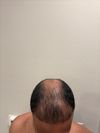
community Seeking Advice After FUT Hair Transplant in 2021 – Considering FUE
The user is unhappy with the results of a FUT hair transplant from 2021, noting uneven hair texture and persistent thinning. They are considering a FUE procedure and have been using finasteride for a year, previously used minoxidil, and currently use Toppik for concealment.

community Struggling with Balding at 21: Seeking Advice on Implants and Self-Image
The conversation is about a 21-year-old seeking advice on managing hair loss, considering options like shaving, hair implants, or using treatments like finasteride and minoxidil. The user is concerned about self-image and the social implications of being bald at a young age.