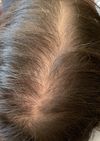
The user is experiencing hair regrowth in small clusters using oral minoxidil, oral finasteride, a redlight cap, and Nizoral 2% shampoo. They are hopeful for continued improvement and thicker hair.
A 43-year-old male with advanced hair loss is experimenting with alternative treatments, including redlight therapy, microneedling, scalp massages, an oil mix, and ketoconazole shampoo, after previously experiencing side effects from finasteride and minoxidil. He noticed some minor changes with redlight therapy but remains skeptical about significant improvement.
The user discusses their hair regrowth success with minoxidil, redlight therapy, massage, and derma stamping but expresses concerns about using finasteride due to potential side effects. They are interested in using clascoterone as a topical treatment for hair loss and are exploring the possibility of creating a topical formula from raw clascoterone powder.
The conversation discusses hair care tips and product recommendations for hair growth, including redlight therapy, The Ordinary hair density serum, Nizoral shampoo, and Minoxidil. It also covers nutrition, stress management, and the importance of blood work for addressing hair loss.
A 21-year-old woman with female pattern baldness has tried minoxidil, redlight therapy, and supplements without success. She is considering spironolactone and seeking medical advice.
A 33-year-old male is documenting his hair regrowth progress using minoxidil, redlight therapy, copper peptides, and micro-needling, with noticeable improvement in hair thickness and coverage. He plans to add a topical finasteride/minoxidil spray and aims for a shadow on his scalp rather than a full head of hair.
The user is considering changing their hair loss treatment from topical minoxidil and oral finasteride to oral minoxidil and oral dutasteride, with suggestions to add microneedling and possibly redlight therapy. They are also exploring the addition of a caffeine and adenosine mix to their regimen.
A 30-year-old considering a hair transplant has been using treatments like oral Minoxidil, Dutasteride, topical Minoxidil, copper peptide serum, redlight laser therapy, microneedling, and vitamin therapy for hair loss. They are advised that a hair transplant is still an option, but maintaining current treatments is crucial to support the transplant and prevent further hair loss.
For early hair thinning, users suggest starting with finasteride alone and considering minoxidil later if needed. Some users advise against minoxidil due to long-term dependency, while others recommend scalp massages and alternatives like redlight therapy.
The conversation discusses hair regrowth treatments, specifically using 1mg oral finasteride and topical minoxidil for six and two months, respectively. Additional suggestions include redlight therapy, derma rolling, and twice-daily minoxidil application.
A 22-year-old shared their 6-month hair loss progress using only topical treatments like minoxidil, derma rolling, and redlight therapy, without finasteride or oral medications. Other users suggested adding DHT blockers like RU58841 and ketoconazole shampoo for better results.
A 25-year-old is experiencing chronic telogen effluvium (TE) and androgenetic alopecia (AGA) after surgery, using finasteride, redlight therapy, and supplements, and considering oral minoxidil despite heart concerns. They are unsure whether to start minoxidil before or after an upcoming surgery, which may trigger another hair shed.
The user is experiencing hair thinning and has been using minoxidil, dutasteride mesotherapy, and redlight therapy for 4.5 months without seeing results. They are considering changing their treatment due to lack of progress.
The user experienced significant hair thinning and has been using minoxidil, dutasteride mesotherapy, and redlight therapy for 4.5 months without results. Suggestions include switching to oral dutasteride or finasteride for better effectiveness.
The user is experiencing hair thinning and is using minoxidil, dutasteride injections, and redlight therapy with little success after 4.5 months. Suggestions include switching to finasteride instead of dutasteride injections.
A user has been using finasteride and minoxidil for over a year with little progress in hair regrowth and is considering switching to dutasteride. They are also using microneedling, ketoconazole shampoo, and considering redlight therapy, but are frustrated with the lack of results.
An 18.5-year-old experiencing rapid hair loss is being treated with saw palmetto, vitamins, and redlight therapy, but these seem ineffective. The consideration of finasteride is discussed, weighing its potential side effects against the emotional impact of early hair loss.
GHK-Cu is discussed as a potential hair loss treatment, with claims of promoting hair growth and possibly reversing gray hair, though strong clinical evidence is limited. The user also mentions using Minoxidil, redlight therapy, and microneedling.
The user is using a comprehensive hair loss prevention regimen including Dutasteride, RU58841, topical treatments, redlight therapy, microneedling, and supplements like Nutrafol, while avoiding Minoxidil. They also supplement with vitamin D and zinc and plan to start testosterone replacement therapy (TRT) in January.
The user shared a 10-month hair loss treatment update using finasteride, minoxidil, derma stamping, redlight therapy, and keto shampoo, reporting improved styling ability but a stubborn frontal hairline. The user experienced lower libido as a side effect of finasteride.
Hair regrowth after 13 weeks using topical minoxidil, oral finasteride, peptide shampoo, serum, and a redlight hat. Some growth is attributed to a recent hair transplant.
Concerns about finasteride affecting sperm quality and embryo abnormalities during IVF. The user plans to stop finasteride for 6 months and use minoxidil, microneedling, a redlight cap, and saw palmetto shampoo to manage hair loss.
A user shared their boyfriend's hair progress after using topical minoxidil 5%, oral finasteride 1 mg, supplements, rosemary scalp pre-wash, ketoconazole shampoo, redlight therapy, and PRP sessions. The user plans to start dermarolling in January and has noticed significant improvement in hair density.
The user did not respond to minoxidil and is considering using tretinoin to improve results. They also explored finasteride, microneedling, adapalene, redlight therapy, and oral minoxidil as potential treatments.
Significant hair regrowth was achieved using a topical combination of 0.3% finasteride and 6% minoxidil, with weekly dermastamping and ketoconazole shampoo, without side effects. Others suggested additional treatments like redlight therapy and PRP.
Using a dermaroller can enhance hair regrowth, especially when combined with minoxidil, and is recommended at depths of 0.75-1.5mm weekly. Microneedling boosts absorption and blood flow, and redlight therapy is also being considered for hair growth.
A 23-year-old male experienced significant hair improvement over 9 months using dutasteride, minoxidil, finasteride, PRP, and redlight therapy, with no side effects. He plans to continue treatment for 6 more months before deciding on a hair transplant.
The user regained hair and reduced forehead size using a routine of 1mg finasteride, 5mg minoxidil, topical minoxidil twice daily, tretinoin before minoxidil, derma stamping weekly, redlight therapy daily, and ketoconazole shampoo thrice weekly. They experienced initial side effects with finasteride but adjusted the dosage over time.
The user has been dealing with hair loss since middle school and has tried various treatments like mesotherapy, PRP, and redlight therapy without success. Currently, they use minoxidil, finasteride, and dutasteride but are considering a hair transplant due to limited improvement.
The user is seeking alternatives to Minoxidil for hair growth, currently using 0.1% topical finasteride and 2% ketoconazole shampoo. Suggestions include microneedling, redlight therapy, rosemary oil, and other topical treatments like cetirizine, Stemoxydine, and Latanoprost.