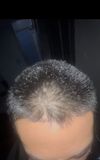
A user with long-term hair loss has been using topical minoxidil, finasteride, RU58841, ketoconazole, and dermastamping for 8 months. They are unsure if the new hairs are miniaturized or vellus.
The user experienced hair shedding after using finasteride and topical minoxidil since August 2024, and briefly adding oral minoxidil in early 2025. They suspect the shedding might be due to the oral minoxidil, a bad batch of finasteride, or a normal shedding cycle, and are also experiencing an itchy scalp and acne.
The user is experiencing hair regrowth after 3.5 months using finasteride, dutasteride, oral minoxidil, dermastamping, and ketoconazole shampoo. They are hopeful about the progress but note that topical minoxidil was ineffective for them.
The user has been using a daily topical spray of finasteride and minoxidil, along with occasional microneedling, to address hair loss since August 2023, and is considering switching to oral medication for convenience and cost reasons. Despite progress, they are exploring options like increasing microneedling frequency or potentially undergoing a hair transplant to address a stubborn spot.
The user has been using finasteride for 5 months along with minoxidil, microneedling, and keto shampoo but hasn't seen significant regrowth and is considering switching to dutasteride. Others advise patience, suggesting waiting at least a year to see results, as finasteride often takes time to show effects.
A user who is using a combination of oral and topical treatments, including finasteride, minoxidil, pyrilutamide, dutasteride, microneedling, and ketoconazole shampoo in order to combat hair loss. Another user gave the original poster a word of warning about overusing the ketoconazole shampoo.
PP405 shows promise for hair follicle reactivation with minimal side effects. Users recommend continuing Minoxidil and Finasteride until more results are confirmed.
The user experienced significant hair improvement after three months using topical Minoxidil and scalp massages. They are considering adding Finasteride to their regimen.
With some minox
This conversation is about a user, Jmilei, who has been using the "big three" hair loss treatments (Finasteride, Minoxidil, and Ketoconazole) for five years. After taking a two year break from treatment, they have recently restarted their regime and noticed results in the fourth month.
The user has been microneedling weekly for almost 8 months without seeing progress and is experiencing shedding. They are also using finasteride daily and Kirkland minoxidil twice a day, and had a hair transplant after starting finasteride.
The user has been using topical minoxidil and microneedling for 4 months and added finasteride 1mg daily for 1 month, but progress has stopped. Others suggest continuing treatment as hair growth cycles are slow and results may take up to a year.
The user discovered that a buildup of sebum and residue was preventing Minoxidil and finasteride from working effectively. After thorough scalp cleaning, hair shedding reduced significantly, and microneedling became more effective.
The individual has experienced no hair regrowth from using minoxidil and finasteride and is considering a hair restoration clinic's options, including PRP and nano follicle hair replacement, as well as a potential beard transplant. They are seeking advice on whether to pursue PRP, timing for hair replacement surgery, and experiences with beard transplants.
User taking 1mg finasteride daily for 2 years, wants to block more scalp DHT. Seeks reference for additional topical DHT blockers like alfatradiol and fluridil.
Prolonged use of topical minoxidil and finasteride can lead to neuroendocrine and autonomic dysfunction, causing severe sensitivity and side effects. Recovery involves avoiding these treatments, supporting neurosteroid recovery, calming the sympathetic system, and rebuilding scalp health naturally.
The user has been using Rogaine (minoxidil), dermastamping, Nizoral shampoo, and spironolactone for 6 months with minimal visible results. They are advised to consider finasteride and be cautious with microneedling frequency and depth.
The user reports significant hair regrowth after three months using finasteride, biotin pills, a derma roller with rosemary/jojoba oil, and drinking coffee, despite an initial increase in hair shedding. Other users share varied results with similar treatments, with some not experiencing improvements.
A 28-year-old male reported significant hair regrowth after 5 weeks using a regime including Minoxidil, Ketozolin shampoo, microneedling, hyaluronic acid, saw palmetto, pumpkin seed, MSM, frankincense, zinc, multivitamins, and vitamin D. He also noted improvements in digestion, dry eyes, and skin health, and observed beard growth from microneedling.
User used sublingual minoxidil for 5 months and saw progress. Also used topical dutasteride, alfatradiol, tretinoin, and reduced oral finasteride dose.
The user has been using a combination spray of finasteride, minoxidil, and tretinoin for 5 months, along with microneedling and biotin, and is uncertain about hair regrowth progress. Other users suggest more time is needed for results, with peak results at 2 years, and mention oral dutasteride as an effective treatment.
A 29-year-old shares progress on hair recovery using a daily liposomal topical mix of finasteride and minoxidil, iRestore device, and several vitamins. They report no side effects from the topical treatment, unlike previous issues with oral finasteride.
The conversation is about finding the best routine for using microneedling, Minoxidil, and Tretinoin 0.025% for hair loss. The user has been using Minoxidil and microneedling for four months, along with daily finasteride since 2021, but has not noticed any difference.
The user has been using topical Minoxidil since April 2025 and Finasteride since September 2025, but their bald spot has worsened. They are considering switching to oral Minoxidil and have been advised to be patient, see a dermatologist, and possibly try additional treatments like derma rolling.
Different treatments for hair loss, such as Finasteride, Minoxidil, Nizoral, Pumpkin Seed Oil, Saw Palmetto and PRP; the risks of using certain treatments; taking a break from this subreddit to cope with anxiety about hairloss; and potential benefits of maintaining confidence despite hairloss.
The conversation is about someone who has been taking finasteride for hair loss without success, considering switching to dutasteride or giving up treatment. Suggestions include trying dutasteride, microneedling, infrared therapy, multivitamins, and high-concentration topical solutions combining finasteride and dutasteride.
The user experienced hair thickening and regrowth using dutasteride on alternate days, oral minoxidil every third day, and daily hair massages, but is dealing with dandruff and inflammation. They are considering adjusting their minoxidil dosage and have started using ketoconazole shampoo and cupping therapy for additional benefits.
The user experienced significant hair regrowth after 4 months using oral minoxidil, oral dutasteride, topical minoxidil, Nizoral shampoo, microneedling, and various supplements. They reported increased body hair and some acne as side effects but noticed less hair breakage with silk pillows.
The conversation discusses using a combination of finasteride, spironolactone, minoxidil, retinol, azelaic acid, and caffeine for hair loss treatment. The user inquires about the limitations of these drugs and whether tretinoin would be more effective than retinol.
User gained hair with topical minoxidil and finasteride, then experienced shedding after starting pyrilutamide. After 12 weeks, new hairs grew and existing hairs thickened, hoping for more improvement in a year.
The user is using 1mg oral finasteride daily, topical minoxidil on the hairline, a dermaroller weekly, Alpecin Caffeine shampoo daily, and ketoconazole shampoo weekly. The hairline appears to be improving after two months.