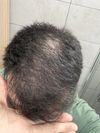
A 35-year-old is seeking advice on hair loss treatments, considering minoxidil, finasteride, and possibly a hair transplant in Turkey. They have previously tried microneedling for a year.
CRISPR Cas9 could potentially treat baldness by targeting specific genes in hair follicles without affecting other body functions. There is optimism about its future use, despite ethical concerns and the current reliance on treatments like minoxidil and finasteride.
Exosomes from Musely are being discussed as a topical hair loss treatment containing ingredients like latanoprost, caffeine, cetirizine, melatonin, vitamin D3, vitamin E, and biotin. Users are curious about its effectiveness and potential side effects, noting it may take 4-6 months to see results.
The user reported positive hair regrowth after 5 months using Minoxidil, red light therapy, and lifestyle changes, including dietary improvements and stress reduction. They chose natural supplements like saw palmetto and beta-sitosterol over pharmaceutical DHT inhibitors like finasteride.
The conversation discusses improvements to a platform and mentions hair loss treatments including Minoxidil, finasteride, RU58841, and melatonin. It also highlights the addition of features like Google login, reply by email, keyword extraction, and a term glossary for better understanding of hair-related terminologies.
The conversation is about using Verteporfin with microneedling as a potential hair loss treatment that may regenerate hair follicles with minimal scarring. There are concerns about the optimal dosage and the DHT sensitivity of the new follicles.
The conversation discusses verteporfin as a potential hair loss treatment and questions why more precise methods aren't used to test its effectiveness in regrowing hair. Some users believe verteporfin is promising and should receive more attention, while others are skeptical about the testing methods.
The user, InternationalTutor92, shared their progress pictures after using a combination of finasteride, minoxidil, keto shampoo, and dermarolling for a year. They mentioned that their hairline on the left side has improved, and they did not experience any side effects from the treatments.
Verteporfin may improve hair transplant outcomes and reduce scarring, potentially allowing patients to avoid finasteride. Dr. Barghouthi seeks collaborations, volunteers, and financial support for research on verteporfin.org.
Exploring the potential of using verteporfin during hair transplants to minimize scarring and regenerate follicles, as well as discussing a possible standardized protocol for this treatment.
Hair cloning and injection of dermal papilla cells are discussed, with skepticism about their availability by 2023. Users mention Minoxidil, finasteride, and hair transplants as current treatments.
The conversation is about the availability of WINLEVI, a hair loss treatment, and the possibility of getting it compounded. The user is seeking information on when they can obtain the treatment.
Exosomes are being considered for hair regrowth, with some users reporting initial improvement. One user moved on to using dutasteride and oral minoxidil with positive results.
The conversation is about using valproic acid, an anti-seizure medication, as a topical treatment to promote hair growth. The original poster is seeking personal experiences from those who have tried this method.
A user reported hairline regrowth after two weeks on a treatment including finasteride, peppermint and rosemary oils, emu oil, magnesium oil spray, apple cider vinegar, and dermarolling, while avoiding shampoos and conditioners. They believe DHT contributes to hair loss but also suggest follicle fibrosis is an issue.
Microneedling can be effective for hair regrowth, especially when used with oils like castor, emu, and rosemary, but should be done with caution regarding needle size and frequency. Some users avoid minoxidil due to its side effects and cost, opting for alternatives like rosemary oil.
PP405's phase 2a trial results were presented, focusing on safety and pharmacokinetics, with a future meeting planned to share the full dataset. The trial includes a randomized controlled portion and an open-label extension, with no indication of phase 2B completion.
HairClone is offering a Dermal Papilla Cell Hair Multiplication procedure in Guatemala, raising questions about its effectiveness and regulatory reasons for the location. Users express skepticism and curiosity about the treatment's success and potential costs.
PP405 is a potential hair loss treatment showing promise, especially for men with severe balding. Some are hopeful it will be a game-changer for those who cannot tolerate finasteride or minoxidil, despite skepticism about the outcomes.
Some users report eye issues like blurry vision and dry eyes while using finasteride or dutasteride, though others experience no changes. Concerns about myopia progression are discussed, but no clear link to these medications is established.
A South Korean company, Therazyne, has developed a promising hair loss treatment using a WNT chain surrogate that binds to Frizzled 7, with human follicle testing expected soon. Current treatments like minoxidil and finasteride are not seen as cures, and while optimism exists for future solutions like PP405, approval processes are lengthy.
PP405 shows promise in treating severe hair loss, with 31% of users experiencing over 20% hair density increase in four weeks, faster than minoxidil and finasteride. Some users are skeptical about the results' significance and long-term efficacy.
The conversation discusses hair loss treatments, specifically Minoxidil, finasteride, and RU58841. The user seeks input from medical professionals and scientists on these treatments.
The conversation discusses whether starting treatments like finasteride or dutasteride early in hair loss leads to better regrowth results. One user implies that early treatment is indeed more effective, while another regrets not starting treatment sooner due to permanent hair loss.
The conversation discusses hair loss treatment using daily topical minoxidil and finasteride, daily 0.5mm dermarolling before application, and 2% ketoconazole shampoo three times a week. Users believe dermarolling enhances the absorption of the treatments and expect significant improvements over time.
The conversation discusses the potential use of verteporfin for hair loss treatment, with one user mentioning their surgeon's interest in trying it and another noting its research status and clinical use as a YAP inhibitor. Some users debate the market size, availability of generics, and the optimism in the hair loss community regarding new treatments.
Kintor's GT20029, a treatment for hair loss, has completed Phase 1 successfully, showing promise as an androgen receptor degrader that could potentially regrow hair. It is considered more effective than Pyrilutamide, with infrequent dosing and minimal systemic absorption.
A US federal judge ruled that using patients' stem cells for medical treatments is not under FDA jurisdiction, potentially speeding up development of stem cell-based hair loss therapies. Some users are optimistic about increased research and development, while others express skepticism about the ruling's impact on safety and efficacy standards.