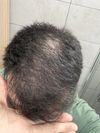
The conversation discusses hair loss treatments, specifically Minoxidil, finasteride, and RU58841. The user seeks input from medical professionals and scientists on these treatments.
Exosomes from Musely are being discussed as a topical hair loss treatment containing ingredients like latanoprost, caffeine, cetirizine, melatonin, vitamin D3, vitamin E, and biotin. Users are curious about its effectiveness and potential side effects, noting it may take 4-6 months to see results.
The conversation discusses whether starting treatments like finasteride or dutasteride early in hair loss leads to better regrowth results. One user implies that early treatment is indeed more effective, while another regrets not starting treatment sooner due to permanent hair loss.
The conversation discusses hair loss treatment using daily topical minoxidil and finasteride, daily 0.5mm dermarolling before application, and 2% ketoconazole shampoo three times a week. Users believe dermarolling enhances the absorption of the treatments and expect significant improvements over time.
Kintor's GT20029, a treatment for hair loss, has completed Phase 1 successfully, showing promise as an androgen receptor degrader that could potentially regrow hair. It is considered more effective than Pyrilutamide, with infrequent dosing and minimal systemic absorption.
Corticosterone inhibits GAS6, affecting hair follicle stem-cell activity, with potential implications for stress-related hair loss. Ashwagandha and Vitamin K are suggested for reducing cortisol, but their effectiveness is debated.
The use of tropoelastin injections and verteporfin for hair transplant recipients to help regrow donor area hairs, as well as research done on tropoelastin injections restoring elastin in scarred heart tissue and skin. There are discussions about why it is taking so long to get cosmetic mass produced tropoelastin injectables on the market.
The conversation discusses potential future hair loss treatments, including SCUBE3, hair follicle cloning, and GT20029, with mentions of past disappointments like CosmeRNA and hopes for treatments like Verteporfin for infinite donor hair.
The conversation discusses using scalp massage, balms like Ethera and L'Occitane, and dietary changes such as rosemary tea and tofu to address hair loss. The user is also considering high-intensity interval training and slow breathing to improve hair regrowth.
New hair loss treatments like stem cells, hair cloning, and gt20029 are unlikely to be available in the next 5-10 years, with some trials possibly starting by 2026. Current treatments like Minoxidil and Finasteride have been used for decades, and new developments depend on funding and successful trials.
User discusses verteporfin for hair regrowth through "super microneedling" and preventing scarring. They mention a case of an old man regrowing hair after a head injury and suggest verteporfin could recreate this result.
A dermatologist recommended PRP (Platelet Rich Plasma) and GFC (Growth Factor Concentrate) for pattern baldness, but online sources suggest they may not be effective. The user is seeking opinions on these treatments.
PRP treatments have been effective for the user, with a new recommendation of using a high-quality plasma kit once a year. The user seeks experiences with this specific PRP approach.
Current treatments like oral/topical minoxidil and finasteride are considered the best options for hair regrowth, with dutasteride being the most powerful medication available. There is hope for future advancements in hair transplant technology and potential new treatments, but significant breakthroughs are not expected soon.
The discussion is about using ASCEplus HRLB exosomes for hair loss treatment, which combines 10 billion exosomes with growth factors, nutrients, biotin, and copper tripeptide. The treatment is expensive and typically administered via scalp injections, but in Europe, it's done with microneedling.
The conversation is about the use of peptide therapies for hair loss, specifically GHK-CU, ZN-Thymulin, and PTD-DBM. The user is seeking feedback on the effectiveness of these treatments from those who have tried them.
The user discusses using dutasteride to stop hair loss and bimatoprost for regrowth. They plan to use VEGF with hydrogels for potentially permanent hair follicle improvement and suggest PRP as an alternative.
Various hair growth treatments were discussed, including microneedling, bimatoprost, setipiprant, stemoxydine, PGE2, CB-03-01, WNT Beta-Catenin upregulators, KY19382, topical estrogen, IGF-1, GH, MK-677, oral castor oil, fisetin, resveratrol, cetrizine, and lactic acid. Users shared experiences and sources for these treatments, with some expressing interest in topical solutions and others noting the lack of FDA approval or scientific evidence for certain options.
The conversation discusses a hair loss treatment regimen that includes scalp massage, derma rolling, saw palmetto, rosemary, peppermint oil, pumpkin seed oil, and various supplements like vitamins C and D, multivitamins, biotin, collagen, and fish oil. The user is asking if the treatment has led to hair regrowth.
Current treatments like finasteride, minoxidil, and derma rolling are considered the best for hair loss, while new treatments such as GT20029, PP405, and others are in various trial phases with results expected in the coming years. There is cautious optimism about the affordability and effectiveness of these upcoming treatments.
Scientists discovered a new T cell treatment that could regrow hair. Users are skeptical but hopeful, with some relying on finasteride and minoxidil in the meantime.
Exploring future hair loss treatments, including immunosuppressants for hair transplants and hair cloning, with a focus on leveraging research from other medical fields. Current treatments like finasteride and minoxidil are effective for most, but there's a call for more funding and innovation in the hair loss industry.
Finasteride, minoxidil, dermarolling, and topical antiandrogens are effective for hair regrowth. Future treatments may include CB0301 and hair cloning.
The conversation discusses using peptides BPC-157 and TB-500, combined with microneedling, to potentially enhance hair regrowth. The user plans to try BPC-157 due to its lower cost and reports of hair growth, despite limited human trials and concerns about side effects from other treatments like minoxidil and finasteride.
Finasteride is mainly for maintaining existing hair, while minoxidil is recommended for regrowth. Users suggest combining both treatments for better results, especially if there are signs of hair follicles still being active.
GHK-Cu is discussed as a potential hair loss treatment, with claims of promoting hair growth and possibly reversing gray hair, though strong clinical evidence is limited. The user also mentions using Minoxidil, red light therapy, and microneedling.
A 35-year-old is seeking advice on hair loss treatments, considering minoxidil, finasteride, and possibly a hair transplant in Turkey. They have previously tried microneedling for a year.
CRISPR Cas9 could potentially treat baldness by targeting specific genes in hair follicles without affecting other body functions. There is optimism about its future use, despite ethical concerns and the current reliance on treatments like minoxidil and finasteride.