A user needs to stop finasteride for 7 days to donate blood due to haemochromatosis. They are concerned if this break will affect their hair loss progress after 6 weeks of use.
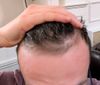
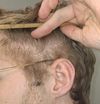
User noticed black dots along the hairline and temples, questioning if it's regrowth. They are using a regimen including Dutasteride, oral and topical Minoxidil, and a compounded topical treatment.
A 27-year-old is experiencing hair thinning and receding, currently using finasteride and planning to start minoxidil. They seek advice on hairline treatment options, including styling, PRP, peptides, and micro-needling.
Oral Minoxidil users discuss whether caffeine affects its effectiveness due to adenosine receptor blockade. Users report no significant impact on hair growth despite caffeine consumption.
A 26-year-old male experienced hair regrowth using finasteride, minoxidil foam, and micro-needling over 2-3 months, with significant improvement in the crown, sides, and temples, but less in the hairline. He noted side effects like fluid retention in the ankles and weight gain but no change in libido.
Hair loss, treatments including Minoxidil and finasteride, confidence being more important than the amount of hair one has, and how actor Jason Statham is an example of a successful bald man.
The conversation is about a user planning to undergo a hair transplant and seeking information on clinics that perform Verteporfin treatment. A user suggests Dr. Barghouthi might offer this service.
The user is pleased with increased hair density and thickness after six months of using topical minoxidil and finasteride. They plan to continue the treatment and consider adding dermarolling for potentially better results.
A 28-year-old male experiencing diffuse thinning and miniaturization around the ears and back has tried finasteride, dutasteride, and both topical and oral minoxidil without success. He is seeking advice on identifying the type of hair loss and next steps since current treatments are ineffective.
Treatments for hair loss, including finasteride, dutasteride, minoxidil, ketoconazole, microneedling, and low level laser light therapy, which aim to reduce DHT production, increase cell absorption and bloodflow, and stimulate epidermal stem cells. It also stresses the importance of patience when using these treatments.
The user is experiencing a strange hair loss pattern despite using dutasteride for 3 years and minoxidil with tretinoin for 1.5 years. They recently added microneedling and are considering a scalp biopsy to understand the cause.
Hair loss treatment should target dermal white adipose tissue (DWAT) to restore hair follicles. Potential remedies include tocopherol (vitamin E), botox, rosiglitazone, niacin, kojyl cinnamate esters, and ADP355.
Adding non-prescription topicals like alfatradiol and Zix to a standard fin/min/niz regimen may help with scalp inflammation and shedding, but their long-term effectiveness varies. Zix is recommended for reducing scalp inflammation and enhancing the effectiveness of other treatments.
A user is planning to get extensive blood tests before starting Finasteride and is seeking advice on which tests are necessary. They are concerned about the cost and potential redundancy of some tests.
25-year-old male with Norwood 2 hair loss tried PRP injections without success. Dermatologists didn't recommend finasteride or minoxidil, but suggested PRP + Mesotherapy for 50% improvement.
A user is trying 2-deoxy-D-ribose with distilled water for hair growth, observing new hair and skin pigmentation changes. Others compare it to Minoxidil, expressing interest and caution about its effectiveness and safety.
A 24-year-old male has been struggling with hair loss since 2020, trying treatments like minoxidil, finasteride, dutasteride, PRP, vitamins, proteins, and exosomes, but hasn't seen significant improvement. He is considering a hair transplant due to the lack of results from these treatments.
Using RU58841 and topical minoxidil together is fine and does not cancel out the benefits of each. Applying both treatments consecutively is acceptable.
A user shared their 3-year progress using 1mg finasteride and 5% topical minoxidil twice daily, reporting significant hair regrowth and some side effects like bloating, seborrheic dermatitis, and water retention. The user is happy with the results, noting improvements in both the crown and hairline.
A 31-year-old male experiencing hair thinning since age 25-26 uses minoxidil, finasteride, a red laser cap, and microneedling to promote hair growth. Users suggest reducing microneedling frequency to once a week to avoid damaging hair follicles.
The user shared progress pictures showing significant improvement in hair loss after using finasteride, RU58841, and undergoing a 3000 graft hair transplant. They plan to get another transplant due to remaining thin areas.
21-year-old female experiencing hair loss and visible scalp seeks advice on PRP effectiveness. Currently taking spironolactone and krimson for high androgens, unsure if PRP can be done with these medications.
The conversation discusses the difference in attitudes toward hair loss treatments, with a focus on lifestyle changes and hair transplant surgery in Hong Kong, as opposed to treatments like minoxidil, finasteride, and microneedling discussed on 'tresless'. The user is now using finasteride and minoxidil and considering microneedling.
PP405 and GT20029 are new hair loss treatments with different mechanisms from traditional options like Minoxidil and Finasteride. PP405 targets hair follicle stem cells to reactivate growth, while GT20029 works as an androgen receptor deleter, both requiring ongoing use for effectiveness.
The conversation discusses hair regrowth using dissolvable microneedles loaded with rapamycin and epigallocatechin gallate nanoparticles. Specific treatments mentioned include Minoxidil, finasteride, and RU58841.
The conversation is about testing the effectiveness of RU58841 for hair loss, with the user planning to increase their dose to 30 mg per day along with 20 mg of Minoxidil. The test results showed approximately 70 mg/ml, which the user considers a good result.