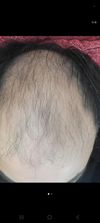
The user is considering using dutasteride 0.5 mg daily for hair loss and is contemplating a hair transplant after a year. They are seeking opinions on progress and potential outcomes.
Hair restoration after FUE surgery, with discussions on using finasteride, dutasteride, and oral minoxidil for hair maintenance and growth. Users share experiences with these treatments, noting varying side effects and effectiveness.
A user shared progress pictures 1.5 months after a hair transplant of 3500 grafts, using oral finasteride, topical finasteride, minoxidil, and vitamins. They are concerned about potential shock loss and the thinning appearance.
A 39-year-old man shared his 18-month hair regrowth progress using oral dutasteride, oral minoxidil, saw palmetto, biotin, red light therapy, and microneedling. He experienced significant improvement after switching from finasteride to dutasteride and adding oral minoxidil, with plans to possibly consider a hair transplant in the future.
The user reported high testosterone and estradiol levels within range, but unexpectedly high DHT levels after using finasteride and dutasteride for hair loss. Another person suggested the dutasteride might be fake or a bad batch and recommended using the branded Avodart.
Pelage is recruiting for phase 2 trials, showing promise for treating bald regions. The discussion highlights its potential effectiveness based on its mechanism of action.
Finasteride is effective for treating male pattern baldness (MPB) with minimal side effects, and topical finasteride is similarly effective. Dutasteride is also effective but less understood, and Minoxidil is less effective than Finasteride.
Two twins who used Minoxidil, finasteride and dermarollers to treat their androgenic alopecia over a 10 month time period. The user is providing details on the process they use for dermarolling.
A 28-year-old male experiencing early male pattern baldness is considering using Pyrilutamide (KX-826) as an alternative to finasteride due to side effects. He seeks to maintain his current hair without regrowth and is concerned about potential side effects like reduced libido.
The user shared their experience with hair loss treatments, including oral and topical Finasteride and Minoxidil, and detailed various blood test results to track hormonal changes. They noted that while DHT levels initially decreased with topical Finasteride, they later increased, but they observed positive results in hair growth.
A user shared progress pictures 7.5 months after a hair transplant of 6350 grafts in Turkey, using 6% minoxidil and 0.05% finasteride. They are satisfied with the results but note some thin areas.
The conversation discusses hair loss treatments, including Minoxidil, finasteride, and RU58841. It highlights an interview with Stemson Therapeutics CEO Geoff Hamilton about advancements in hair cloning technology.
The conversation discusses using a combination of finasteride, spironolactone, minoxidil, retinol, azelaic acid, and caffeine for hair loss treatment. The user inquires about the limitations of these drugs and whether tretinoin would be more effective than retinol.
The individual had a hair transplant in Turkey with 4052 grafts, resulting in significant hair growth and increased confidence. They use finasteride, rosemary oil, and vitamins, and are pleased with the natural-looking results, encouraging others to consider similar treatments.
The conversation humorously discusses hair loss treatments, including Minoxidil, finasteride, and RU58841, and debates the merits of being bald versus using hair systems. Opinions vary on confidence and attractiveness related to baldness and hair systems.
The user has been on finasteride for 17 months and recently switched to dutasteride, sharing bloodwork results showing no side effects. They express a wish to have started treatment earlier to save their hair.
Finasteride and dutasteride have potential risks, including post-finasteride syndrome, but are commonly used for hair loss. RU58841, minoxidil, and needling are suggested as alternatives, though all treatments carry risks.
The conversation discusses hair regrowth treatments, including stem cell exosomes, PRP, and PP405. Users question the effectiveness of the treatments and mention finasteride and minoxidil.
User started balding at 16 and began treatment at 18, using RU58841, minoxidil, derma rolling, and peptides. After 6 months, they experienced significant hair regrowth and are happy with the results.
The conversation is about which blood markers to test before starting a 5-AR inhibitor for hair loss. The user mentions already testing Total T, Free T, SHBG, Estradiol, Haematocrit, Red blood cell count, and White cell count, and asks if DHT or additional markers are needed.
KX826 is considered a legitimate option for those who cannot use finasteride or dutasteride, but many users report it as ineffective compared to RU58841. RU58841 is favored by some due to anecdotal evidence of effectiveness, despite the lack of published clinical data.
The conversation is about a user who started using finasteride to address crown balding, noticing reduced hair shedding and halted progression of male pattern baldness. The user also used a dermal stamp and expressed optimism about potential regrowth, despite a slight decrease in libido.
A 38-year-old user shared progress pictures after 3.5 months of using oral dutasteride, oral minoxidil, dermastamping, and Nizoral shampoo, reporting significant hair regrowth. The user is optimistic about further improvement, while others discuss the effectiveness and side effects of these treatments.
Finasteride is the most effective treatment for reducing DHT and addressing hair loss compared to fish oil and saw palmetto. Topical treatments like RU58841 and minoxidil are also discussed, but finasteride remains the most effective option.
The conversation is about a hair transplant operation video by a clinic owner, with comments suggesting it's staged for marketing and criticizing the unrealistic hairline created. Some users question the necessity of the transplant for the individual featured.
The post and conversation are about a user seeing hair regrowth after using Rogaine, rosemary oil, pumpkin seed oil, saw palmetto, microneedling, and LLLT. The user plans to add Nizoral soon and is hopeful about continued progress.
PP405's phase 2a trial results were presented, focusing on safety and pharmacokinetics, with a future meeting planned to share the full dataset. The trial includes a randomized controlled portion and an open-label extension, with no indication of phase 2B completion.
The conversation is about the effectiveness and production of GT20029, a drug being developed as a topical androgen receptor degrader for hair loss, and whether it can fully degrade androgen receptors or only partially. It also discusses the drug's potential unique working mechanism and synthesis by a company called Anagen.
The user has been using oral minoxidil and dutasteride for hair loss without success and is considering adding topical 17α-estradiol, Pyrilutamide, Clascoterone, or cetirizine. They have confirmed low serum DHT levels and are exploring additional treatments due to genetic sensitivity to DHT and prostaglandin D2.
The user is experiencing severe hair shedding after taking finasteride for three weeks and plans to stop due to gynecomastia symptoms. Stopping finasteride may lead to some hair regrowth, but benefits from the treatment might be lost; topical alternatives are suggested.