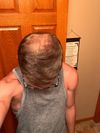
Using hair fibers daily is generally fine, but it's important to choose a quality keratin-based product to avoid scalp irritation. The user combines hair fibers with a regimen of finasteride, minoxidil, microneedling, and ketoconazole.
The user regrew their hairline using mechanical stimulation, including a 1.5mm derma roller weekly, daily scalp massages, and other treatments like Nizoral, zinc pyrithione, fish oil, and Lipogaine The Big 5. They did not use Minoxidil or finasteride.
The user reports progress in hair regrowth using topical finasteride/minoxidil, microneedling, topical dutasteride, latanoprost, and MSM supplements. They express frustration over the lack of interaction on progress posts compared to trivial topics.
The user is using minoxidil and topical finasteride for hair loss and is seeking advice on whether to use a derma pen or derma stamp for microneedling, including the appropriate length and frequency. They previously stopped oral finasteride due to side effects.
Topical tretinoin applied to the face may exacerbate hair loss in some individuals, potentially triggering conditions like frontal fibrosing alopecia. Experiences vary, with some users reporting no impact on hair, while others experience significant hair loss.
A 41-year-old is addressing hair loss by eating better, using a dermaroller, and taking Nutrafol, but many suggest adding finasteride and minoxidil for better results. The conversation includes mixed opinions on Nutrafol's effectiveness, with some recommending pharmaceutical treatments like finasteride and minoxidil for more significant hair regrowth.
PP405 is ineffective for miniaturized, fibrosed hair follicles in androgenetic alopecia. AMP303 may activate hair follicle stem cells, but minoxidil and finasteride are still the main treatments.
User seeks advice for regrowing temples, currently using Fin, oral Min, and dermarolling. Suggestions include improving scalp environment and considering RU58841 or dutasteride.
The conversation is about a user's 3-month hair regrowth progress using finasteride, minoxidil, and a 0.5mm dermaroller, with recent addition of caffeine shampoo. Users are responding positively and inquiring about application methods.
Tretinoin and microneedling both enhance hair growth through different mechanisms, with microneedling being considered safe for long-term use. Optimal microneedling needle length varies, but 0.8 mm is suggested for hair growth, and a Dermastamp is recommended to avoid skin damage.
A user shared their 2-month progress using finasteride (1mg) daily, topical minoxidil (5%) daily, and dermarolling twice a week, noting some regrowth and satisfaction with the results. Another user complimented the progress, and the original poster detailed their dermarolling routine.
High DHEA levels may contribute to hair loss by increasing DHT in hair follicles, potentially explaining why finasteride is ineffective for some. Treatments like high-dose dutasteride and RU58841 are suggested, but the underlying cause, such as adrenal issues, should be investigated.
The user experienced significant hair regrowth using dermarolling, peppermint essential oil, rosemary carrier oil, finasteride, dutasteride, biotin, vitamin E, spirulina, fish oil, and a protein-rich diet. The oral versions of finasteride and dutasteride were noted as more effective.
The conversation discusses experimenting with microneedling for hair loss, specifically addressing non-responsiveness and the use of topical treatments like dutasteride, minoxidil, and tretinoin. The user seeks advice on effective frequency and depth combinations for better results.
A 17-year-old is concerned about hair loss and questions his dermatologist's advice against using finasteride due to age. The dermatologist recommended a serum with aloe vera, saw palmetto, biotin, and dexpanthenol, but the user is skeptical and considers using minoxidil instead.
AMP-303 and AMP-601 are new hair loss treatments targeting dermal papilla cells, with AMP-303 showing early efficacy in transitioning vellus hairs to terminal hairs after one injection. Further clinical trials are planned, and these treatments are seen as promising due to their biologic approach and less frequent application compared to daily treatments.
A user is starting a microneedling regimen for hair loss, using Derminator 2, ketoconazole shampoo, castor oil, and multivitamins. They plan to provide monthly updates on their progress.
Topical melatonin was found to significantly increase hair density and decrease scalp conditions like seborrheic dermatitis. The user is considering using it alongside finasteride and oral minoxidil for treating hair loss and scalp health.
The conversation discusses difficulty in distinguishing between new hair growth and thinning hair at the temples after using microneedling and a rosemary peppermint topical for four weeks. The advice given is to wait a few months to see if the hairs grow out to determine their nature.
Folligenz liposomal minoxidil sulfate is being discussed for its effectiveness and cost, with users comparing it to regular minoxidil and tretinoin. One user found no difference with the 10% version and noted that a lower tretinoin percentage reduced side effects like skin peeling.
The user experienced side effects from daily 1 mg Finasteride and switched to 0.5 mg every other day, supplemented with creatine, tongkat ali, tribulus terrestris, vitamin D3, bromantane, l-tyrosine, and caffeine. They also use weekly 1.5 mm microneedling and daily 50 mg RU58841, except on microneedling days, to manage hair loss.
Topical pirfenidone is highlighted as an effective anti-inflammatory and anti-fibrotic treatment for hair loss, particularly in addressing perifollicular fibrosis, which may enhance the effectiveness of standard treatments like finasteride and minoxidil. The user also uses calcipotriol, MCT oil, ciclopirox shampoo, and benzoyl peroxide shampoo as part of their regimen.
A user's success with the hair loss treatments finasteride, minoxidil, nizoral shampoo and dermarolling; discussion about how to use minoxidil on temples; and the importance of being happy in one's own skin regardless of results.
The conversation discusses using a 1.0mm dermaroller for hair loss, with the user experiencing mild redness that subsided quickly. The user seeks advice on the frequency of dermaroller use.
The user reports temple hair regrowth using RU58841, minoxidil, and finasteride, recently switching to dutasteride. They consider stopping RU58841 and continuing with oral minoxidil and dutasteride.
User asks about Redensyl as a substitute for Minoxidil due to side effects. Another user suggests trying Ordinary Hair Serum with dermarolling for improved hair quality.
The conversation is about someone using minoxidil, biotin, a laser cap, and a derma roller for hair loss, and considering finasteride. Some users are skeptical about the treatments, while others advise patience for results.
Hair fibers effectively cover thin hair areas, boosting confidence and reducing stress about hair appearance. Users discuss combining hair fibers with other products like hair spray, dermmatch, and Boldify, noting challenges like blocking minoxidil absorption and the importance of color matching.
The user is using a hair recovery treatment with 0.5 mg dutasteride, 5 mg biotin, 5% topical minoxidil, and dermarolling twice a week. They are considering using a 1.5 mm dermaroller and red light therapy.