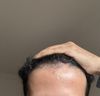
User seeks advice for regrowing temples, currently using Fin, oral Min, and dermarolling. Suggestions include improving scalp environment and considering RU58841 or dutasteride.
A user is treating hair loss with Dutasteride, Minoxidil, RU58841, Derminator 2, Vitamin D, Biotin, and Zinc. After 6 months, there's no significant visual improvement, but the user feels less insecure about Retrograde Alopecia.
Minoxidil may cause wrinkles and dark circles, which some users report can be mitigated by adjusting dosage. Reactions vary, and while some dismiss these side effects, others experience significant changes.
A 35-year-old man with 10 years of hair loss at NRW7 started using topical Minoxidil and noticed some hair regrowth. He plans to continue with Minoxidil, add microneedling, and possibly try topical treatments like finasteride or dutasteride.
A user increased their dutasteride dose to 3mg daily after two years but experienced significant hair loss. They also use RU58841 and minoxidil and are concerned about whether the loss is due to shedding or another issue like telogen effluvium.
A 39-year-old experienced hair regrowth on his temples after switching from finasteride to topical RU58841 combined with 5% minoxidil. He also underwent stem cell treatment and noticed improvements, attributing the regrowth mainly to the change in treatment.
This post and conversation are about the molecular mechanisms triggered by microneedling, specifically its effects on inflammation, tissue remodeling, epithelial proliferation, differentiation, and collagen synthesis. The discussion highlights the potential benefits of microneedling for hair loss treatment.
Loose-Message9596 has been experiencing hair loss for 3-4 years, initially due to low ferritin and vitamin D levels, and has tried treatments like vitamins, System 4, and PRP therapy. They are considering starting finasteride and minoxidil but are unsure due to their relatively low DHT level of 425.
MCL-1 protein may help maintain hair follicles in the growth phase and prevent miniaturization. There is interest in experimental treatments like exosomes, peptides, or stem cell serums to upregulate MCL-1 for hair loss, especially for those not using minoxidil or finasteride.
The user has been using oral dutasteride and minoxidil for over a year without regrowth or stability, and hair loss continues. Suggestions include checking for inflammation, considering a scalp biopsy, and trying microneedling, topical anti-androgens, or a hair transplant.
The user is seeking advice on a hair loss treatment called Ell Cranell, which contains Alfatradiol. Another user shared information from a study stating that Alfatradiol only slows down or stabilizes hair loss, but does not increase hair density or thickness.
A 19-year-old male experienced significant hair loss, initially thought to be male pattern baldness (MPB), and used minoxidil and briefly finasteride. After realizing the issue was telogen effluvium (TE), he improved his diet and supplemented with vitamins, which led to substantial hair regrowth.
The user recently started topical dutasteride and microneedling, and has been using RU58841 and Minoxidil for 16 months. They are curious if small black dots at their hairline indicate hair regrowth.
The conversation is about managing allopregnanolone deficiency caused by 5-alpha-reductase inhibitors like finasteride or dutasteride. Specific treatments discussed for hair loss include Minoxidil, finasteride, and RU58841.
The user has been using minoxidil, microneedling, and finasteride for hair loss without improvement and is considering tretinoin, but concerns about shedding persist. Another user suggests trying dutasteride instead of finasteride, as both tretinoin and microneedling can irritate the skin.
The user is considering using Ruderma to maintain hair and is concerned about potential hair loss acceleration due to starting TRT. They are also inquiring about the use of minoxidil, RU58841, and a derma roller for hair maintenance.
A 22-year-old male using 0.5mg Dutasteride and 2.5mg oral Minoxidil daily for 5.5 months reports increased shedding and scalp itching. He also experienced acne and is concerned about whether the shedding is normal and if daily hair washing for seborrheic dermatitis is causing dryness.
The user has been experiencing diffuse hair thinning despite using finasteride, minoxidil, dermarolling, clobetasol cream, and PRP sessions. They seek advice on additional treatments and are advised to check vitamin D, iron, and thyroid levels.
A 40-year-old used minoxidil, dutasteride, RU58841, and microneedling for one year, resulting in noticeable hair regrowth despite initial shedding. They believe having more hair is beneficial for dating at their age and also recommend staying fit, eating well, and sleeping over 8 hours.
The user experienced significant hair shedding after long-term use of finasteride and dutasteride and is now considering trying RU58841 as a last resort. They have checked health factors and suspect stress and poor sleep may contribute to the shedding, but they are determined to try RU58841 to see if it helps with androgenetic alopecia.
A 25-year-old male using Dutasteride, oral Minoxidil, and Ketoconazole shampoo is experiencing increased hair shedding and vellus hair growth along the hairline. Concerns are raised about whether this is a seasonal shed or a potential setback.
A 26-year-old male with high testosterone is experiencing diffuse hair thinning despite using a comprehensive treatment regimen including dutasteride, oral minoxidil, RU58841, ketoconazole shampoo, microneedling, and low-level laser therapy. Suggestions include adjusting dutasteride dosage, monitoring iron levels, and consulting a dermatologist for further evaluation.
A 20-year-old started using minoxidil, rosemary oil, Alpecin caffeine shampoos, scalp massager, derma rollers, and supplements for hair regrowth, seeing significant improvement initially. However, after 6 months, they noticed increased shedding and thinning, causing concern about whether this is normal or indicative of a problem.
The user experienced hair shedding after using finasteride and topical minoxidil since August 2024, and briefly adding oral minoxidil in early 2025. They suspect the shedding might be due to the oral minoxidil, a bad batch of finasteride, or a normal shedding cycle, and are also experiencing an itchy scalp and acne.
The conversation is about the potential benefits of Rapamycin for hair pigmentation and regeneration, based on effects observed in mice. The original poster is seeking personal experiences from others using Rapamycin for longevity.
The user experienced severe hair shedding despite using oral finasteride, minoxidil, dutasteride, and RU58841, and was diagnosed with Non-Alcoholic Fatty Liver Disease (NAFLD). They are considering switching to topical treatments due to the ineffectiveness of their current regimen.
The user has been using dutasteride, lymecycline, betamethasone, and minoxidil for hair loss but struggles with eczema and dry skin. They feel hopeless as no treatments or moisturizers have helped, and they are concerned about their appearance due to their soft facial features.
Hair loss without a white bulb may indicate mechanical damage, anagen effluvium, alopecia areata, or traction alopecia. Seeking a specialist is recommended, but access can be difficult in smaller areas.