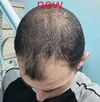
User experienced hair loss after starting dutasteride, but saw regrowth with finasteride. They wonder if dutasteride can cause initial shedding but eventually lead to hair regrowth.
The conversation discusses unconventional methods for hair regrowth, including scalp trauma like burning or microneedling, and compares them to treatments like Minoxidil and Finasteride. It highlights skepticism about these methods and the body's unpredictable healing responses.
A 32-year-old shares their hair loss treatment journey, using finasteride for nearly 10 years, minoxidil for about 6 months, and previously RU58841, along with keto shampoo. They express concern about potential treatment effectiveness decline and consider switching to dutasteride.
The user recovered from Post-Finasteride Syndrome (PFS) using a specific hormone protocol after trying finasteride and dutasteride. They now help others with PFS by reviewing blood work and offering personalized advice.
The conclusion of the conversation is that the user, who has been using finasteride for 11 years and then switched to dutasteride and minoxidil, has experienced minimal side effects and significant hair regrowth. They also mention that side effects are rare and often related to other factors such as poor diet and low testosterone levels.
OP shared a 1-month progress update on using a topical solution with dutasteride, minoxidil, and tretinoin for hair loss. Users noted regrowth and discussed tretinoin's availability.
Stopping saw palmetto and rosemary oil led to significant hair loss for a long-term finasteride user. Resuming saw palmetto caused side effects, and there is debate about its effectiveness and the potential impact of oxycodone on hair loss.
Kintor Pharmaceutical's Phase 2 results with the drug Pyrilutamide, a potential alternative to 5-ARI drugs like Finasteride and Dutasteride but without the side effects. It could be used in combination with other topical treatments such as Minoxidil. The safety of the drug has been demonstrated in 6 months of use, however there are still questions about long term efficacy and systemic absorption.
FCE 28260 (PNU 156765), an under-explored 5α-reductase inhibitor, showcases promising results in research by Giudici et al., outperforming well-known treatments like Finasteride in reducing the conversion of testosterone to DHT. Its superior efficacy, demonstrated through lower IC50 values in both natural and human recombinant enzyme studies, suggests it could offer more effective management of DHT-related conditions. Additionally, its lower molecular weight hints at better potential for topical application, potentially offering advantages in treating conditions such as androgenic alopecia. Despite its potential, it has not advanced in development, possibly due to financial limitations, leaving its therapeutic prospects and side effect profile largely unexplored.
The user experienced significant hair loss after stopping a treatment with vitamins, minoxidil (2.5mg), and dutasteride (0.5mg) for three months. They resumed the treatment 20 days ago and are hopeful for recovery, with no side effects reported.
The user has been treating hair loss for over 11 years with various methods including Minoxidil, Keto shampoos, vitamins, and microneedling, but has avoided Finasteride due to fertility concerns. They have recently added Zix and The Ordinary Serum to their routine and are questioning their high DHT levels despite their efforts.
OP experienced significant hair regrowth with Dutasteride over three years but recently faced a massive hair shed, raising concerns about the medication's effectiveness. OP has not used Minoxidil.
The user experienced significant hair regrowth using a single pill containing 2.5mg minoxidil and 1mg finasteride over 11 months, with noticeable improvements starting around month 8. They reported minor side effects initially but none ongoing, and they have not undergone a hair transplant.
A 20-year-old has been using oral dutasteride for 6 months, topical minoxidil for a year, ketoconazole shampoo for a year, and dermarolling every 2 weeks for a year to treat hair loss. They are questioning the effectiveness and value of these treatments and seeking advice on whether to continue.
New hair loss treatments like Shiseido/Replicel and Histogen were discussed, with cautious optimism about their availability by 2018. Setipiprant, Replicel, and Bimatoprost were mentioned as potential treatments expected around 2016-2017.
Kintor's phase III trial for pyri (KX-826) showed promising safety and efficacy results, with no drug-related sexual dysfunction reported. Users discussed their experiences with pyri, Minoxidil, Dutasteride, and concerns about the validity of the study results.
The user is trying a new hair loss regimen including Spirolactone, Finasteride, oral Minoxidil, microneedling, and various supplements. They are experiencing increased shedding and seeking advice on microneedling and treatment effectiveness.
A man used finasteride, minoxidil, and a derma pen for a year to improve hair growth with no significant side effects. He plans to continue the treatment and explore new options.
The user was using 1mg finasteride daily and oral minoxidil 2.5mg daily for two years, then added RU58841 to their routine two months ago and is asking for opinions on any changes in hair growth. They provided progress pictures without dermarolling and maintained consistent lighting for comparison.
The user has been using various hair loss treatments, including dutasteride, oral minoxidil, finasteride, RU58841, and dermarolling, but feels they may have lost hair and is considering a hair transplant. They are advised to stick to one treatment for 6-12 months to see results, as frequent changes may hinder progress.
The user has been using finasteride and minoxidil for nearly three years, maintaining and possibly regrowing hair despite noticing shedding and miniaturized hairs. They are considering adding another treatment due to concerns about ongoing hair loss.
The post is about a user's progress with hair loss and the effectiveness of finasteride as a treatment. The conclusion is that the user did not see any progress with their hair loss after being on finasteride for a year.
AH-001 is a new topical treatment designed to degrade androgen receptors, targeting the root cause of androgenetic alopecia without the side effects of oral treatments like finasteride. It has shown a strong safety profile and good local tolerability in early trials.
The conversation discusses the potential of verteporfin in treating hair loss, with some users reporting positive results and speculating that it could lead to a cure for baldness. Others are skeptical, and there's a debate on the effectiveness of verteporfin for regrowing hair and reducing transplant scars.
A user shared their hair regrowth progress using Dutasteride and topical Minoxidil over three years, noting significant improvements around 4-5 months and continued gains after a year. They reported no major side effects, only an itchy scalp, and emphasized the importance of patience and consistency.
The user has been using finasteride for hair loss since January 2023, initially seeing improvement but now experiencing increased thinning. They are considering other factors like thyroid and insulin resistance and are seeking advice from long-term finasteride users, while some suggest trying dutasteride, minoxidil, or consulting a dermatologist for further evaluation.
Norwood 7 hair loss is often excluded from trials to ensure treatments appear more effective and to reduce costs. Some believe treatments effective for Norwood 5 could work on Norwood 7, but companies prioritize market readiness.
Finasteride and Minoxidil may continue to improve hair regrowth after one year, but significant changes are unlikely, and most improvements occur in the first year. Some users report minor improvements after 18 months or more, but maintenance is the primary benefit after the initial year.
A user shared their 1-year hair loss treatment update, switching from finasteride to dutasteride due to side effects, and combining it with oral minoxidil. They reported significant hair regrowth, especially at the right temple, with no sexual side effects from dutasteride.
A 26-year-old male has been using dutasteride for one year after previously using finasteride, along with 5% minoxidil and micro-needling, to treat hair loss. He reports no side effects and is satisfied with the progress, noting some shedding as part of the hair cycle.