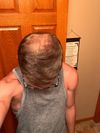
This conversation was about a user's experience with hair loss treatments over two years, using finasteride and minoxidil which resulted in significant improvement.
A 33-year-old man used Minoxidil 5% and Tretinoin 0.05% for a year to address hair thinning and receding hairline, resulting in new "baby hairs" filling in thin spots. He applies Tretinoin first, lets it dry, then applies Minoxidil, and notes that consistent use is necessary to maintain results.
A 23-year-old has been using finasteride 5mg daily since age 19 and added dutasteride 0.5mg twice a week to prevent hairline recession. They report no side effects and credit early treatment for maintaining their hair.
The post is a humorous take on the author's experience with hair loss and using finasteride for six months. The conversation includes discussions about hair loss, treatments like finasteride, and personal experiences with baldness.
The user has been using finasteride for over a year, which improved their hairline but not the crown area. They are considering alternatives like hair fibers, derma stamping, or possibly minoxidil, while avoiding topicals due to their work environment.
A 34-year-old man started using oral finasteride and topical minoxidil in late August for hair regrowth and noticed significant progress. He shared his results and expressed gratitude, while also mourning his father's recent passing.
User on Dut, oral minox 20 mg, Saw Palmetto, Pumpkin Oil, RU, 8% topical minox, and topical fina for hair loss; top of head improves, but retrograde alopecia worsens. Asks for options besides exosomes and where to find topical melatonin.
Creatine may increase DHT levels, potentially affecting hair loss, but evidence is mostly anecdotal. A study to explore this was withdrawn due to funding issues.
The user shared their 2-year progress using finasteride and minoxidil, with significant improvement after adding dutasteride in the last year. They advise persistence with the treatment despite initial setbacks.
A user shared progress pictures 1.5 months after a hair transplant of 3500 grafts, using oral finasteride, topical finasteride, minoxidil, and vitamins. They are concerned about potential shock loss and the thinning appearance.
KX-826 Phase II results show that a 0.5% concentration performs better than 1% for treating male pattern baldness. Concerns about receptor upregulation from long-term DHT antagonism were mentioned.
The user is considering switching from topical to oral finasteride due to lack of progress with their current hair loss treatment, which includes topical fin/min, microneedling, Nizoral shampoo, oral minoxidil, biotin, collagen, tretinoin, and hair masks. A suggestion was made to try oral finasteride for potentially better results and to monitor progress over 6-12 months.
A 48-year-old male experienced hair regrowth after using oral finasteride for 3 years, despite stopping due to side effects like depression and low energy. He achieved a fuller look with styling techniques and reported using organic shampoo and herbal treatments.
A 25 year-old male who has been taking finasteride (1mg/day) for 4 months and then switching to dutasteride (0.5mg twice per week) for 20 months, with positive results; the difference between finasteride and dutasteride is discussed.
A 59-year-old man with significant hair loss has seen some improvement, including reversal of Retrograde Alopecia and darkening of hair, after switching to RU58841 and a new minoxidil base solution with additional ingredients. He also changed from a derma roller to a derma stamp for application.
A user is considering stopping hair loss treatments, including finasteride, dutasteride, and minoxidil, due to lack of progress after 16 months. They plan to continue until October and are seeking advice and experiences from others.
The conversation discusses using USB microscopes for scalp photos and provides a link to an overview of trichoscopy. Treatments mentioned include Minoxidil, finasteride, and RU58841.
The user has been on finasteride for 17 months and recently switched to dutasteride, sharing bloodwork results showing no side effects. They express a wish to have started treatment earlier to save their hair.
Kintor Pharma completed enrolling subjects for a Phase III trial of KX-826 for male hair loss treatment. The trial includes a 24-week treatment period and a 4-week safety follow-up, with results expected in about 6-7 months.
The user stopped taking oral finasteride due to depression and now uses a topical finasteride/minoxidil mix with some scalp irritation. They plan to start derma stamping and have seen some improvement in their hair over three years, which others have noticed and encouraged them to continue their efforts.
Finasteride and minoxidil use resulted in a more youthful appearance and improved skin. There is debate about their effects on collagen and skin aging, with no solid evidence supporting significant changes due to finasteride.
The user is using a hair loss regimen involving 2ddr applied twice daily, tretinoin weekly, and occasionally micro-needling. They report feeling increased scalp thickness and seeing some hair growth progress.
People shared experiences with hair loss treatments like Minoxidil, Finasteride, and Dutasteride. Opinions varied on effectiveness and side effects, with advice to start early and adjust dosages based on individual reactions.
A 28-year-old shared his 2-year hair loss treatment progress using finasteride, minoxidil, dermarolling, and Revita shampoo. He saw significant improvement, especially with minoxidil and dermarolling, and stressed consistency.
The conversation discusses switching from oral to topical treatments for hair loss, specifically using a mix of retinoic acid, finasteride, and minoxidil, after oral treatments like dutasteride and finasteride were ineffective. The user is concerned about the cost and potential impact of dandruff on the absorption of topical treatments.
A 21-year-old has been using oral finasteride, topical minoxidil, and tretinoin for 2 months and notices potential regrowth with baby hairs. They consider adding dutasteride weekly but wonder if current treatments are sufficient.
A 52-year-old shared positive hair regrowth results after using finasteride for 24 months, with noticeable improvements after 13-14 months, and recently added oral minoxidil to the regimen. Users discussed the effectiveness of combining finasteride, minoxidil, and sometimes dutasteride for better hair growth results.
The conversation discusses the long-term results of using finasteride, RU58841, and minoxidil for hair loss, with some skepticism about the truthfulness of the results and a reference to a scam involving RU58841.
The user initially had success with Minoxidil for hair loss but stopped due to life changes, resulting in hair loss returning. They plan to restart treatment with Minoxidil, add Nizoral, dermarolling, and supplements like saw palmetto and beta-sitosterol, while avoiding pharmaceutical drugs.