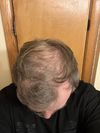
The user experienced significant hair regrowth after 2.5 years of using Minoxidil 5% and hormone replacement therapy (HRT) with Lupron, despite initial scalp irritation. Finasteride was ineffective for them.
Hope Medicine's announcement of the HMI-115 Phase II clinical trial for androgenetic alopecia in China; other related trials have been conducted or are ongoing in different countries, including Australia, US, and Europe. There is speculation that the product may be accepted across borders without additional testing.
A 31-year-old man successfully used oral minoxidil and finasteride for hair regrowth over eight years, experiencing minimal side effects like initial shedding and increased body hair. He credits these medications for preserving his hair despite a family history of baldness.
Finasteride helped OP recover their hairline, and they did not use minoxidil. OP experienced significant hair regrowth with finasteride, similar to their father's experience.
The user has been on finasteride for 18 months and added dutasteride after the first 6 months, with no hair regrowth observed. Bloodwork shows normal levels of DHT despite the use of both medications.
User Kylo313 used dutasteride for 20 years and had two daughters, questioning if dutasteride affects the likelihood of having male vs female children. Replies mostly request hairline photos and discuss anecdotal experiences, with some suggesting correlation doesn't imply causation and that gender determination isn't affected by dutasteride.
Hope Medicine's HMI-115 is expected to be released in 2027, with phase 3 trials currently recruiting. Concerns include the safety of targeting prolactin and the potential cost of the treatment.
A 24-year-old male shared his progress after over two years of using finasteride and topical minoxidil, reporting significant improvement from Norwood 3 to Norwood 1.5 with minimal side effects, mainly watery semen. Other users discussed their experiences with similar treatments, noting varying results and timelines for hair regrowth.
A user shared their 3-month experience with oral Minoxidil and nearly a year on finasteride, asking if a hair transplant might still be needed. Responses varied from congratulatory remarks on visible improvement to advice on sticking with treatments despite initial shedding.
A user shared their experience using topical finasteride for 6 months, showing a reduction in DHT levels but no visible improvement in hair loss. They are considering switching to oral finasteride for potentially better results.
A 40-year-old user shared their experience using finasteride and minoxidil for hair regrowth over a year, noting initial sexual side effects that improved after reducing the finasteride dosage. They also experienced scalp irritation from Rogaine, leading to reduced usage, and expressed satisfaction with the hair regrowth despite ongoing challenges.
A user shared their experience with hair loss, using finasteride and minoxidil, and eventually undergoing a hair transplant of 1800 grafts. They regret not starting finasteride earlier and mention that despite the transplant, their scalp is still visible under strong light.
A user applied pyrilutamide for 6 months without hair regrowth and is considering stopping due to cost and lack of results. Another user suggests switching to finasteride, which is cheaper and has shown regrowth for them.
The user shared progress pictures showing hair regrowth after using minoxidil, finasteride, and dermarolling, and is currently trying oral minoxidil, dutasteride, and a finasteride/minoxidil topical. Another user commented on the significant improvement, and the original poster emphasized the importance of consistency despite shedding phases.
Kintor edited their Amazon page, removing claims that KX-826 provides "real" visible results from clinical experiments. The discussion includes treatments like Minoxidil, finasteride, and RU58841.
The conclusion of the conversation is that the user "CheckHopeful" has seen significant improvement in their hair loss after using finasteride and minoxidil for 1.5 years. Some users discuss side effects and suggest adjusting the dosage or trying topical finasteride or RU58841.
A 17-year-old is addressing hair loss with finasteride, topical minoxidil, and microneedling. They are considering adding GHK-Cu to their regimen, but others advise caution with finasteride due to age.
A user is unsure if their hairline is regrowing or receding after 4 months of oral dutasteride 0.5 mg and oral Minoxidil 2.5 mg. Another user thinks it looks better with new small hairs growing.
The user has used finasteride and minoxidil for five years to slow hair loss but hasn't seen regrowth. They are considering increasing finasteride dosage, switching to dutasteride, and exploring microneedling and oral minoxidil.
The user has been using finasteride for 3 years with good results and wants to switch to dutasteride combined with tamsulosin. They are seeking more information about tamsulosin.
People are discussing their reactions if PP405 fails in phase 3 trials, with some expressing skepticism and others holding onto hope for future treatments like GT20029 and Breezula. Many mention continuing with existing treatments like minoxidil and finasteride, while others express disappointment and consider alternative solutions.
A user used dutasteride 0.5mg for 3 months and is unsure about hair regrowth, noting some greying. Responses suggest improvement and that full regrowth may take time with shedding cycles.
The user experienced improved hair density after using finasteride for over a year and oral minoxidil for about four months, with noticeable results around 10 months. They reported minor side effects from minoxidil but plan to adjust the dosage.
Scalp micropigmentation as a treatment for hair loss, and the importance of choosing a reputable practitioner to get a natural look. Different treatments such as laser removal were also discussed in relation to long-term maintenance.
Lab-grown hair using iPSCs is being explored, but practical applications are limited. Finasteride is suggested as the only current effective treatment.
People have been using finasteride for 10 to 20+ years to maintain their hairline, with many reporting success and no significant side effects. Some users have combined finasteride with minoxidil for better results, and a few have switched to dutasteride or added hair transplants when finasteride was less effective.
A 19-year-old shared their one-year progress using finasteride for hair loss, despite inconsistent use and poor lifestyle habits. They plan to improve their routine and have noticed thicker beard growth.
Finasteride prescriptions in France now require an annual certificate acknowledging psychiatric and sexual risks, as the European Medicines Agency recognizes these risks. The conversation discusses the potential mental health effects of Finasteride, with some users reporting side effects and others questioning the statistical significance of these findings.