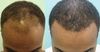
The conversation discusses hair loss treatments, specifically Minoxidil, finasteride, and RU58841. The focus is on setting realistic expectations for these treatments.
The conversation is about using microneedling for hair loss treatment, including questions on disinfection and post-treatment care. The user mentions using oral minoxidil and finasteride, and considering dutasteride.
The results of using Pyrilutamide, a hair loss treatment available on the gray market, and other treatments such as Minoxidil, Finasteride and RU58841.
Hair loss treatments discussed include alfatradiol, big 3, finasteride, RU58841, and stemoxydine. Alfatradiol is less effective but has fewer side effects, and mixing with stemoxydine may improve results.
The conversation is about a person regrowing their hair in 7 weeks using scalp massages, peppermint oil, microneedling, and keratin shampoo without drugs. They experienced initial shedding but saw improvement after consistent treatment and shampooing every other day.
The conversation discusses a hair loss treatment regimen that includes scalp massage, derma rolling, saw palmetto, rosemary, peppermint oil, pumpkin seed oil, and various supplements like vitamins C and D, multivitamins, biotin, collagen, and fish oil. The user is asking if the treatment has led to hair regrowth.
The user is exploring hair loss treatments, including Patented Growth Factors (PGF) and a serum with Copper Peptide, Ceramides, Amino Acids, and Caffeine, while expressing concerns about the cost and effectiveness of PGF. They are also considering starting finasteride due to doubts about PGF's long-term viability and are seeking experiences from others who have used these treatments alongside antidepressants.
A 29-year-old considering hair loss treatment received advice to explore a theory on androgenic/anabolic balance and was encouraged to read a beginner's guide for better recovery chances. The user expressed gratitude and willingness to try the suggested approach.
A new stem cell therapy shows promise in treating hair loss, but skepticism remains about its availability. Users humorously discuss the effectiveness of treatments on mice compared to humans.
The conversation discusses various hair loss treatments, including Minoxidil, Finasteride, Dutasteride, Ketoconazole shampoo, microneedling, and supplements like collagen, biotin, and vitamins. Users suggest additional treatments like red light therapy, scalp massages, and possibly adding RU58841 or Tretinoin.
The conversation is about experimenting with topical exosomes for hair loss treatment, alongside microneedling, Happy Head's gel-like topical, and Ordinary's hair serum. The user also mentions the availability of treatments like latanoprost and Redensyl.
The method combines finasteride, minoxidil, intense leg exercises, and cold exposure to treat androgenetic alopecia. It aims to boost metabolism and reduce androgenic effects, enhancing hair growth.
Exosome therapy for hair loss is being discussed, with mixed personal experiences and no significant results reported by some users. The treatment is expensive, and users are skeptical about its effectiveness.
User tried oral finasteride, topical finasteride, topical dutasteride, and RU58841 but experienced side effects. They discuss upcoming treatments like clascoterone, pyrilutamide, gt20029, and KY19382 as potential options.
A user who has been trying various treatments for hair loss for four years, with no success. Suggestions include use of minoxidil, finasteride, RU58841, microneedling, supplements and multivitamins, lifestyle changes, scalp biopsy, and SMP.
A 28 year old using a hair loss prevention protocol to restore thinning hair, which includes finasteride, dutasteride, minoxidil, stemoxydine, alopecin, nizoral shampoo and microneedling; the user is now adding pyrilutamide solution to the regimen with the hope of improving their results. RU58841 was also ordered but not yet used.
The conversation discusses progress with a hair loss treatment regimen that includes once daily topical Finasteride, Pyrilutamide, and WAY-316606. Specific treatments for hair loss are being shared and discussed.
The conversation discusses hair loss treatments, specifically mentioning Minoxidil, finasteride, RU58841, and TB-500 Thymosin Beta-4. It critiques the credibility of biohacking claims.
The conversation is about finding an affordable and effective low level laser therapy device for hair loss, with a preference for a cap but open to a comb.
User started fin/min/niz at 23, switched to Dut at 24, and has been on treatments for 7 years. Despite occasional doubts, hair improved and user advises sticking with treatments.
The conversation is about someone using minoxidil, low-dose aspirin, and LLLT for hair loss, finding microneedling painful, considering topical finasteride, and feeling frustrated enough to think about shaving their head. They are inquiring about the effectiveness of combining oils like peppermint, rosemary, and castor for hair loss treatment.
A 35-year-old has seen no hair regrowth after 9 months using treatments including finasteride, pyrilutamide, microneedling, ketoconazole shampoo, and topical dutasteride, but experienced side effects with RU58841. Commenters suggest starting minoxidil for better results and question why it wasn't included from the beginning.
The conversation discusses creating a mix of essential oils for hair regrowth, questioning the proper mix ratio for single or multiple oils. It also mentions using finasteride and minoxidil for hair loss treatment, alongside oils, shampoos, and microneedling to improve scalp conditions for hair regrowth.
The conversation discusses a user experimenting with RU58841 for hair regrowth by ingesting it, which others find concerning. There are mentions of potential side effects and comparisons to other treatments like minoxidil, finasteride, and flutamide.
The conversation is about someone using finasteride and minoxidil along with microneedling as a treatment for hair loss, and there's a mention of scalp tattooing as an alternative or additional approach. Some responses mock the approach, while others inquire about the specifics of the treatment and its effectiveness.