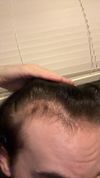
The user experienced hair loss and itching after stopping RU58841 and resumed it to stop these symptoms. They also use Dutasteride and question which treatment is effective.
The conversation discusses hair regrowth using 0.1% finasteride, 5% minoxidil, 1% retinoid, weekly microneedling, and red light therapy, with noticeable improvement in a short time. One person is curious about the retinoid application process when used with minoxidil.
The post is about using different solutions for RU58841, a treatment for hair loss. The user is asking for opinions on the effectiveness of different vehicles and dosages.
The user is considering using Ruderma to maintain hair and is concerned about potential hair loss acceleration due to starting TRT. They are also inquiring about the use of minoxidil, RU58841, and a derma roller for hair maintenance.
A 31-year-old uses Minoxidil, RU58841, Reviv Hair Serum, and Ketoconazole shampoo for hair loss but avoids finasteride. They plan to reintroduce red light therapy (LLLT) and Eucapil despite previous shedding concerns.
The conversation humorously discusses using a dermaroller for hair growth, with a playful suggestion of using it on the wrist. It includes references to Minoxidil, finasteride, and RU58841 as treatments.
The conversation discusses using topical Calcipotriol and Valproic Acid for hair loss, focusing on their mechanisms involving the VDR receptor and Wnt/beta-catenin pathway. Specific treatments mentioned are Minoxidil, Finasteride, and RU58841.
A 19-year-old concerned about long-term effects of 5AR inhibitors on physical appearance. They have used finasteride and plan to try dutasteride or RU58841; responses suggest improved skin, hair, and confidence.
A user is considering using RU58841 for female pattern baldness and is also planning to use Minoxidil. They are hesitant to ask their doctor for spironolactone due to its cosmetic nature and are experiencing significant hair loss possibly due to stress and hormonal issues.
A 17-year-old shared progress pictures after using RU58841 and Minoxidil for 2 months, showing significant hair regrowth. Another user commented on the impressive results achieved in a short time.
Microneedling for hair regrowth, using a 1.0 dermastamp, is discussed with a focus on achieving slight redness without bleeding. Minoxidil is mentioned as an effective treatment when used after dermastamping.
The user is concerned about safely using RU58841 around cats and wonders if applying it 2 hours before a shower is as effective as leaving it overnight. The discussion focuses on the absorption time and effectiveness of RU58841.
The user saw significant hair regrowth using topical minoxidil and finasteride, even on areas not directly treated. They used local Algerian products with 5% minoxidil and 0.1% finasteride and reported no side effects.
JW0061 shows superior hair growth results compared to existing treatments, with significant increases in hair follicles. The Wnt/β-catenin pathway is crucial for hair growth, and JW0061 activates this pathway effectively.
Quitting RU58841 after over two years reduced scalp itching and inflammation, despite concerns about losing hair gains. The user continues using finasteride and oral minoxidil.
The user is experiencing increased hair shedding while using finasteride and RU58841, possibly due to changes in application methods. They are considering adding minoxidil and stemoxydine to their regimen to improve results and manage hair greasiness.
RU58841 is being considered for hair maintenance by someone who can't tolerate finasteride. Alternatives like topical finasteride, dutasteride, and KX826 are also suggested.
The conversation is about seeking alternatives to combine with Finasteride for hair loss treatment, specifically if not wanting to use Minoxidil. The user questions if anyone has tried Redensyl as a potential alternative.
The user has been using oral minoxidil and finasteride but continues to experience hair thinning. They are considering adding RU58841 or dutasteride to their regimen for better results.
The conversation discusses hair loss treatments, specifically using a Dermaroller, Minoxidil, and RU58841 for two months. The user shared progress pictures showing the results of these treatments.
The user wants to mix 0.2 ml of RU58841 solution with 2 ml of Alfatradiol to use 10 mg of RU58841 daily due to concerns about side effects. They are asking if this combination would be effective for hair loss treatment.
A 21-year-old male experienced negative side effects from oral finasteride and is considering switching to topical finasteride or RU58841 after using oral minoxidil. He seeks advice on a standard hair loss routine, mentioning peptides, RU58841, and dermarolling.
A user is concerned that using rosemary oil after microneedling might cause gynaecomastia due to increased absorption and potential DHT blocking. Other users believe rosemary oil is unlikely to affect hormones or cause gynaecomastia.
GHK-Cu is a potent inhibitor of the type 1 5-alpha reductase enzyme in hair follicles, which may reduce hair loss without the side effects associated with type 2 5-alpha reductase inhibitors. The user previously experienced side effects with 5-alpha reductase inhibitors and is considering GHK-Cu as an alternative.
The conversation discusses the effectiveness of adding RCP (redensyl, capixyl, procapil) to a hair loss treatment regimen that includes minoxidil and finasteride. Users share experiences, suggesting RCP may not be as effective as minoxidil, but could be useful for creating topical solutions.
The conversation is about accessing and purchasing RU58841 or Pyrilutamide for hair loss treatment, with mentions of alternatives like Breezula. Users discuss price differences in various countries and suggest websites like rudirect.com for purchasing.
The conversation is about which blood markers to test before starting a 5-AR inhibitor for hair loss. The user mentions already testing Total T, Free T, SHBG, Estradiol, Haematocrit, Red blood cell count, and White cell count, and asks if DHT or additional markers are needed.