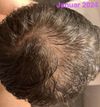
The conversation is about the effectiveness of 0.25% topical finasteride compared to other concentrations and forms. Users discuss its potential for better scalp DHT reduction and fewer side effects, with some preferring topical over oral treatments.
A 26-year-old male with high testosterone is experiencing diffuse hair thinning despite using a comprehensive treatment regimen including dutasteride, oral minoxidil, RU58841, ketoconazole shampoo, microneedling, and low-level laser therapy. Suggestions include adjusting dutasteride dosage, monitoring iron levels, and consulting a dermatologist for further evaluation.
A person experienced hair loss after switching from finasteride to dutasteride and returned to finasteride, adding oral minoxidil. Dutasteride may increase scalp testosterone, worsening hair loss for some individuals.
A user shared their positive experience with finasteride and minoxidil for hair regrowth, reporting no side effects and recommending early treatment for hair loss. Others discussed their experiences, side effects, and questions about dosages and application methods.
A user achieved significant hair regrowth from Norwood 3 to a dense Norwood 2 after five months using oral dutasteride, oral minoxidil, and a topical solution with minoxidil, retinoic acid, and hydrocortisone. The user reported no side effects and found the topical treatment especially effective for the hairline.
The user has been dealing with hair loss for six years using minoxidil, finasteride, and dutasteride without success. They are contemplating shaving their head due to continued hair loss and social anxiety.
A 22-year-old male has been using Minoxidil for 2.5 years and Finasteride for 8 months without significant improvement in hair loss. Despite adding supplements and other treatments, hair density remains low, and he seeks advice on further options.
A user is experiencing hair loss despite using dutasteride and oral minoxidil, feeling hopeless and considering a hair system. They are advised to try ketoconazole, seek a second opinion from a dermatologist, and consider treatments like finasteride, RU58841, and hair transplants.
A 24-year-old experiencing hair loss received advice from four dermatologists, with most recommendations focusing on using minoxidil and finasteride. The consensus among users was to start with finasteride and consider adding minoxidil later, while expressing concerns about potential side effects.
A husband saw significant hair regrowth in 2.5 months using minoxidil, finasteride, collagen, biotin, multivitamins, GHK-cu, microneedling, and scalp oils. His wife highlighted the routine's effectiveness and the importance of consistency.
A person improved hair loss from Norwood 3 to Norwood 2 using a topical formula with minoxidil, dutasteride, and tretinoin, plus oral minoxidil and red light therapy. There is skepticism about the treatment's effectiveness and concerns about misleading comparison photos.
Topical finasteride is considered a safer option for hair regrowth with fewer systemic side effects compared to oral finasteride. Some users report similar efficacy and side effects between topical and oral treatments, while others prefer topical due to reduced systemic exposure.
A user shared their 5-month progress using 1mg Finasteride and 5% Minoxidil daily, noting significant improvement in their crown with no side effects. They started treatment in January after rapid hair loss and advice from Reddit.
The user discusses their hair loss experience, exploring various hypotheses including thyroid levels, vitamin D, DHEA, nutritional deficiency, diabetes, seborrheic dermatitis, lack of nutrition to hair follicles, chronic inflammation, female pattern hair loss causes, cortisol, and prolactin levels. They are currently using finasteride, beta-sitosterol, and have tried topical dutasteride and microneedling therapy.
Some people claim Dutasteride worsened their hair loss, causing concern among users. Reasons suggested include initial shedding phases, incorrect attribution to Dutasteride when other factors are involved, genetic variations affecting drug response, and the possibility of non-authentic medication.
A user experienced heart problems after taking 1mg finasteride and 2.5mg oral minoxidil and is considering quitting minoxidil. Others discussed their experiences with heart issues and minoxidil, with some suggesting topical minoxidil as a safer alternative.
People are discussing if microneedling alone can improve hair loss without using treatments like minoxidil, finasteride, or RU58841. Some users report moderate success with microneedling and natural remedies, but most suggest that results are better when combined with medical treatments.
A 39-year-old shared a 17-month hair loss treatment update using Dutasteride, Minoxidil, Nizoral shampoo, and a 1.5mm derma roller, noticing significant results after 9-12 months. They also maintain a healthy lifestyle and manage side effects like dry skin with moisturizer.
Some men are bald because they are unaware of hair loss treatments like Minoxidil (Min) and Finasteride (Fin), while others choose not to use them due to potential side effects, cost, or personal preference. Treatments like Min and Fin are discussed, with varying results and opinions on their effectiveness and side effects.
A user on dutasteride and oral minoxidil for two years has experienced worsening hair loss and an itchy scalp. Suggestions include increasing medication doses, trying other treatments like RU58841, getting a scalp biopsy, and addressing potential inflammation through diet and topical treatments.
A user did not respond to finasteride, dutasteride, and oral minoxidil for hair loss after four years of treatment and is considering scalp micropigmentation (SMP). Other users suggest the hair loss pattern may indicate alopecia areata and recommend seeing a dermatologist.
The user shared a one-year progress of hair regrowth using topical minoxidil and dutasteride, along with microneedling and scalp massages. They experienced significant hair growth without side effects.
The conversation discusses hair loss treatments, with some users advocating for finasteride and minoxidil, while others express concerns about potential side effects of finasteride. A social media influencer is criticized for promoting scalp massages and minoxidil over finasteride, which some believe is misinformation.
The conversation discusses a hair loss flowchart for beginners, with mixed opinions on its effectiveness. Treatments mentioned include minoxidil, finasteride, dutasteride, microneedling, and vitamins.
A 30-year-old female with PCOS and male pattern baldness is frustrated with her endocrinologist's recommendation of only Spironolactone and minoxidil, feeling that dutasteride, finasteride, and progesterone would be more effective. Other users suggest various online sources for treatments, warn against self-medicating due to potential risks, and recommend seeking a specialized endocrinologist or considering additional treatments like Inositol, Berberine, and dermaneedling.
The user is experiencing significant hair shedding despite 2 years on finasteride, 1.5 years on RU58841, and 10 months on oral minoxidil, and is frustrated with the ongoing issue. Another user shares a similar experience of losing a lot of hair daily for the last 3 years.
Discussing a regimen to improve the user's hairline, with treatments proposed including minoxidil, rectal microneedling, IV drip of minoxidil, laser removal, PRP injection, topical minoxidil, divine protein shakes, stem cell injections, and keto shampoo.
Accepting hair loss, and the use of medications such as finasteride, minoxidil, and microneedling to treat it. The responses provide advice and personal experiences related to coping with hair loss.
Nutrafol, a hair loss supplement, has limited and potentially biased research, with one study showing a 10% increase in hair count for women after 6 months but no significant results for men. The user concludes that cheaper, well-studied options like minoxidil may be more effective, especially for men, given the lack of evidence supporting Nutrafol.