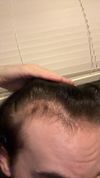
The conversation discusses using GHK-Cu, C60, and saw palmetto oil as treatments for hair loss. Specific treatments mentioned include Minoxidil (Min), Finasteride (Fin), and RU58841 (RU).
Liposomal carriers for topical finasteride offer better targeting, reduced side effects, and less irritation compared to alcohol-based solutions, but availability and cost may limit their use. Minoxidil can dissolve in liposomal carriers, enhancing delivery and stability.
A user applied a homemade topical finasteride solution daily for 35 days, reducing hair shedding significantly with minimal side effects. They plan to continue for 90 days and will provide further updates.
A 21-year-old male experienced negative side effects from oral finasteride and is considering switching to topical finasteride or RU58841 after using oral minoxidil. He seeks advice on a standard hair loss routine, mentioning peptides, RU58841, and dermarolling.
Topical spironolactone is gaining attention as an alternative hair loss treatment, but it's not as effective as other options like finasteride. Oral spironolactone can cause side effects in men, and there are better topical alternatives like RU, Pyril, and CB.
The conversation discusses the application frequency of a 1% Koshine solution for hair loss, with recommendations varying between once or twice daily. It is noted that the 1% solution is more effective than the 0.5% solution.
AltruisticBro's experience with Fluridil (Eucapil) as a hair loss treatment, and the current blood work results associated with it. They are not willing to take finasteride due to potential permanent side effects.
The conversation humorously discusses hair loss treatments, focusing on finasteride, dutasteride, minoxidil, and microneedling. Users share experiences and opinions on the effectiveness and side effects of these treatments.
User shared 3.5 months progress on oral finasteride 1.25mg daily with no side effects. Other users commented on the effectiveness and shared their experiences.
GT20029 showed significant hair growth and safety in phase II trials, with no adverse sexual events. Users are hopeful but concerned about future costs and systemic effects.
For hair loss, recommendations include using finasteride along with supplements like saw palmetto and zinc. Other treatments mentioned are Minoxidil and RU58841.
Alfatradiol is used by some for hair loss, often alongside treatments like finasteride, RU58841, and minoxidil, but its effectiveness is unclear. Some users report no significant improvement, while others note reduced sebum production but experience side effects like gallbladder pain.
Finasteride improved mental health and reduced hair loss concerns for the original poster. Other users suggested using minoxidil and derma-rolling for better results.
Pyrilutamide should be applied before topical minoxidil and finasteride, allowing time between applications to prevent degradation from water. Users discuss the order and timing of applying these treatments for hair loss.
The user experienced sexual side effects from a topical finasteride and minoxidil combo and stopped using it after three weeks. They plan to use foam minoxidil nightly to slow hair loss and seek alternative treatments that don't affect sexual health.
The user is concerned about using only minoxidil for hair loss without finasteride, despite having seborrheic dermatitis. They are considering seeking a second opinion from another doctor.
The conversation discusses the potential benefits of adding Vitamin B6 (P-5-P) to topical hair loss treatments like RU58841, finasteride, or minoxidil. The user suggests that Vitamin B6 might enhance these treatments by naturally lowering scalp prolactin.
Comparing the effectiveness of RU58841, Pyrilutamide and CB-03-01 as treatments for hair loss, with people discussing different aspects such as binding affinity, time of inhibition, safety data and cost.
Topical spironolactone is more effective than topical finasteride for treating hair loss in both men and women. Oral spironolactone can affect testosterone, but the topical form doesn't impact the endocrine system.
Users discussed hair loss treatments, specifically 0.1% latanoprost with melatonin, caffeine, and biotin. Other treatments mentioned include minoxidil, finasteride, RU58841, and microneedling.
The conversation discusses hair loss treatments, with the original poster considering joining a clinical trial for setipiprant after experiencing side effects from finasteride and disinterest in minoxidil. Some users express skepticism about setipiprant's effectiveness, while others encourage participation in the trial for potential benefits.
The reduction in scalp oiliness is likely due to finasteride reducing DHT levels and the use of ketoconazole shampoo. The combination of these treatments may have decreased sebum production.