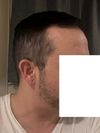
The user is pleased with their hair transplant results after six months and seeks feedback. The conversation is positive, with others affirming the success of the procedure.
The conversation discusses hair loss treatments, specifically mentioning Minoxidil, finasteride, and RU58841, and highlights hair multiplication research from Koehler Lab at Harvard. Users express optimism about future advancements.
The VT Reedle Shot, a skincare product using silica spicules, is discussed as a potential at-home alternative to microneedling for hair regrowth. It is suggested that different intensities may aid in hairline regrowth.
Hair fibers effectively cover thin hair areas, boosting confidence and reducing stress about hair appearance. Users discuss combining hair fibers with other products like hair spray, dermmatch, and Boldify, noting challenges like blocking minoxidil absorption and the importance of color matching.
PP405 may promote short-term hair growth by pushing follicles into the growth phase, but concerns exist about long-term effects due to lack of rest phases. Users discuss various treatments like finasteride, minoxidil, spironolactone, alfatradiol, and investigational drugs like KX-826 and GT20029 for hair maintenance and regrowth.
.
This conversation is a satire post about a user who appears to have an abundance of hair, with other users commenting and asking questions about the treatments they use for their hair loss. Treatments discussed include minoxidil and finasteride.
The conversation discusses hair loss treatments, specifically Minoxidil, finasteride, and RU58841. It also mentions a new hair transplant therapy approved by the government.
The conversation discusses a live stream presentation on Pelage PP405 for hair regrowth, with skepticism about its effectiveness compared to minoxidil. Some users express doubt and suggest sticking to proven treatments like minoxidil, finasteride, and RU58841.
A user is very satisfied with their hair transplant results, despite choosing a straight hairline against the doctor's advice for a more natural look. Some commenters think the hairline looks artificial, while others discuss the importance of a natural-looking hairline and inquire about any medications used post-transplant.
Minoxidil and finasteride have improved hair thickness and density, but temple areas remain stubborn. Continued use is recommended, with suggestions for topical minoxidil, microneedling, or considering a hair transplant for further improvement.
Volunteers using finasteride and minoxidil are needed to test if intense calf raises increase hair shedding. The goal is to see if overexertion of leg muscles affects hair loss.
The conversation discusses whether finasteride's reduction of DHT and increase in scalp testosterone contribute to hair follicle miniaturization. Some participants argue testosterone does not cause miniaturization, while others suggest that even with reduced DHT, other androgens like testosterone may still contribute to hair loss.
Celonius discusses hair loss and plans for a FUE Hair Transplant, but worries about how it will look when shaved in the future. Derhab21 suggests going for the transplant and mentions potential future treatments like Breezula and stem cell injections.
Topical 2-deoxy-D-ribose (2dDR) regrows hair in mice almost as well as 2% Minoxidil. However, 2dDR may contribute to oxidative stress and hair loss due to the formation of advanced glycation end products (AGEs).
The conversation discusses hair shedding experienced by users on minoxidil and finasteride treatments, with some considering additional options like spironolactone and dutasteride. Many users report experiencing a second shedding phase but are advised to continue treatment as it may lead to thicker hair regrowth.
People are frustrated with hair loss treatments like finasteride, minoxidil, and dutasteride, with mixed results and side effects. Some users suggest trying different combinations or doses, while others express disappointment and hope for a cure.
AMP-303, a new injectable treatment for androgenetic alopecia, showed promising results in increasing hair count and density with minimal side effects. The treatment demonstrated significant hair regrowth and durability, offering new hope for those with hair loss.
PP405 shows promise in hair regrowth, with 31% of participants experiencing over 20% increase in hair density after 8 weeks. Phase 3 trials are expected in 2026, with potential market availability by 2029-2031.
A user recommends the Hair Restoration Network forum for better guidance on hair loss, mentioning it has many helpful hair doctors and surgeons. They express hope that others find solutions and feel less despair.
The user is regrowing hair while using steroids by following a regimen that includes Rogaine, RU58841, Dutasteride, Nizoral, PGE2, and occasionally castor oil. Despite using harsh steroids like Tren, Masteron, and Proviron, the user reports successful hair regrowth.
The conversation discusses HMI-115, a potential cure for hair loss. Users share mixed opinions, with some expressing skepticism and others sharing anecdotal evidence of its effectiveness, including photos of significant hair regrowth from a trial participant.
A study that outlines the full model for androgenic alopecia (AGA) which links DHT to cellular senescence in dermal papilla cells, and suggests black chokeberry as a source of cyanidin 3-O-arabinoside polyphenol with potential anti-oxidant properties that could reverse this process. The post encourages reaching out to experts in anti-aging and longevity to research treatments involving the polyphenol.
Use finasteride or dutasteride with minoxidil for at least a year to improve hair density before considering a hair transplant. A transplant might be needed if medications don't provide sufficient regrowth.
The conversation is about the progress of clinical trials for SCUBE3, a potential hair loss treatment. Specific treatments mentioned include Minoxidil, finasteride, and RU58841.
The conversation is about the anticipation of results for a hair loss treatment study, specifically for GT20029, with expectations for the results to be released in the first quarter of 2024. No specific treatments were discussed.
A user underwent a hair transplant with 3500 grafts after trying treatments like finasteride and minoxidil, preferring a local clinic in Toronto over traveling to Turkey. The user plans to continue using finasteride to maintain existing hair, as the transplanted hair is DHT resistant.
The user is concerned about the lack of improvement in hair density 12 months after a hair transplant on the crown, despite using minoxidil. The doctor suggests the native hair is thinning, but the user disagrees.
Creatine may affect hair loss by reducing PGE2 levels, which could influence hair growth. The discussion highlights the need for more research on this potential mechanism.