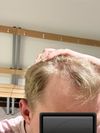
A user's hair regrowth journey involved a hair transplant and using RU58841, finasteride, and minoxidil, with side effects managed by other medications.
Ethosomes are suggested as an effective delivery method for topical finasteride solutions, requiring the addition of a phospholipid like soya lecithins. The user questions why do-it-yourself solutions don't commonly use ethosomes despite their potential benefits.
The user has been using finasteride for 18 months and minoxidil for 9 months, recently switching to dutasteride, but still struggles with hair growth at the hairline. They are considering taking creatine and are unsure if it would be a bad idea.
A user is using topical finasteride, keto shampoo, microneedling, and tretinoin for hair loss and is considering adding pyrilutamide. They notice some improvement at the temples and seek advice on whether to focus on cosmetic results despite daily shedding.
The user reported subtle hair regrowth by focusing on scalp health and lifestyle changes, using Nizoral shampoo and methods to reduce inflammation and cortisol, without using finasteride, minoxidil, or other common treatments. Opinions in the conversation varied, with some skeptical of the results and others acknowledging the potential benefits of addressing scalp health and inflammation.
The conversation discusses aggressive hair loss treatments, including finasteride, dutasteride, minoxidil, topical cetirizine, and experimental options like Estrogel, oh-flutamide, and RU58841. Users share experiences and suggest trying oral minoxidil and el cranell, noting the complexity and challenges of treating hair loss.
A 21-year-old is using a topical solution with minoxidil and finasteride for hair loss, along with supplements and specific shampoos, and is considering switching to oral treatments if no progress is seen in a few months. They are concerned about diffuse thinning and potential future hair transplants, and are exploring additional treatments like microneedling and tretinoin.
GT20029 is a topical treatment that degrades androgen receptors to prevent hair thinning and loss, potentially offering fewer side effects than systemic treatments like finasteride. Concerns include its impact on hair texture and potential systemic effects, with market availability speculated in 3 to 5 years.
The conversation discusses using USB microscopes for scalp photos and provides a link to an overview of trichoscopy. Treatments mentioned include Minoxidil, finasteride, and RU58841.
PP405 is the most promising future treatment for hair loss, aiming to reactivate dormant hair follicles. Clascoterone 5% is the most promising near-term drug, while current strategies include using finasteride or dutasteride to stabilize hair loss and minoxidil to stimulate growth.
The conversation discusses a topical finasteride therapy with hydrocortisone butyrate, estrone base, and breviline. A user suggests oral finasteride as a superior option.
Clascoterone is being discussed for hair loss, but its current acne formulation may not be suitable for scalp use due to potential skin irritation and lower dosage compared to Breezula. Users mention other treatments like finasteride, minoxidil, and pyrilutamide, with some expressing skepticism about clascoterone's effectiveness for hair loss.
The conversation is about using pyrilutamide and RU58841 as topical solutions to prevent hair loss. Pyrilutamide is considered safer but less potent than RU58841, which some users find effective despite potential side effects like heart palpitations.
The user is considering stopping finasteride due to depression, anxiety, and difficulty building muscle, despite its effectiveness in stopping hair loss. Suggestions include reducing the dose, switching to topical solutions, or consulting a doctor for alternatives like dutasteride or RU58841.
A user's extreme regimen for hair loss, which includes taking oral and topical medications such as minoxidil, dutasteride, cyproterone acetate and bicalutamide, but still experiencing miniaturization. Suggestions were made to try other treatments such as RU58841 and Pyrilutamide, while also considering mental health treatment and advice on lookmaxxing.
The conversation expresses frustration over the lack of progress in hair loss treatments, with specific mentions of Minoxidil, finasteride, and RU58841. Users discuss the slow development of new treatments and the potential of hair transplants.
User experienced slow gains with topical fin+min, switched to topical dut+min, and considered adding Eucapil. Another user suggested DUT may be less effective topically due to high molar mass and mentioned Fluridil as a weak anti-androgen that could help.
A user is considering using topical finasteride, topical minoxidil, RU58841, and dermarolling twice a week to address hair loss after experiencing side effects with oral finasteride. They previously saw positive results with a topical spray containing finasteride, minoxidil, and tretinoin but discontinued use due to laziness.
The user is experiencing hair regrowth with oral minoxidil and dutasteride but still has fragile hairs that easily pluck out from the front center. Despite improvements, the user is concerned about the persistent fragility and shedding of these hairs.
Improving hair health involves not only using treatments like finasteride, minoxidil, and ketoconazole but also focusing on a healthy lifestyle, including diet, exercise, and stress management. A balanced approach enhances treatment effectiveness and overall well-being.
RU58841 is being considered for hair maintenance by someone who can't tolerate finasteride. Alternatives like topical finasteride, dutasteride, and KX826 are also suggested.
The conversation jokes about using hair loss treatments like finasteride, minoxidil, and derma rolling on a baby, with suggestions ranging from starting treatment immediately to accepting baldness and focusing on other aspects of life. Some users suggest extreme measures like hair transplants in Turkey.
A user claimed to cure their baby's baldness by using finasteride, minoxidil, ketoconazole, dermarolling, scalp massages, and headstands to increase blood flow. Commenters responded with humor, suggesting various exercises and questioning the legitimacy of the transformation.
The conversation discusses the scalp tension theory as a potential factor in hair loss, alongside DHT, inflammation, and other mechanisms. Treatments mentioned include finasteride, minoxidil, and botox injections, with some users exploring additional methods due to varying effectiveness.
The conversation is a satirical discussion about hair loss treatments, jokingly suggesting using a Cocker Spaniel as an alternative to actual treatments like finasteride, minoxidil, RU58841, ketoconazole, and dermarolling.
A 21-year-old experiencing diffuse thinning is considering switching from finasteride to dutasteride after using topical and oral minoxidil and finasteride. They have seen some regrowth but are concerned about overall density loss, especially at the crown.
The conversation discusses hair transplants, including the use of techniques like FUE and the importance of a good donor area to avoid visible bald patches. It also touches on alternative treatments like Minoxidil, Finasteride, and Pyrolutimide, and debates the idea of embracing baldness versus seeking treatments.